Origins and Evolution of Medieval Armor
From Ancient Influences to the First Breastplates
At the beginning of the Middle Ages, barbarian peoples often recovered old Roman pieces, such as the lorica segmentata, which they adapted as they wished. These borrowings reflect the desire to protect the torso with articulated metal plates. In reality, the quality of the iron varied greatly, forcing craftsmen to compensate with robust leather work and textile reinforcements.
Transition to Chainmail
Chainmail, composed of thousands of interlinked rings, became established for its remarkable balance between protection and flexibility. Each ring, often made of tempered steel (annealed then polished iron), was assembled by hand. This work could require several hundred hours for a piece covering the entire body. Quickly, a fabric lining or a padded gambeson was added, acting as a shock absorber and thermal insulator.
Materials Used
Iron and Steel: The Beating Heart of Armor
The choice of metal depended on access to ores and local expertise. Wrought iron, derived from ores with high carbon content, offered a certain malleability ideal for shaping curved elements (helmets, pauldrons). Hardened steel, harder and more shock-resistant, required advanced mastery of heating and quenching temperatures to avoid cracks.
“A well-hardened steel is a faithful ally: it absorbs impact, does not deform, and remains light if the heating is controlled.” — Anonymous master blacksmith of the 15th century
Leather and Textile: Flexibility and Comfort
Leather, whether from cow, bison, or sometimes fish, served both as an inner framework and light protection. It was tanned with plants – oak, mimosa – to resist weathering. As for textiles, linen canvas lined with felt played a central role in the “gambeson,” sewn in multiple layers to absorb the energy of blows and prevent friction burns under the chainmail.
Alloys and Late Innovations
Towards the end of the Middle Ages, armorers experimented with adding nickel or manganese to increase the toughness of alloys. These metals, although more costly, reduced brittleness in cold and offered better resistance to repeated impacts. Calamine plates, heated then welded at the forge, revolutionized the making of full cuirasses, offering a sleeker silhouette and enhanced protection.
Manufacturing Techniques
Forging and Hammering
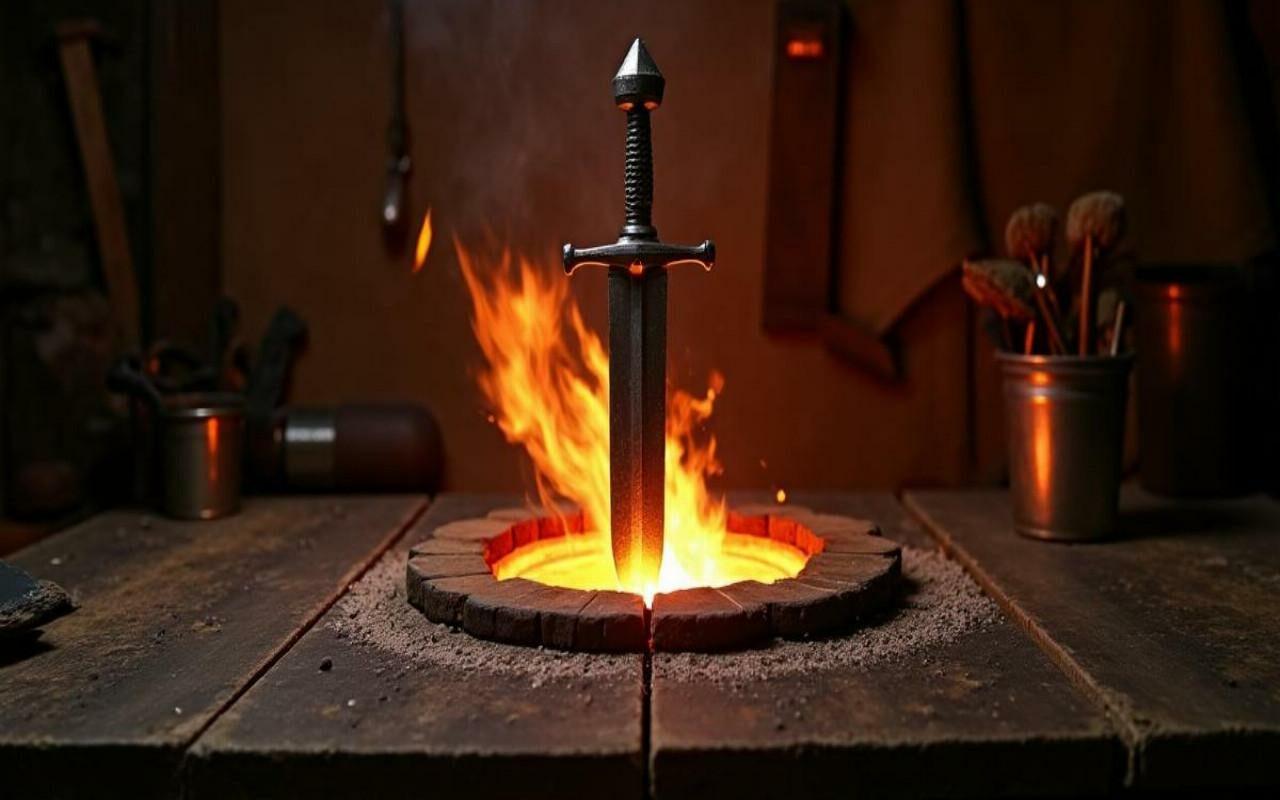
The forge remains the heart of metal transformation. The blacksmith heats the iron bar until it is red-hot, then, with the hammer, shapes it into its final form. This hammering strengthens the metal fibers, called “filieres,” and step by step, the edge of a blade, the curve of a pauldron, or the dome of a helmet is drawn out.
Stamping and Shaping
To save time, some armorers used cast iron or hardened steel dies. The heated metal was placed between two engraved molds, then pounded. This method, faster than simple hammering, allowed for the production of identical elements in series – practical for equipping a large troop.
Assembly and Finishing
Each piece then had to be riveted or adjusted with hinges. Rivets, often made of bronze or mild steel, ensured the connection between plates. Edges were often chamfered to avoid snags before moving on to polishing. Finishes could include burnishing (heating to red then quenching), chalk-based paint, or even fine gold gilding for ceremonial outfits.
Comparative Table of Armor Types
| Type of Armor | Materials | Average Weight | Advantages | Maintenance |
|---|---|---|---|---|
| Chainmail | Tempered steel, leather | 15–25 kg | Great flexibility, good perforation protection | Oil cleaning, ring inspection |
| Plate Armor | Hardened steel | 20–30 kg | Excellent shock resistance, defensive silhouette | Polishing, rust prevention |
| Brigandine | Riveted plates on fabric | 10–18 kg | Lightweight, modularity | Seam inspection, oiling |
Maintenance and Preservation
Cleaning After Use
After each reenactment outing or any outdoor event, dust off the armor in the open air, then gently wipe it with a cloth soaked in camellia oil, linseed oil, or petroleum jelly. This prevents the appearance of black stains and rust spots.
Restoration and Corrosion Prevention
If corrosion spots appear, they can be very finely sanded with 0000 steel wool, then a thin layer of microcrystalline wax should be applied. For collectors, an annual inspection of the welds and rivets ensures the longevity of the whole set.
Long-Term Storage
Store your pieces in a dry place, protected from temperature fluctuations. Hanging the chainmail on a sturdy coat hanger or stacking the plates with fabric spacers prevents unwanted friction.
Practical Tips for Collectors and Reenactors
- Keep a logbook to note every maintenance, restoration, or modification.
- Use special supports (wooden forms or mannequins) to avoid compression of padded pieces.
- Prefer natural oils and biodegradable waxes, which are more respectful of ancient metals.
- Perform fitting tests with reenactment clothing before any public engagement.
FAQ
1. What is the difference between hardened steel and mild steel?
Hardened steel undergoes a heat treatment that makes it harder and more shock-resistant, while mild steel remains more malleable, ideal for hammering and custom adjustments.
2. How to repair a tear in a gambeson?
A strong linen thread stitch, reinforced with a patch of similar fabric, is often sufficient. For optimal strength, sew with a blanket stitch and apply a thin layer of animal grease to waterproof it.
3. Can a medieval armor be modernized for free combat?
Yes, by adding high-density foam inner reinforcements and covering metal edges with a thin plastic film, a compromise between authenticity and regulatory safety is achieved.
4. How often should maintenance be done for armor displayed in a showcase?
Bi-monthly dusting and semi-annual anti-rust inspections are recommended to preserve the metal and textile accessories.
{
“@context”: “https://schema.org”,
“@type”: “WebPage”,
“about”: {
“@type”: “Thing”,
“name”: “Medieval Armors”
},
“keywords”: [“armor”, “medieval”, “materials”, “manufacturing”, “maintenance”]
}
{
“@context”: “https://schema.org”,
“@type”: “FAQPage”,
“mainEntity”: [
{
“@type”: “Question”,
“name”: “What is the difference between hardened steel and mild steel?”,
“acceptedAnswer”: {
“@type”: “Answer”,
“text”: “Hardened steel undergoes a heat treatment that makes it harder and more shock-resistant, while mild steel remains more malleable, ideal for hammering and custom adjustments.”
}
},
{
“@type”: “Question”,
“name”: “How to repair a tear in a gambeson?”,
“acceptedAnswer”: {
“@type”: “Answer”,
“text”: “A strong linen thread stitch, reinforced with a patch of similar canvas, is often enough. For optimal strength, sew with a blanket stitch and apply a thin layer of animal grease to waterproof.”
}
},
{
“@type”: “Question”,
“name”: “Can a medieval armor be modernized for free combat?”,
“acceptedAnswer”: {
“@type”: “Answer”,
“text”: “Yes, by adding high-density foam interior reinforcements and covering the metal edges with a thin plastic film, a compromise between authenticity and regulatory safety is achieved.”
}
},
{
“@type”: “Question”,
“name”: “What is the maintenance frequency for armor displayed in a showcase?”,
“acceptedAnswer”: {
“@type”: “Answer”,
“text”: “Bimonthly dusting and semi-annual anti-rust checks are recommended to preserve the metal and textile accessories.”
}
}
]
}