/* Css En-Bref */
Since the end of the 17th century, the throne has wavered far more often than one might imagine. Yet, through revolutionary storms—from France to Russia, passing through Great Britain—the monarchy has not disappeared. Behind each uprising, one discovers a tangle of alliances, reforms, and sometimes almost imperceptible cunning. How did these dynasties manage to reinvent themselves, undermine the adversary from within, or even turn public opinion around? We lift the veil on these sometimes little-known strategies that transformed the threat of abolition into a historic opportunity for renewal.
🕰️ Three major revolutions (France, Great Britain, Russia) illustrate the fickleness of monarchical fate and the political responses adopted to survive.
🔑 Breaking with absolutism, some courts granted charters, convened parliaments, all while retaining the shadow of effective power.
🌍 Pragmatic adaptation and religious support proved to be key levers, capable of softening popular radicalism and sealing lasting compromises.
Sommaire
At the Origins of the Questioning
In many European kingdoms, royal authority rested on belief in an almost intangible divine mandate. Yet, as early as the English Civil War of the 17th century, the mere idea of judging a king marked a first turning point. Charles I, judged and executed in 1649, left an unprecedented precedent: a monarch was no more untouchable than his subjects. This questioning was not only political but also cultural: people began to question the legitimacy of hereditary transmission, reviving debates dating back to Antiquity.
At the same time, the dissemination of writings by thinkers like John Locke or Montesquieu helped build a critical discourse denouncing the excesses of monarchical arbitrariness. The idea of controlled power, meant to serve the common good, was gaining ground. Painting a new social contract, these ideas would prepare the ground for the revolutionary shocks to come.
The First Cracks in the 17th Century
It was in the heart of Puritan England that the idea of “popular sovereignty” took root. The trial of Charles I reveals how much the monarch’s oath could be subordinated to a higher legal corpus. Like a mattress that always ends up sagging, the absolutist regime was already showing its weaknesses when Parliament forced the king to give up levying taxes without its consent. A precedent was created: the people (or their representatives) now dared to challenge the king in their own name.
The Enlightenment and the Intellectual Earthquake
In the 18th century, the powerful printing press crystallized discontent. Voltaire, Diderot, and Rousseau nurtured a new collective consciousness, advocating freedom of expression and the separation of powers. This intellectual earthquake pushed society to question not only the person of the sovereign but also the very structure of the regime. European monarchies, caught off guard, had to invent safeguards to appear more democratic, without abandoning the key to their prerogative.
Adaptation or Extinction?
When revolution rumbles, two choices are offered to the monarchy: crush the opponent with violence or transform itself. This second path, less spectacular but often more effective, consists of conceding ground on certain prerogatives while retaining the essential ceremonial power. It is a balancing act: trading absolutism for a constitutional monarchy, admitting an elected parliament, publishing a charter of liberties—but remaining at the top of the State.
Cherry on the cake, these concessions often make the monarchy appear as a bulwark against revolutionary anarchy. By stabilizing the country through compromise, the king or queen can seduce the elites, reassure the emerging bourgeoisie, and isolate the most radical parties.
The Politics of Compromise
Charters granting rights appeared from the late 18th century. In exchange for support or neutrality, the monarch grants fiscal privileges, creates representative assemblies, or limits his veto power. This formula proved particularly effective in countries where the nobility and upper bourgeoisie could be enlisted to suppress popular movements.
Beyond institutional compromises, political marriage remains a formidable instrument. Marital alliances, expanding the royal circle to new local powers, everything is good to guarantee legitimacy broader than simple heredity.
The Role of Religious Institutions
Throughout Europe, Churches—Catholic, Anglican, or Orthodox—served as moral guarantors of the monarchical regime. They often played the role of social arbitrator, relaying the idea of a sacred order. In some cases, the clergy even became a moderating force, curbing revolutionary excesses by calling for moderation and civil peace.
This collaboration transformed into a true political partnership. In exchange for a privileged place at court and stable funding, religious authorities counterbalanced calls to insurrection led by more radical sects or anti-theist philosophies.
Survival Strategies Through Key Revolutions
Each revolution has its own dynamics, but a number of tactics recur consistently:
- Co-optation of elites: integration of bourgeois into governing bodies.
- Symbolic reforms: charter of rights, declaration of freedom of the press.
- Selective repression: neutralization of the most radical leaders.
- Religious propaganda: sermons, supervised civil celebrations.
- International play: external alliances, mobilization of mercenaries.
The British Monarchy Facing Popular Anger
The Glorious Revolution of 1688 did not shed a drop of blood—or almost none. William of Orange, called upon by an exasperated Parliament, accepted the Declaration of Rights (Bill of Rights) of 1689, which limits royal power and guarantees individual liberty. An apparently drastic concession, this measure sealed a parliamentary monarchy that has lasted through the centuries until today.
Thanks to this compromise, the Crown was able to establish itself as a national symbol rather than a repressive authority, concentrating most of its influence on soft power, military decorations, and public ceremonies.
The French Case: Between Abdication and Restoration
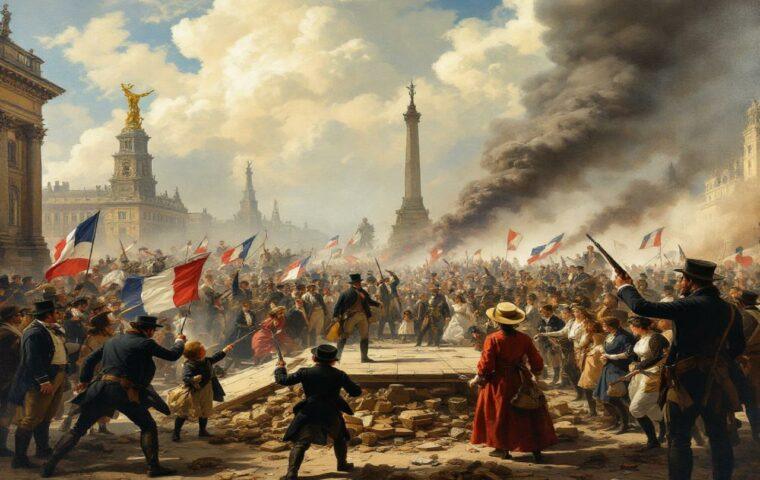
The French Revolution marks a brutal turning point. In 1792, the monarchy was abolished and Louis XVI guillotined. Yet, as early as 1814, the Congress of Vienna restored the Bourbons, not in their full splendor, but in the form of a constitutional monarchy. If history could stop there, the truth is that between 1814 and 1830, then in 1870, the dynasty jostled against an increasingly political public opinion.
This alternation of abdications, ephemeral returns, and growing concessions to the Declaration of Rights illustrates extraordinary resilience. Rather than disappearing, the royal figure adapted, sometimes masking its real power under a symbolic veneer to better come back stronger.
Monarchical Resilience in Russia
The February and then October 1917 revolutions swept away tsarism in a few months. Yet, the very idea of supreme power never disappeared, even under Lenin and then Stalin. During the patriotic war of 1941, history tells us that many peasants still prayed for the imperial family. This shows how the legend of the tsar, even distorted by Soviet propaganda, retained its power of attraction.
After 1991, Russia did not question all forms of verticality. The maintenance of a strong presidency, sometimes compared to a “modern monarch,” reveals how certain legal and symbolic models remain enduring.
Contemporary Lessons
In the 21st century, most former European monarchies have chosen parliamentary or constitutional monarchy, reducing the monarch to an essentially symbolic role. Yet, through ceremonies, commemorations, and diplomatic interventions, these institutions retain a popular trust capital often superior to that of elected politicians.
One might think that globalization and the rise of populism will definitively bury all forms of royalty. In reality, the monarchy is reinventing itself: support for sustainable development, humanitarian commitments, institutional projects linked to youth. The icing on the cake? The image of a “monarch” turned non-partisan ambassador, capable of transcending divisions.
In Brief
⚔️ Three major tactics (co-optation, symbolic reforms, religious support) are found in most of the revolutions studied.
🤝 Institutional compromises, far from weakening royal legitimacy, have often served as cement for a new era of stability.
👑 Even today, the monarchical heritage persists in the shadow of modernity, relying more on soft power than on direct coercion.
FAQ
How was the monarchy able to survive the French Revolution?
By yielding on key points (constitutional charter, limitation of powers) and embodying a bulwark against post-revolutionary chaos, the monarchy regained renewed legitimacy as early as the Restoration.
Why has the British parliamentary monarchy remained stable?
Because it managed to integrate Parliament into its functioning, abandoning the idea of absolute power without disappearing: it became the symbolic heart of a peaceful United Kingdom.
What role did the Church play in the survival of the thrones?
Religious institutions offered a moral discourse favorable to the monarchy, proposing a model of sacred continuity and legitimizing concessions as a “lesser evil” in the face of anarchy.
Does the monarchy have a future in a democratic world?
Yes, provided it focuses on diplomacy, social cohesion, and civic engagement. Many modern courts are redirecting their function towards humanitarian efforts and sustainable development.
{
“@context”: “https://schema.org”,
“@type”: “WebPage”,
“about”: {
“@type”: “Thing”,
“name”: “Survival of the monarchy after the revolutions”
},
“keywords”: [“monarchy”, “revolution”, “resilience”, “constitutional”, “history”]
}
{
“@context”: “https://schema.org”,
“@type”: “Article”,
“headline”: “Revelations: how the monarchy survived the revolutions”,
“description”: “Analysis of the strategies and adaptations that allowed European monarchies to endure despite major revolutionary upheavals.”,
“keywords”: [“monarchy”, “revolution”, “adaptation”, “charter”, “resilience”],
“mainEntity”: {
“@type”: “FAQPage”,
“mainEntity”: [
{
“@type”: “Question”,
“name”: “How was the monarchy able to survive the French Revolution?”,
“acceptedAnswer”: {
“@type”: “Answer”,
“text”: “By conceding on key points (constitutional charter, limitation of powers) and embodying a bulwark against post-revolutionary chaos, the monarchy regained renewed legitimacy as early as the Restoration.”
}
},
{
“@type”: “Question”,
“name”: “Why has the British parliamentary monarchy remained stable?”,
“acceptedAnswer”: {
“@type”: “Answer”,
“text”: “Because it managed to integrate Parliament into its functioning, abandoning the idea of absolute power without disappearing: it became the symbolic heart of a peaceful United Kingdom.”
}
},
{
“@type”: “Question”,
“name”: “What role did the Church play in the survival of the thrones?”,
“acceptedAnswer”: {
“@type”: “Answer”,
“text”: “Religious institutions offered a moral discourse favorable to the monarchy, proposing a model of sacred continuity and legitimizing concessions as a “lesser evil” in the face of anarchy.”
}
},
{
“@type”: “Question”,
“name”: “Does the monarchy have a future in a democratic world?”,
“acceptedAnswer”: {
“@type”: “Answer”,
“text”: “Yes, provided it focuses on diplomacy, social cohesion, and civic engagement. Many modern courts are redirecting their function towards humanitarian efforts and sustainable development.”
}
}
]
}
}