
Why This Campsite Fascinates So Much in France: What Makes It Truly Unique
The unusual camping in France is no longer just a passing trend hidden in a corner of a catalog. When a place generates so much buzz, it’s not just because it features a cabin or a caravan: it’s because it reinvents the way to spend nature holidays, with a genuine experiential approach.

The subject deserves more than a marketing superlative. What fascinates here is the combination of a setting, accommodation, and atmosphere that give the impression of having left the routine without giving up comfort. In other words, you don’t just come to sleep outside: you come to live a setting.
And that’s exactly where the difference lies. In an increasingly competitive market of original camping, this type of place stands out when it manages to align the landscape, design, and service. The visitor doesn’t buy a bed. They buy a meaningful break.
🌿 Unusual camping stands out by offering a more immersive experience than classic camping.
🏡 Its appeal comes from the trio setting + accommodation + comfort, not just a simple “wow” effect.
💶 Prices vary greatly depending on location, season, and level of equipment.
✨ When the setting and services are coherent, the stay becomes much more memorable.
Sommaire
Why does this campsite attract so many travelers?
Because it doesn’t just sell atypical accommodation, it sells a feeling of escape. The visitor feels like they are stepping out of the usual framework without going through a standardized hotel, and this feeling is hugely important in experiential tourism. The place becomes a story: you imagine yourself there even before arriving.
An unusual campsite fascinates when it doesn’t just sell an original roof, but a coherent break. The visitor pays for a setting, chosen comfort, and a sense of escape that classic camping doesn’t always activate at the same level.
A concept designed as an experience
The real strength of exceptional camping is its overall logic. It doesn’t just juxtapose pitches and a few services: it builds an atmosphere. Every detail counts, from arrival to movement between common areas. When everything flows smoothly, the stay feels simpler, therefore more enjoyable, and originality shifts from a gimmick to real added value.
On the ground, it is observed that the most successful stays are those where the accommodation is not disconnected from the rest of the site. An agent observing this type of place often notes that campers remember less the size of the plot than the coherence of the whole: view, privacy, access, light, and the impression of being “elsewhere” without being cut off from comfort.
It is observed on site that the most convincing stays are those where the accommodation, paths, reception, and shared spaces tell the same story.
A family arriving in spring often says they remember the general atmosphere more than the technical details of the lodging.
A setting that plays a central role
The setting is not a bonus; it is part of the product. An unusual campsite by the water, on the edge of a forest, or at the foot of a marked relief does not offer the same interpretation of the stay. The landscape acts as an emotional amplifier: it heightens the perception of calm, isolation, and disconnection.
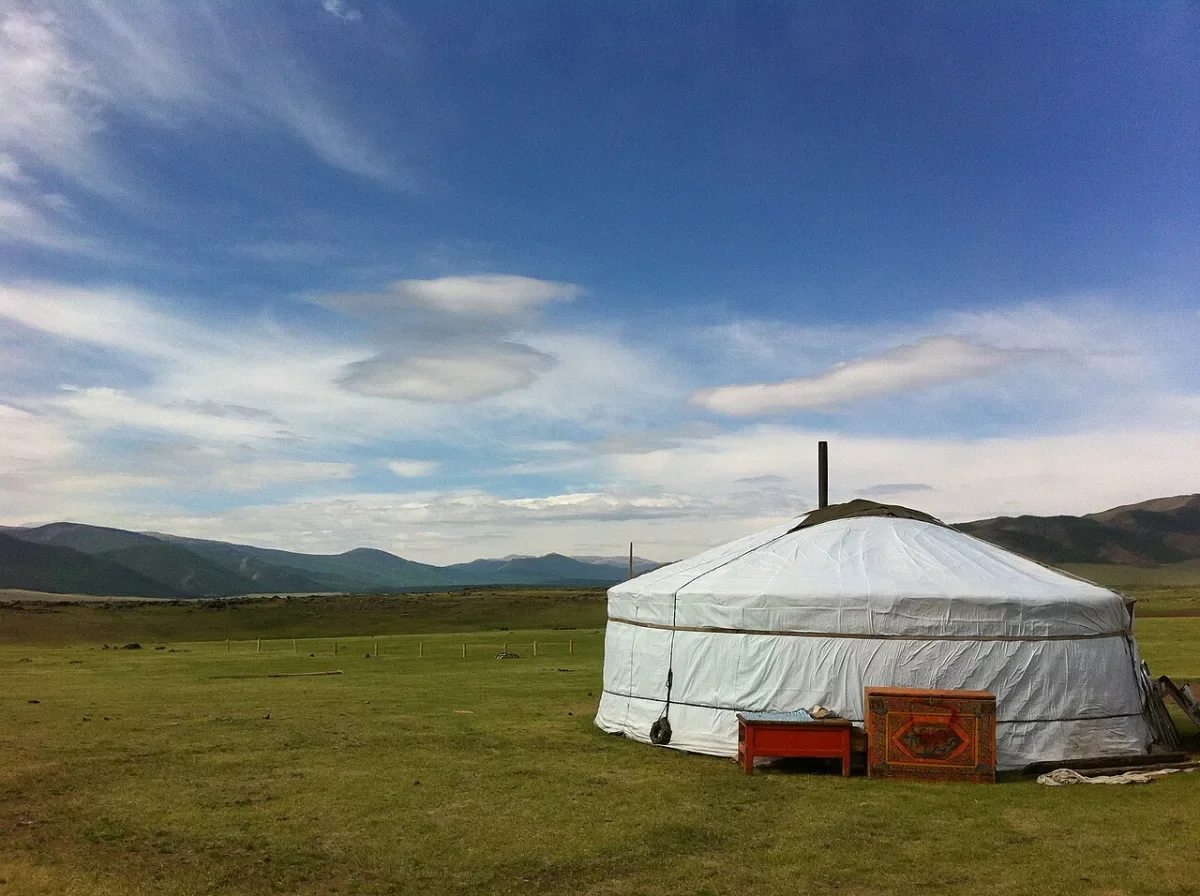
That is also why some campsites quickly become benchmarks. The offer of unusual camping in France is not only based on the volume of facilities but on their integration into the site. When the trees, trails, viewpoints, and accommodations seem to interact with each other, the whole appears rarer. And this feeling of rarity, in tourism, is worth gold.
Accommodations that are part of the story
The formats offered say a lot about the positioning. According to Flower Campings, the offer of unusual accommodations covers 146 campsites in France, with treehouses, caravans, Airstream trailers, tipis, and wine barrel lodgings. This is not trivial: each format tells a different story and attracts a different type of traveler.
- The treehouse plays the card of disconnection and a return to childhood.
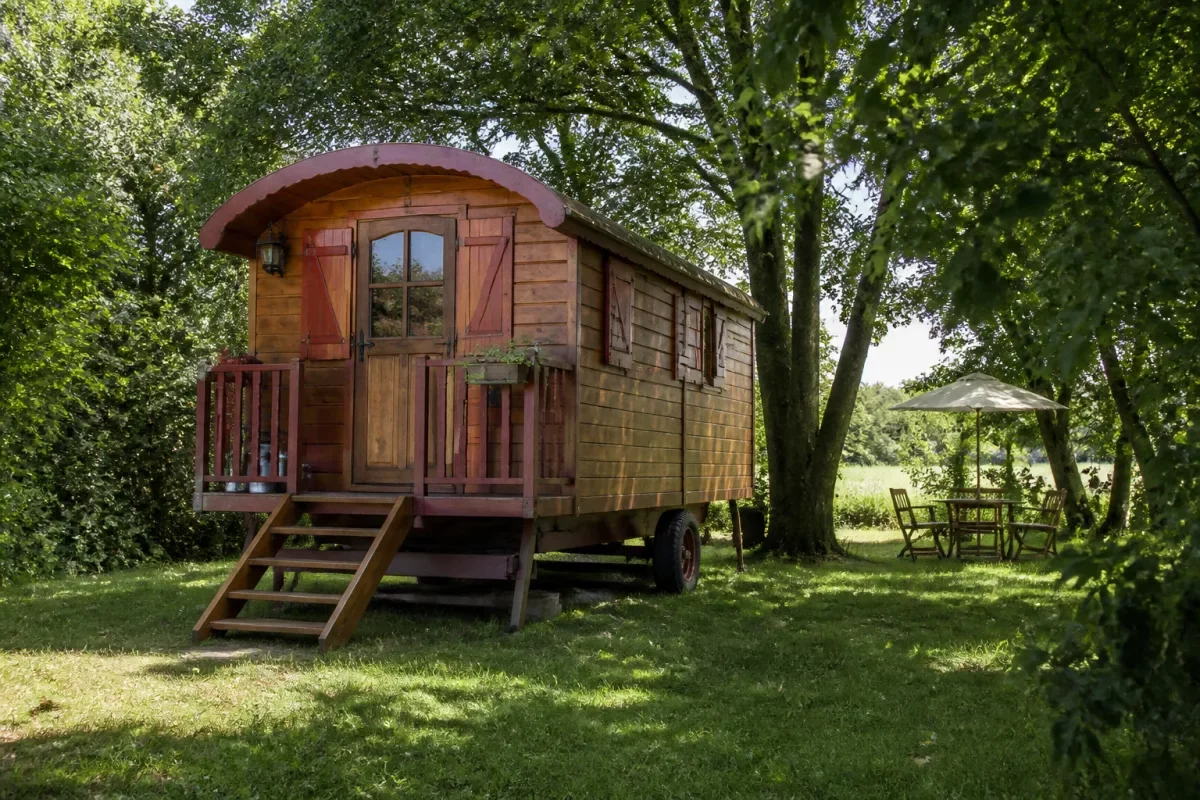
- The caravan evokes nomadic travel and a form of gentle freedom.
- The tipi creates a more raw, adventurous, often family-oriented imagination.
- The Airstream brings a retro and very photogenic touch.
- The converted wine barrel or repurposed lodging intrigues by its uniqueness.
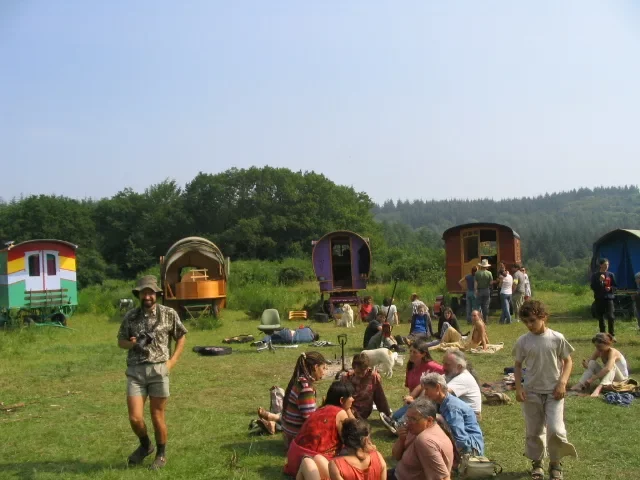
Joking aside, success often comes from there: the accommodation is no longer just a place to sleep, it becomes an object of desire. And as soon as an accommodation starts to be photographed, shared, told, and compared, it crosses a threshold. The unusual campsite then becomes a unique place in France in the minds of travelers, even when the offer remains rational and well thought out.
How does this campsite compare to a classic campsite?
The difference is not only aesthetic. A classic campsite primarily responds to a practical accommodation logic, whereas the unusual campsite adds a layer of storytelling, design, and emotion. This extra layer changes everything: it modifies the way of booking, arriving on site, consuming services, and leaving with a stronger memory.
The real difference with a classic campsite lies in the trade-off: less standardization, more identity. When the accommodation, landscape, and services respond to each other, the stay becomes memorable, which explains much of the appeal of unusual camping in France.
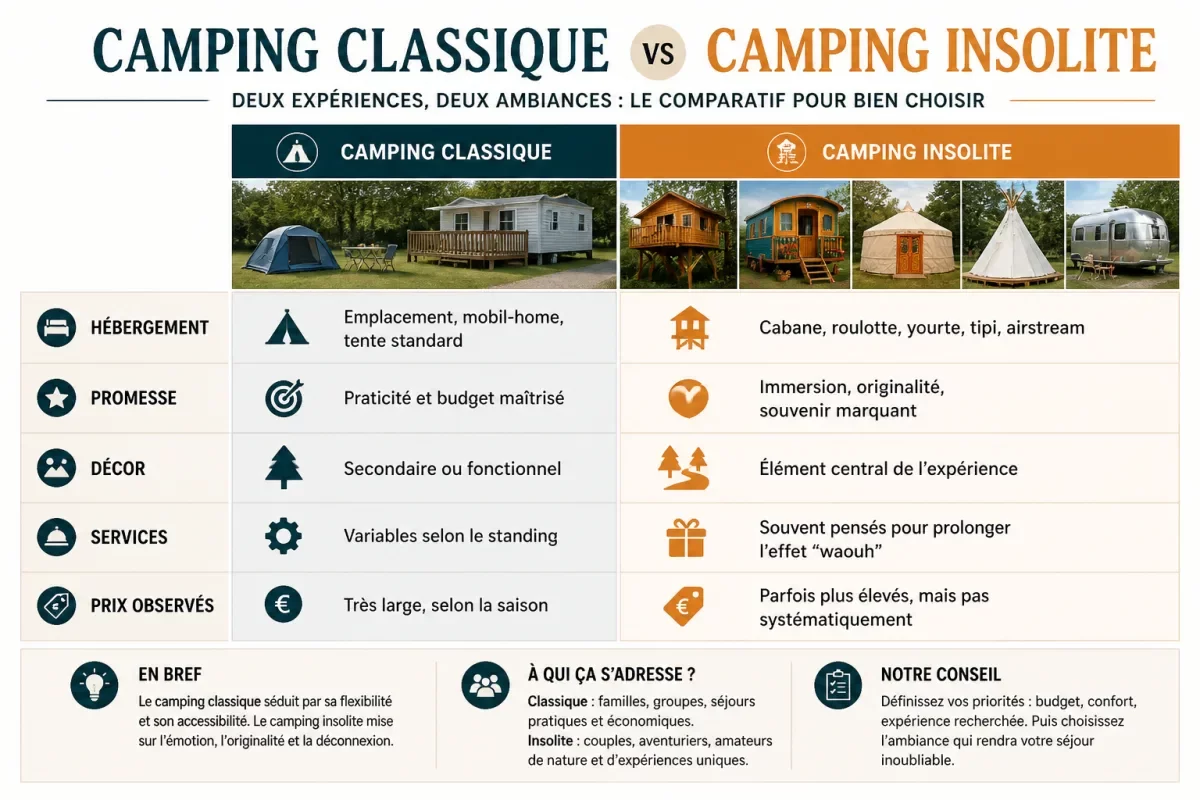
| Criterion | Classic campsite | Unusual campsite |
|---|---|---|
| Accommodation | Pitch, mobile home, standard tent | Cabin, caravan, yurt, tipi, Airstream |
| Promise | Practicality and controlled budget | Immersion, originality, memorable souvenir |
| Decor | Secondary or functional | Central element of the experience |
| Services | Variable according to the level | Often designed to extend the “wow” effect |
| Observed prices | Very broad, depending on the season | Sometimes higher, but not systematically |
This table summarizes the shift well. The unusual campsite does not necessarily seek to become more “luxurious” in the classic sense. It mainly aims to be more unique. In practice, this can range from a simple family address to a more upscale version, as seen in several specialized selections and among market players.
The real luxury here is not the size of the pool: it is the feeling of switching to a different rhythm.
This logic also explains why sites like CampingQualité highlight unusual campsites with filters by services, location, or aids such as VACAF and ANCV vouchers. The need is not only to dream, but also to choose wisely.
And for those who want to compare more addresses in the same spirit, this selection of 10 exotic addresses allows you to see how the market positions itself between nature, comfort, and destination storytelling.
What verifiable criteria justify its reputation?
The reputation of an exceptional campsite does not rely solely on word of mouth. It is verified through services, observed prices, variety of accommodations, level of comfort, and the immediate environment. In other words, you need to look at what is visible, measurable, and comparable, not just the aesthetics of the photos.
The segment is therefore not marginal. It is based on a diffuse offer, spread across several regions, with different positioning. For example, there is Camping Le Platin in Nouvelle-Aquitaine, listed at €147 for a 2-person pitch at a given period in September 2026, or Camping Le Moulin in the Southwest starting from €175 per week in June.
We can also mention Camping Le Petit Bois near Vallon-Pont-d’Arc, listed from €115.50 per week with pool and restaurant, Camping De Vaubarlet in Haute-Loire from €154 in a natural setting with river and aquatic area, or Camping Le Ventoulou in the Lot from €161, with infinity pool and view over the Dordogne valley.
These figures say something important: unusual camping is not automatically overpriced, but it becomes more expensive as the setting, location, and services increase in quality. This is where comparative reading is useful. The same keyword can cover very different realities, from simple stays to high-end camping.
What concerns positioning and staging
One must also accept a part of storytelling. Some campsites are very good at telling their uniqueness, with a strong visual identity, a compact offer, and photos that entice. This is not a flaw in itself. The problem only begins when the visual promise exceeds the reality of the stay.
An unusual campsite succeeds when the setting, comfort, and service tell the same story.
Hence the interest in looking at consistent customer reviews, the density of services, ease of access, and clarity of facilities. The ADEME more broadly reminds us of the importance of sober and well-organized tourism: a great idea for a stay never replaces poorly thought-out logistics.
What limits should you know before booking?
Unusual camping fascinates, yes, but it is not suitable for everyone. Its strength is also its limit: by betting on originality, it sometimes requires more flexibility, less interior space, or a comfort level less “neutral” than a standard accommodation. Therefore, you must book with full knowledge of the facts, not just on a visual crush.
- Families with young children must check safety, access, and circulation on the site.
- Travelers very sensitive to comfort should check heating, bedding, sanitary facilities, and privacy.
- Off-season stays require verifying insulation, service availability, and local weather.
- People without a car need to closely examine the accessibility of transport and shops.
The right timing matters as much as the right place. In high season, the “unique place in France” effect can be diluted by attendance. Conversely, in spring or early autumn, unusual camping can regain all its appeal: more calm, often better light, and a more believable sense of isolation.
Camping sites from the Sites et Paysages family, for example, often emphasize nature and atypical accommodations, such as Camping De Martinière in Isère starting at €140 per week, in the heart of the Chartreuse Natural Park. This type of address clearly shows that value is not just about the number of stars: it also depends on the coherence of the setting.
According to the benchmarks of the INSEE on tourism and outdoor accommodation, travelers’ choices remain very sensitive to the period, location, and type of offer. This exactly explains the rise of unusual camping in France: it meets a demand for experience, but with concrete conditions to be well framed.
How to choose an original campsite without making a mistake?
The right choice depends less on the word “unusual” than on what you expect from the stay. If you are looking for a true immersion, prioritize the setting and privacy. If you want a comfortable break, look at the services. If you want a family compromise, seek a balance between originality, accessibility, and on-site activities.
To choose well, you need to cross three filters: accommodation, environment, and services. A successful original campsite is not necessarily the most spectacular, but the one that truly matches your way of traveling and your level of expectation.
- Check the type of accommodation: cabin, caravan, yurt, furnished tent, wine barrel.
- Check the environment: sea, mountain, countryside, river, forest.
- Look at useful services: pool, restaurant, grocery store, children’s activities.
- Compare the real budget: cleaning, linen, options, season, length of stay.
- Evaluate access: car needed or not, nearby station, parking, paths.
In practice, the most relevant unusual camping in France is not necessarily the most photogenic. It is the one that turns the stay into a coherent memory, without forcing the staging. And maybe that is what explains its lasting fascination: it speaks to our desire for nature, but also to our need for a story.
Unusual camping has therefore taken a special place in the French tourist landscape. It does not replace classic camping; it shifts it. It says something very current about holidays: we no longer just look for a roof, we look for an experience that has style, charm, and a true memory.
To remember
🌲 Unusual camping fascinates because it transforms a simple stay into a complete experience.
🏕️ Its originality lies as much in the setting as in the type of accommodation offered.
💡 Comfort, services, and site coherence weigh as much as the visual effect.
📍 Prices vary greatly depending on the season, region, and level of equipment.
🎯 The best choice remains the one that matches your traveler profile.
FAQ
What is the difference between unusual camping and glamping?
Glamping focuses mainly on comfort and upgrading the experience, while unusual camping places more emphasis on the originality of the accommodation and the setting. In practice, the two often overlap, but glamping is generally closer to a “premium” version of outdoor living.
Is unusual camping necessarily more expensive?
Not necessarily. The examples found range from about €115.50 per week to €175 depending on the site and the period, and some rates start at €147 for two people on a specific date. What drives the price up is mainly the location, the season, and the added services.
Is this type of stay suitable for a family?
Yes, provided you check the space, safety, and equipment. Families often appreciate the change of scenery, but you need to look at access to sanitary facilities, bedding, circulation on the site, and available activities. A good unusual campsite knows how to maintain comfort without ruining the adventure.
Should you book well in advance?
Often yes, especially for the most unique accommodations or school holiday periods. Since the offer remains limited by nature, the most sought-after lodgings go quickly. If you are targeting a specific place, it is better to plan ahead rather than rely on last-minute availability.
How to avoid disappointment upon arrival?
You need to cross-check reviews, photos, actual services, and the exact location. A campsite can look great in pictures but be average in comfort, or vice versa. The right approach is to verify what is included, what is optional, and what is mainly for show.