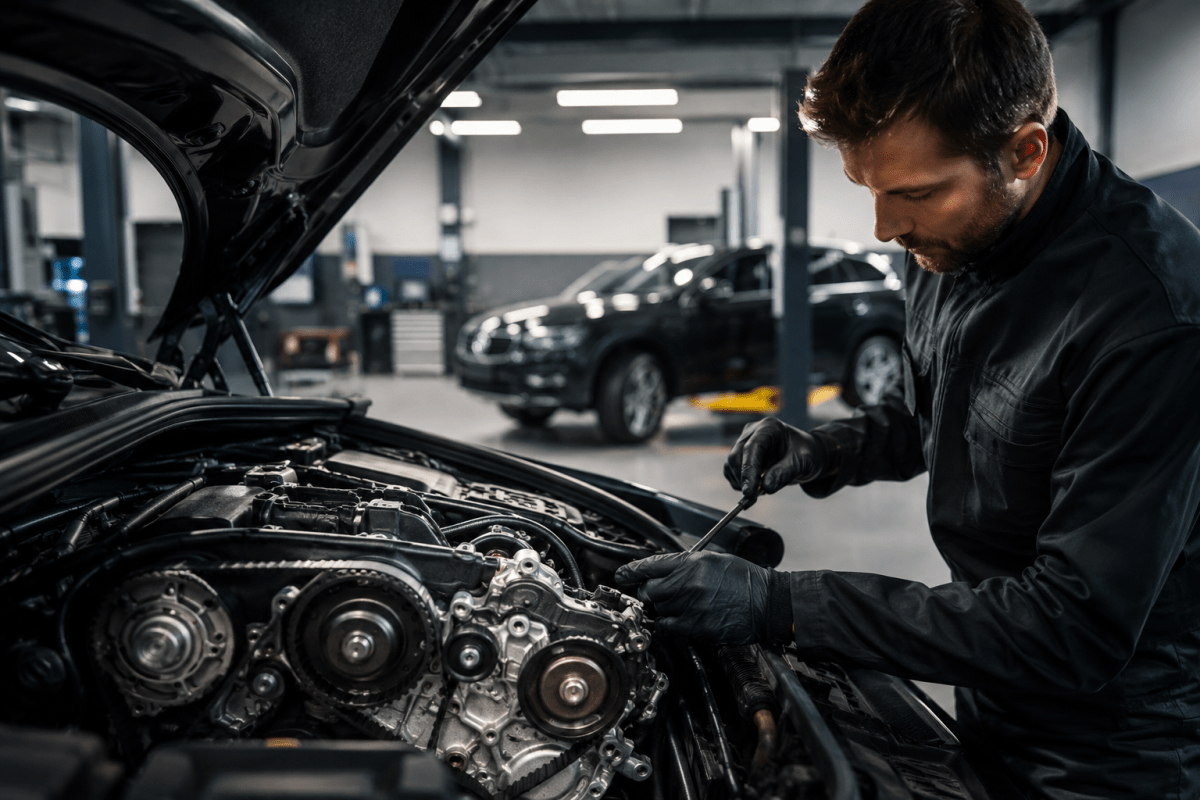
Respecting the replacement interval of a timing belt avoids one of the most costly engine failures for a motorist. A well-timed timing belt maintenance protects the internal synchronization of the engine, limits the risk of engine failure, and ensures the daily use of the vehicle is safe. The real question is not just “at how many kilometers?”, but at what exact time according to the maintenance logbook, the age of the car, its history, and its usage conditions. When doubt arises, it is better to check early than to wait for the noise that signals too late.
Sommaire
Quick verdict before making an appointment
Clear verdict: postponing the replacement of a timing belt is not trivial. On a vehicle equipped with a belt and not a chain, the deadline must be treated as a priority engine maintenance. In most cases, the observed benchmarks range around 80,000 to 160,000 km or 5 to 10 years, but the only reference that counts remains the data specified for the exact model. Important note: 9.6/10. Recommended for: daily drivers, used car buyers, new drivers, families, and owners of a vehicle approaching a major service.
- Key takeaway: the date matters as much as the mileage.
- Major risk: belt breakage and internal engine damage.
- Good practice: check the maintenance log before a long trip.
- Sensitive case: used car without a recent timing belt invoice.
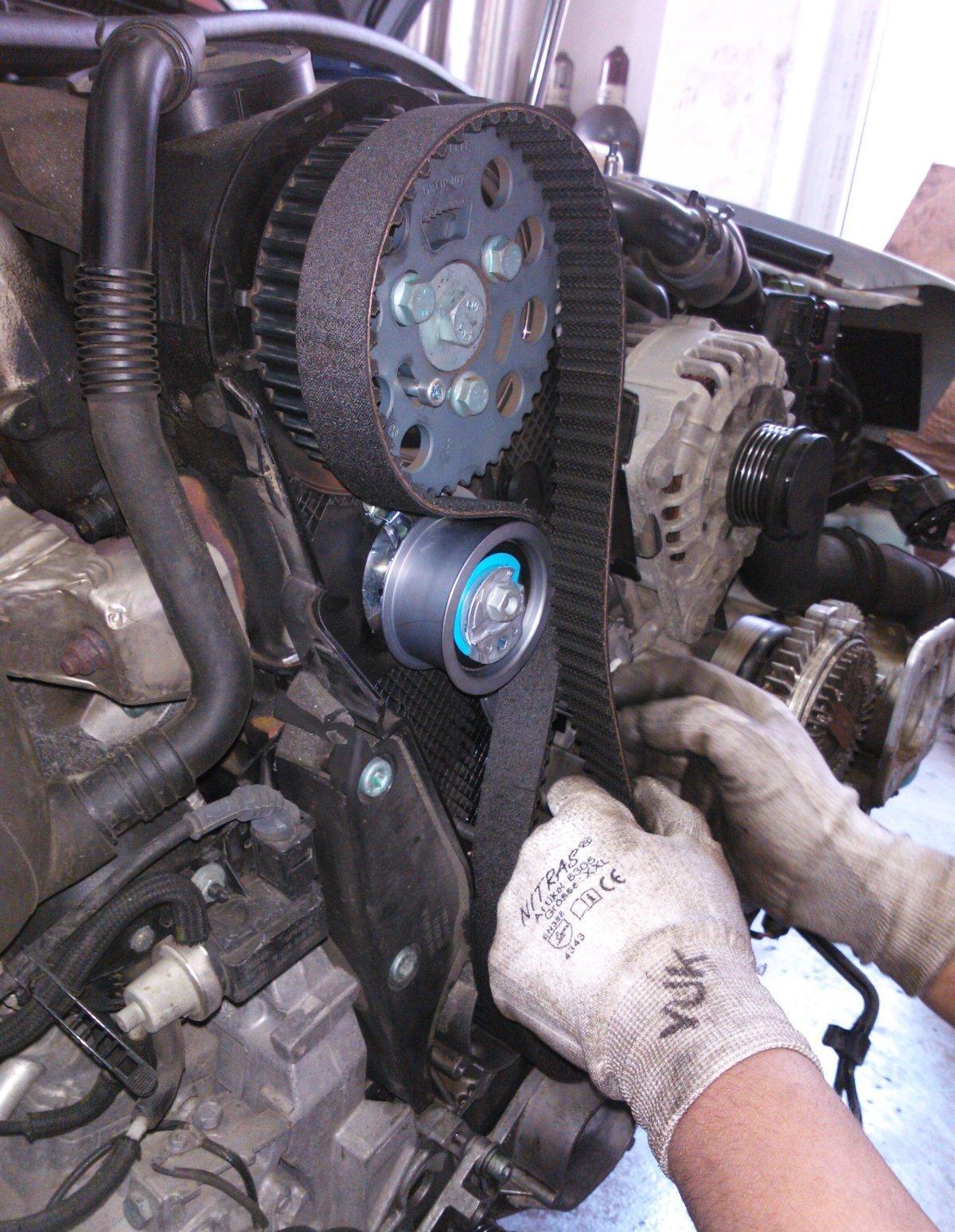
Before choosing a workshop, requesting a timing belt quote allows you to verify what will actually be replaced: belt, tensioner pulleys, water pump, accessory belt, and coolant depending on the setup. This is often where the quality of the intervention is decided, much more than by a simple quick comparison between two displayed prices.
“Make sure to respect the timing belt replacement intervals of your vehicle to avoid engine failure.”
AD, timing belt guide
Why the correct interval is non-negotiable
The timing system coordinates the movement of the valves and pistons. As long as this synchronization remains precise, the engine runs normally. When a belt ages, stretches, cracks, or skips a tooth, the mechanical balance can shift in a fraction of a second. That’s why a maintenance delay is not a minor oversight: it is a direct risk to the most expensive component of the vehicle.
Another common mistake is to believe that a car that drives little can wait. In reality, aging over time weighs as much as mileage. Prolonged parking, temperature variations, repeated urban trips, humidity, long immobilization: all these sometimes accelerate the deterioration of peripheral components. A low-mileage car can therefore reach its timing belt deadline by age before it has “driven much.”
The maintenance log remains the basis, but its interpretation requires some method. You must check the exact engine, the year, sometimes the generation of the engine block, and especially the invoice history. On the used car market, a vague mention like “service done” is not enough. For such a structural operation, proof of timing kit replacement is needed, not just a general idea of maintenance.
When doubt persists, a visit to a garage provides a more reliable answer than a rough estimate. A professional can confirm if the vehicle is equipped with a belt or a chain, recall the expected interval, and check the engine environment. This approach avoids many mistakes, especially on similar models whose intervals vary from one version to another.

The most useful benchmarks
General data provide a practical framework, without replacing the manufacturer’s recommendation. Maintenance networks often recall two basic ranges: 120,000 to 160,000 km for many models, with some cases dropping to 80,000 km or increasing depending on the engine, and a time benchmark of 5 to 10 years. As soon as a vehicle approaches these thresholds, the reasonable decision is to schedule a check, not to extend “a few more months” without visibility.
| Situation | Useful benchmark | Recommended decision |
|---|---|---|
| Up-to-date logbook | Follow the manufacturer’s deadline | Plan before the threshold |
| Used car without invoice | Incomplete history | Have it checked quickly |
| Low mileage | High vehicle age | Check the age limit |
| Intensive use | City, heat, frequent stops | Avoid waiting until the maximum |
| Chain engine | Different maintenance logic | Confirm the exact setup |
What you really risk in case of negligence
The most feared scenario remains belt breakage. When it breaks, the engine synchronization disappears. Depending on the block architecture, the valves can hit the pistons, bend, break, or damage other internal parts. The vehicle often stops without usable warning, and the bill then shifts from planned maintenance to a heavy car repair, sometimes disproportionate compared to the residual value of the car.
The danger is not limited to a sudden failure. A skipped tooth, a worn tensioner, a failing water pump, or an accessory belt that disrupts the system can cause progressive malfunction. Unusual noises, leaks, overheating, irregular idle, more hesitant start: none of these signs alone is enough to “diagnose” the timing system, but their coexistence should prompt a vehicle check without delay.
Delaying maintenance also costs time. An anticipated intervention is scheduled in a workshop, by appointment, with planned immobilization. A failure suffered interrupts daily life, blocks commutes, requires towing, and complicates resale. Many motorists underestimate this indirect cost, even though it weighs as much as the mechanical bill itself. If the situation escalates to a crash or collision, knowing the steps to follow after a car accident prevents adding improvisation to stress.
- Breakage: sudden engine stop.
- Misalignment: altered synchronization, degraded performance.
- Overheating: possible if the water pump is affected.
- Immobilization: vehicle unusable without repair.
“The timing belt is essential for the engine. Without it, the engine destroys itself under its own action.”
AD, timing belt service page
In other words, the right time is not when the belt “shows signs,” but when the interval requires it. This is often misunderstood. A belt may look fine visually yet be close to its service limit. Preventive maintenance is not a mechanical luxury: it is the normal way to protect an engine.
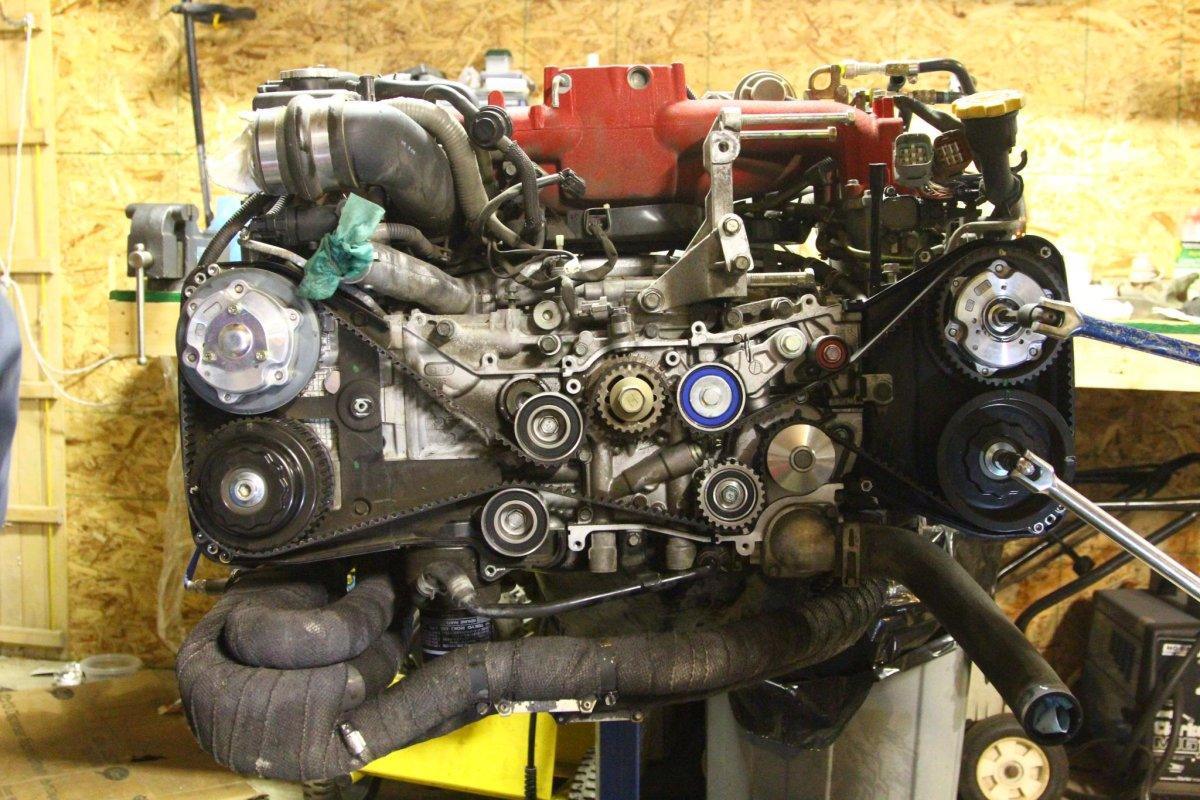
How to know when to replace the timing system
The first reference to consult remains the manufacturer’s manual or the maintenance logbook. It sets the replacement interval for the exact vehicle configuration. Between two engines of the same range, the difference can be clear. An approximate reading from a forum or a generic sheet does not replace this document, especially when the car has undergone technical evolutions over the years.
The second reference is the actual history. A detailed invoice indicating the kit replacement, date, mileage, and the garage that performed the work is worth much more than an oral promise at the time of purchase. On a used vehicle, this check should be part of the basic reflexes just like the technical inspection, tire condition, or service history.
The third reference is usage. A vehicle that tows, often drives in the city, undergoes many cold starts, or remains immobilized for long periods does not offer the same aging conditions as a car that regularly drives on the road. In real life, it is therefore not only about mileage but about a usage context that helps the garage assess the urgency of intervention.
Signs that should prompt action
A worn timing system does not always “warn” clearly. Some signals still deserve a quick check: abnormal noises on the engine side, leak marks, worn accessory belt, more difficult start, overheating, or maintenance history too old to be reassuring. A cautious motorist does not try to diagnose alone; they mainly seek not to let a technical doubt linger.
| Checked element | Why it’s related | Consequence if ignored |
|---|---|---|
| Belt | Wear, aging, tension | Misalignment or breakage |
| Pulleys | Guidance and tension of the kit | Noise, play, failure |
| Water pump | Often replaced at the same time | Leak or overheating |
| Accessory belt | Environment of the intervention | Untreated wear |
| Coolant | Frequent purge during replacement | Incomplete maintenance |
When an intervention is decided, the immobilization time is generally compatible with normal vehicle use. Replacing a timing belt often requires 2 to 5 hours, depending on mechanical accessibility and workshop experience. It is therefore not an operation to postpone for months to save half a day: anticipation actually simplifies the organization.
Why the AD brand often comes up in this topic
When talking about multi-brand garages and car maintenance, the AD brand often comes up because it covers common needs as well as more technical interventions on vehicles of different brands. The network belongs to the Autodistribution universe and brings together mechanics and bodywork trades. For a motorist, this changes the service reading: the same network can support both scheduled maintenance and more complex repairs.
Another concrete point: AD presents itself as the leading network of independent multi-brand repairers, with more than 2,300 garages across France. For a driver, this mainly means a density of contact points useful when making an appointment, obtaining a quote, or having a recently purchased vehicle checked. This network coverage matters a lot for a service like timing belt replacement, where workshop availability and clarity of handling weigh heavily in the decision.
The network also highlights two elements often sought by motorists: manufacturer’s warranty preserved when recommendations are followed, and interventions guaranteed 24 months parts and labor. For a structural mechanical operation, these benchmarks reassure. They do not replace the need to read the quote line by line, but they provide a clearer framework when entrusting one’s vehicle.
- Multi-brand: useful for comparing maintenance of a varied family fleet.
- Mechanics and bodywork: broader vehicle care.
- Extensive network: more proximity for workshop appointments.
- 24-month warranty: parts and labor included.
“All interventions are guaranteed 24 months parts and labor.”
AD, network commitments
This positioning remains consistent with the nature of the service. Timing belt replacement is not an impulse purchase: it is a maintenance decision that requires a structured workshop, a clear quote, parts adapted to the vehicle, and clean execution. Within this framework, the AD brand naturally fits into the conversation around correct intervals and risks of postponement.
Method, budget benchmarks, and limits to keep in mind
To write useful content on the replacement interval, several levels of information must be crossed: general benchmarks observed in maintenance guides, commitments announced by the network, the mechanical logic of the timing system, and concrete cases encountered on used vehicles. This method helps avoid two pitfalls: the too vague rule, which is useless, and the false precision, which would make one believe a single interval fits all engines.
On the budgetary level, amounts vary greatly depending on the model, engine accessibility, and exact content of the intervention. In the ranges displayed by networks, one often sees ranges from €250 to €1,000, with AD announcing a starting price around €323.24 for certain vehicles. The right way to read this figure is as an indicative base, never as a universal promise. What counts, again, is the detail of the replaced kit and the fit to the vehicle. When the car still holds real market value, this expense also deserves to be put in perspective with the chosen coverage level, for example between a third-party or comprehensive car insurance.
The main limit of any advice article on timing systems lies in the variety of setups. A small gasoline car, a family diesel, a recent SUV, or a ten-year-old used car do not offer the same deadlines nor the same intervention cost. A serious guide must therefore direct the reader towards the correct check rather than sell a generic certainty. On this subject, caution is a quality, not a lack of answer.
The next step is simple: take out the maintenance log, look at the date of the last replacement, check the current mileage, then request a detailed quote if the deadline approaches or if the history is missing. This is the most logical decision to protect an engine, keep a vehicle reliable, and avoid a scheduled maintenance turning into a forced repair.
FAQ on the timing belt and garage maintenance
At what mileage should a timing belt be replaced?
There is no single mileage valid for all cars. The most frequent benchmarks are between 80,000 and 160,000 km, with many cases around 120,000 to 160,000 km. The decisive data remains that of the manufacturer for the exact model.
Does time count as much as kilometers?
Yes. A timing belt also ages with years. A low-mileage vehicle can therefore reach its deadline by age, even if its odometer seems reassuring.
What are the signs of a worn timing system?
There is not always an obvious sign. Abnormal noises, leaks, more difficult start, overheating, or unclear maintenance history should prompt a check in a garage.
Should only the belt be replaced?
In most cases, it is about a timing kit. The intervention often includes the belt, tensioner pulleys, water pump, accessory belt, and coolant purge depending on the setup.
How long does the intervention take?
Replacement generally takes 2 to 5 hours. The duration depends on the vehicle, engine access, and operations performed simultaneously.
Should a used car be checked sooner?
Yes, especially if there is no recent invoice. Without clear proof of the last replacement, the timing system is among the priority points to check after purchase.
Does AD work on multiple brands?
Yes. AD positions itself as a network of independent multi-brand repairers, capable of ensuring routine maintenance and technical interventions on vehicles of different brands.
What does the warranty announced by AD provide?
The network indicates interventions guaranteed 24 months parts and labor. For the motorist, this benchmark provides a clearer framework when validating a quote and entrusting their vehicle.