Context of the Minimum Wage in Europe
Origin and Definition
The Interprofessional Growth Minimum Wage (SMIC) originated in France but was largely inspired by similar initiatives across Europe. It serves as a legal floor to guarantee a minimum income for full-time employees. While some countries opt for calculation formulas indexed to inflation or cost of living, others conduct regular negotiations with social partners.
Ranking Methodology
To establish this 2025 ranking, we centralized data published by national bodies and Eurostat. Monthly amounts were converted into euros and compared to a basket of essential goods, allowing an assessment of their real purchasing power. To demystify these differences and better understand the calculation methods, a guide is available.
2025 Minimum Wage Ranking in Europe
The Top Three Countries
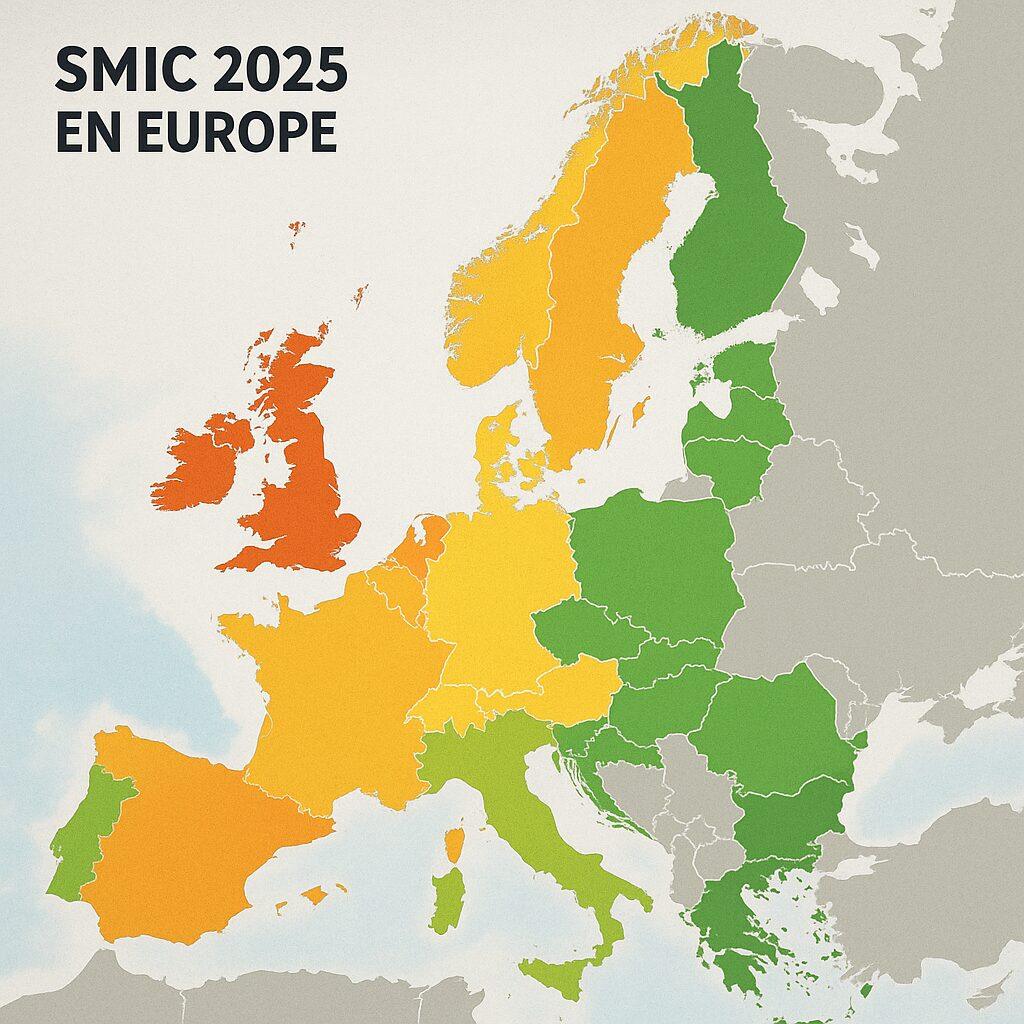
Not surprisingly, Luxembourg retains its position as leader with a gross monthly minimum wage of around €2,400. Belgium comes in second, close to €1,900, while Ireland climbs onto the podium with a minimum wage set at approximately €1,800 per month. These amounts reflect not only a high standard of living but also a strong political will to ensure a safety net for workers.
Intermediate countries
In the middle of the pack, we find Spain (€1,200), Portugal (€900), and Greece (€820). These countries have increased their minimum wage faster than the European average in recent years, without surpassing the symbolic threshold of €1,000. Their strategy often relies on compensatory tax measures to lighten the burden on small businesses.
The bottom of the list
At the lower end of the ranking, several Central and Eastern European countries have a monthly minimum wage between €600 and €700. Bulgaria, for example, caps at €710, while Hungary remains slightly below, around €650. These differences are explained by a lower cost of living, but also by an economic fabric where the informal economy remains significant.
Factors influencing the ranking
- Consumer price index: inflation and rent increases.
- Tax policy: tax relief and hiring incentives.
- Union negotiations: social dialogue more or less structured depending on the country.
- Budget capacity: financial reserves of the state and level of debt.
Impact on purchasing power
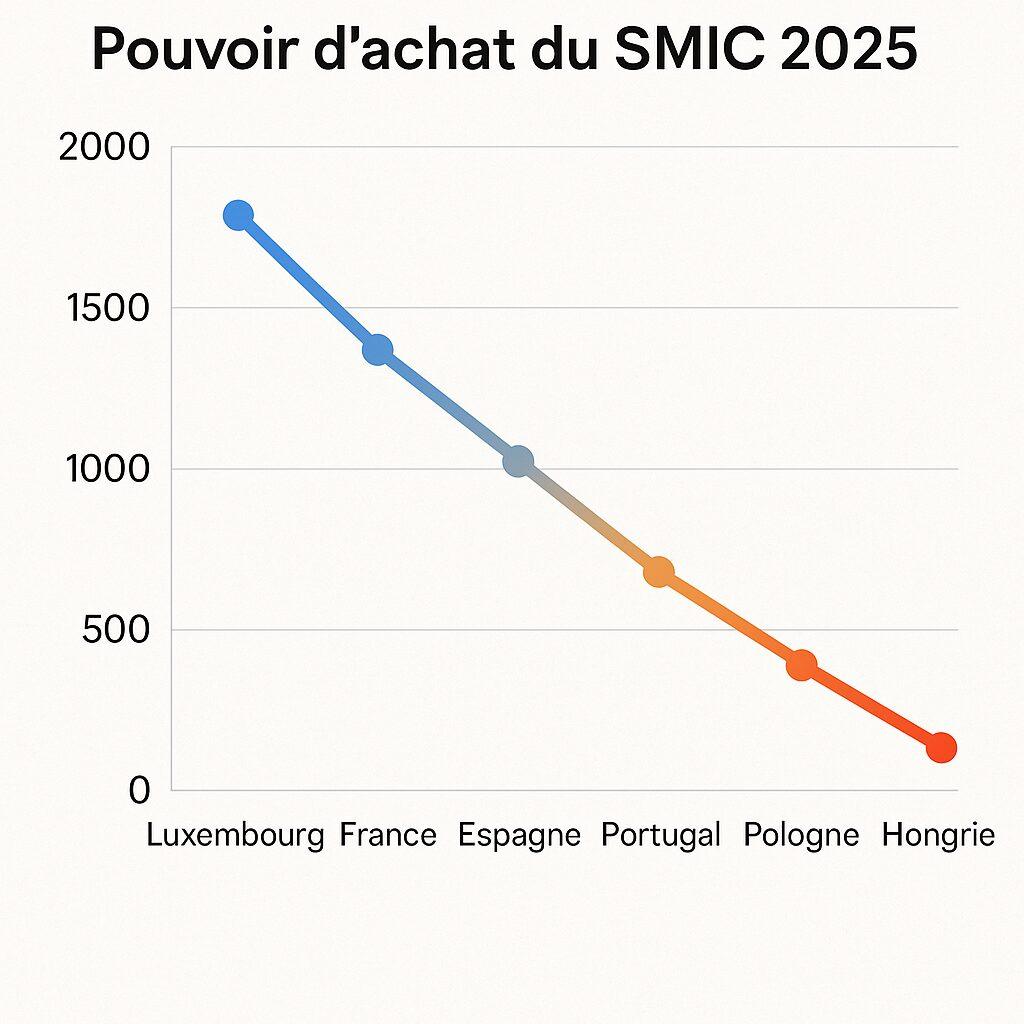
A high minimum wage does not always guarantee better purchasing power. Indeed, in some countries like Denmark or Sweden, mandatory deductions can absorb a significant portion of the gross income. Conversely, in Eastern Europe, a modest minimum wage often suffices to cover basic needs due to a lower cost of living.
Outlook for 2026 and beyond
Several governments have already announced automatic increases indexed to inflation for 2026. There are also discussions about a European minimum wage, intended to harmonize disparities and combat social dumping, without erasing local economic realities. It remains to be seen whether such a measure will come to fruition, as national sovereignty over the minimum wage remains a sensitive issue.
FAQ
- What is the minimum wage in Europe?
- The minimum wage represents the legal minimum salary set by each country to protect workers from excessively low pay.
- How is the minimum wage calculated?
- Depending on the countries, the calculation is based on inflation, cost of living, union negotiations, or a percentage of the national median wage.
- Which countries top the 2025 ranking?
- Luxembourg, Belgium, and Ireland occupy the top three spots respectively, with minimum wages above €1,800.