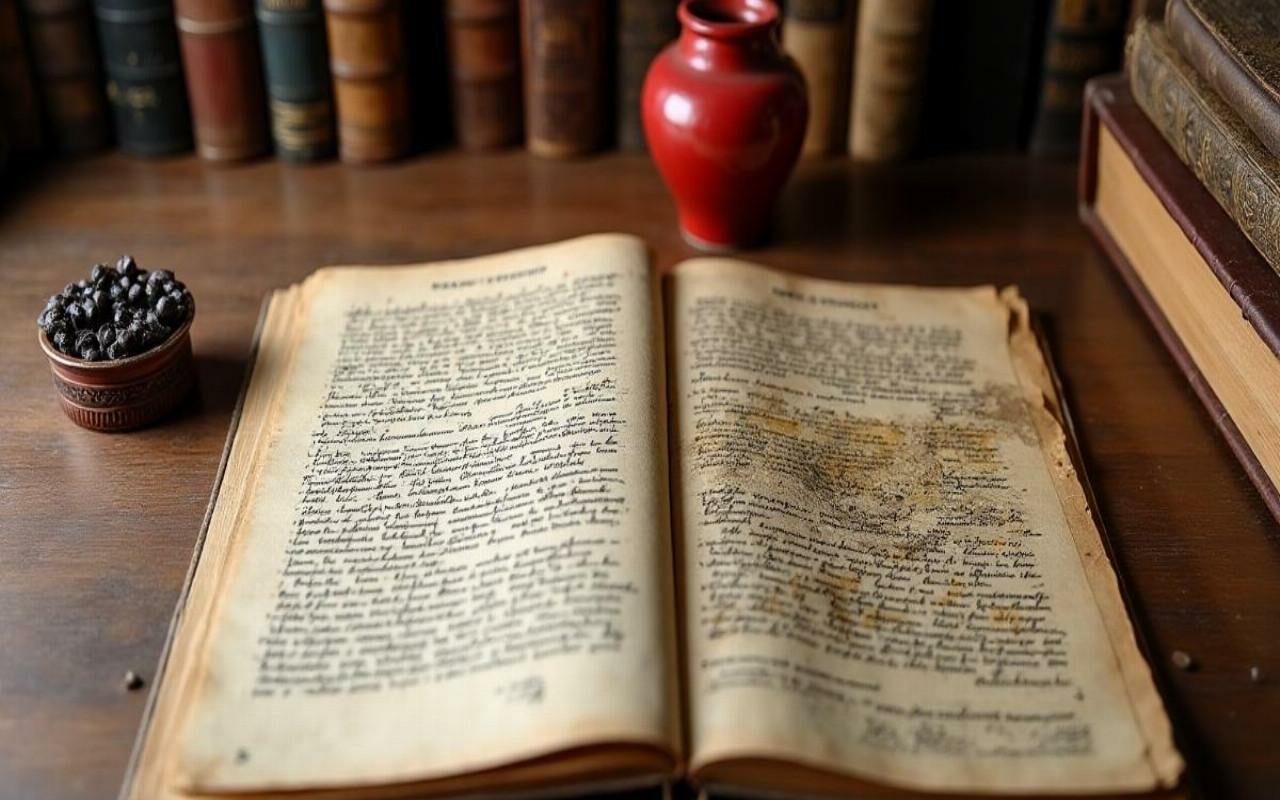
Why search for your noble ancestors?
Beyond genealogical pride, tracing a noble lineage reveals a part of local and social history: you discover how a lordship was passed down, how a matrimonial alliance strengthened a network, or how the Revolution changed the status of families until then protected by their privileges. Understanding these mechanisms also enriches your family story and, more broadly, reconnects with the political and economic memory of France.
However, unlike research on bourgeois or artisan families, the nobility left more scattered traces: privileges recorded in special registers, titles confirmed by letters patent, and sometimes private correspondence files. This specificity requires method and patience, as you must navigate between digitized archives and old unindexed collections.
Getting familiar with historical sources
Before rushing to Ancestry or Geneanet, it is better to map out the archives to consult. The main institutions are divided into two large groups: on one hand, the National Archives in Paris, which hold castle minutes, chancery registers, and letters patent; on the other hand, the Departmental Archives (AD) which gather notarized deeds, seigneurial terriers, and parish registers.
At the same time, local genealogical associations or those specialized in noble history (Genealogical Society of France, French Federation of Genealogy) possess handwritten or printed indexes, sometimes unpublished, which list families of minor and major nobility by provinces.
Step 1: identify the noble title
The different titles and their specificities
One might think that “nobility” is limited to “count” or “baron,” but the hierarchy is more subtle: knights, squires, gentlemen, marquises, dukes, peers… Each bore a precise title, and depending on the era, its mode of transmission varied (by primogeniture or division). For example, a “knight” title was not always hereditary before the 18th century, whereas a marquis almost always retained his rank from generation to generation.
To determine the exact title, prioritize consulting the parish registers at the AD, where signatures often specify “La Mothe de Saint-Rémy, knight lord of…”. The nobility registers (kept by the Chancellery of France) also contain annual lists, consultable at the National Archives under the reference Y/XXX.
Step 2: Explore the digital archives
National Archives online
The National Archives portal offers a search engine covering royal notarial minutes and series O (general administration, chancery). Thanks to PDF indexes, one can identify deposits of letters patent confirming a title. For example, the confirmation of Dupleix’s nobility in 1670 can be found in the files O/1/1264; a note sometimes specifies the year of ennoblement, an essential element to guide your previous research.
Departmental archives online
Each department has its own digital library where you can find:
- Parish registers (civil status before 1792) containing noble signatures.
- Enumeration registers (1665, 1685, 1719) listing lords and noble owners by parish.
- Terriers and compoix (medieval or modern cadastral files).
A comparative table can be useful to help you find your way:
| Department | Key collections | Typical reference |
|---|---|---|
| Seine-et-Marne | Parish registers, compoix 1786 | 3 E |
| Yvelines | Seigneurial terriers, 1665 lists | 4 E |
| Bouches-du-Rhône | Chancellery, royal ordinances | 3 Q |
Step 3: Consult the physical archives
Make an appointment with the services
Many documents exist only in paper form: registers of Provençal nobility, post-mortem inventories kept by 17th-century notaries, pension files granted to officers from noble families. Contact the reading rooms at least three weeks in advance to reserve your references. Also note the specific hours for documents protected by a communication condition (over 100 years old or originating from the chancery).
Prepare your visit
Do not leave without having made a clear list of references, accompanied by photocopies or extracts previously requested if your budget allows. Bring a laptop or tablet to take photos (while respecting the rules), as well as a notebook. If a register is fragile, request a duplicate or a microfilm: some departmental deposits keep a digitized copy available for consultation on site.
Step 4: Draw from reference works
Nobiliary directories and armorials
Several 19th-century directories list noble families: the Almanach de Gotha, La Chesnaye-Desbois’s Dictionary of the Nobility of France, or d’Hozier’s General Armorial. Available in university libraries or partially accessible online, they offer summary genealogies and coats of arms. Always verify their information with primary archives, as these compilations sometimes contain errors linked to oral traditions.
Articles from learned societies and special collections
The Revue nobiliaire regularly publishes monographs on family branches. Regional association bulletins often reveal in-depth studies, for example on corsair nobility or the petty nobility of Gascony. Incorporating these studies into your research will save you valuable time and allow you to cross-check dates and alliances otherwise invisible in official registers.
Step 5: Validate and Cross-Check Each Lead
Accumulating mentions of nobility without contextualizing them can lead to dead ends: homonyms, sales of fiefs, or acts of simple ecclesiastical ennoblement sometimes blur the lineage. For each hypothesis, look for a corroborating document (for example, a marriage sealed before a notary clearly mentioning each party’s rank). If possible, compare signatures and seals, and match them with those published in armorials.
Finally, beware of the “nobility of the robe”: an ennobling office conferred “commoner” nobility, sometimes very different in rights and transmission from an old nobility called “of the sword” (inherited from military service). This nuance often appears in the margins of chancery registers.
Practical Tips and Tricks
- Rigorous organization: centralize your documents in genealogical software (Hérédis, Geneatique) to keep track of sources and dates.
- Bibliographic monitoring: subscribe to the bulletins of the French Genealogical Society or to the social networks of noble circles to learn about the latest discoveries.
- Local collaborations: volunteers from departmental associations often know of forgotten archives (seigneurial account books, family correspondence).
- Beware of false friends: some acts of acknowledgment and enumerations did not exclusively concern the nobility and included commoner owners of fiefs.
Carry the Quest Through to the End
Gathering the pieces of a noble family puzzle requires perseverance and intellectual curiosity. Each recovered document is a piece of the historical mirror reflecting the society of the Ancien Régime. By combining digitization, on-site exploration, and bibliographic research, you will weave a solid genealogy, supported by tangible evidence. Now it’s up to you to set out to discover your noble ancestors, their rank, their role, and, why not, their extraordinary daily lives.