In brief
- The DPE is not only for information: it now guides renovation and rental decisions.
- Its strength is regulatory, but its limitation is clear: it does not describe actual day-to-day consumption.
- Effective work targets first the building envelope, then technical systems, and finally fine adjustments.
- The reliability of a DPE depends as much on the method as on the diagnostician’s skill.
Understanding the central role of the DPE in energy renovation: challenges, methods, and perspectives
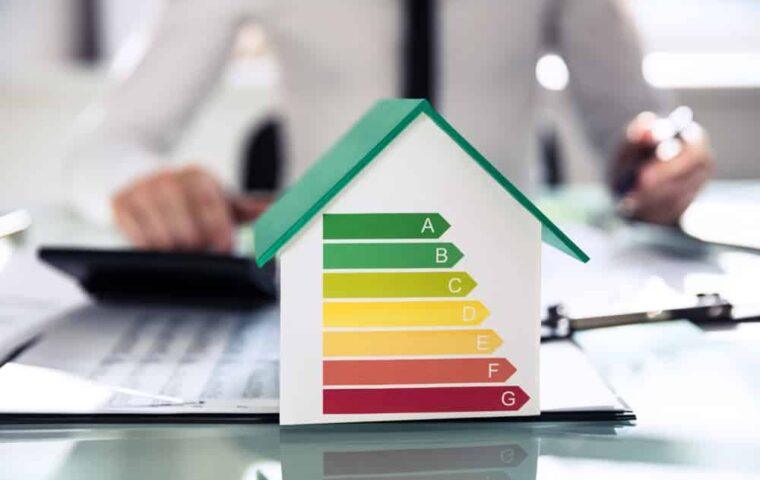
This analysis of the DPE’s role in energy renovation reveals a reality that has become difficult to bypass: the Energy Performance Diagnosis is no longer a simple administrative document, but a sorting tool that influences work, aid, property value, and increasingly, the very possibility of renting it. In other words, the DPE has ceased to be decorative. It structures the decision.
Overall, the subject goes far beyond the small colored label stuck on a real estate listing. The DPE is used to classify buildings, to flag energy sieves, to push owners towards the right renovation levers, and to provide a common framework for housing stakeholders. That is why it must be read as a public policy instrument, not just a technical rating.
The DPE does not just tell the story of a building: it prioritizes a problem, makes a risk visible, and triggers action.
Why has the DPE become a key lever for energy renovation?
The DPE has become central because it connects three worlds that communicated poorly until now: regulation, the real estate market, and energy renovation. Its logic is simple in appearance — classifying a dwelling from A to G — but its effects are powerful, as this classification influences sales, rentals, and the order of work to be undertaken.
A now enforceable tool, therefore much more than indicative
Reformed in 2021, the DPE changed status: it became enforceable. This shift is major, as it gives it legal weight in real estate transactions and rental relationships. According to the Court of Auditors, the diagnosis has also industrialized rapidly, with a monthly volume rising from 120,000 diagnoses in 2018 to over 350,000 in 2025, while the number of certified diagnosticians increased by 46% between 2019 and 2023. The market thus followed the rule, but the rule also accelerated the market’s transformation.
Since 2021, the DPE no longer just informs: it conditions arbitrations, obligations, and asset strategies.
This rise in importance fits into a broader policy of energy renovation of the building stock, with a clear objective: reducing the carbon footprint of buildings and approaching carbon neutrality by 2050. The DPE is therefore not a normative gadget; it is a filter that selects the dwellings to be treated as a priority.
Can the DPE predict the actual consumption of a dwelling?
No, and this is even the most misunderstood point. The DPE is a regulatory evaluation method, not a method for measuring actual consumption. It estimates a theoretical performance based on the building and equipment, whereas actual bills also depend on usage, occupancy habits, climate, settings, and sometimes simple behavioral differences.
In other words, the DPE mainly indicates what a dwelling is capable of consuming within a standardized framework, not what it will necessarily consume for a given occupant. This nuance changes everything: it prevents overinterpreting a label, but it also means not asking the impossible of it.
The DPE measures a regulatory performance; it does not replace actual usage or the energy bill.
This limitation does not diminish its usefulness. On the contrary, it reminds us that the DPE is used to compare, classify, and guide, not to precisely predict the kWh consumption of a particular household. It is a decision-making basis, not a crystal ball.
How does the DPE help prioritize renovation work?
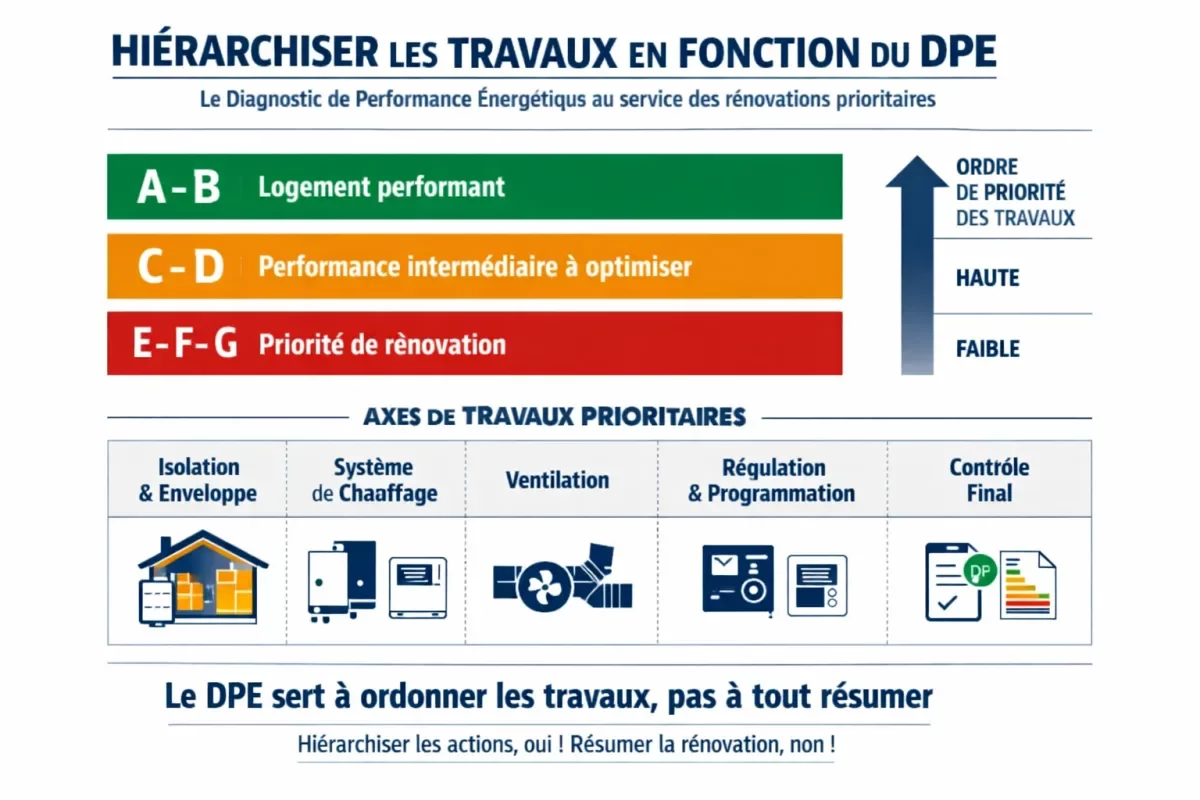
The DPE is useful because it brings order to the chaos of possible works. Without a diagnosis, many owners start with what is most visible or what seems cheapest. With the DPE, the logic should be reversed: first tackle the heaviest losses, then address the systems, then fine-tune the settings.
The priorities that almost always come up
When a dwelling is poorly rated, energy renovation work should rarely be thought of in isolation. Insulation alone, without appropriate ventilation, can create other problems. Heating alone, without addressing losses, can remain oversized. The DPE helps avoid these false good plans.
- Treat the envelope: roof, walls, floors, and joinery when losses are significant.
- Correct the heating system: especially when it is old, poorly regulated, or over-consuming.
- Check the ventilation: a high-performance renovation without healthy air often ends up disappointing.
- Optimize hot water production: a often underestimated area in older dwellings.
- Refine regulation: thermostat, programming, and balancing can complement an already serious project.
This sequencing is valuable because it allows reasoning in terms of overall efficiency rather than adding up small actions. This is where the DPE becomes a true operational guide: it clarifies the order of priorities, which avoids spending a lot to gain little.
DPE or energy audit: which to choose to build a work plan?
The DPE and the energy audit do not play in the same league. The first classifies and informs; the second deepens and scenarios. The DPE is the regulatory entry point, while the audit is more used to build a coherent work trajectory, especially when the dwelling is energy-intensive or the budget issue is significant.
The right reflex is therefore not to oppose the two, but to articulate them. The DPE gives the alert signal, the audit helps decide how to renovate without doing just anything. It is a simple but decisive difference for owners as well as co-ownerships.
| Criterion | DPE | Energy audit |
|---|---|---|
| Purpose | Classify the dwelling and inform about its performance | Build a more detailed renovation plan |
| Scope | Regulatory and enforceable | More technical and oriented towards work decision |
| Reading results | Energy label and climate label | Renovation scenarios and action hierarchy |
| Usage | Sale, rental, information, first sorting | Preparation of an energy renovation project |
In practice, the DPE is used to know where one stands, the audit to know how to move forward. For a very degraded property, this duo avoids cobbling together a strategy by chance.
The DPE sets the framework; the audit transforms the observation into a work scenario.
How do renovation aids relate to the DPE?
The DPE strongly influences access to and the logic of energy renovation aids because it allows for objectifying the initial performance level and identifying the homes that must be prioritized. In public policy, it becomes a common reading piece: without a readable diagnosis, it is difficult to justify a solid project.
However, aids should not be the sole driver. The classic mistake is to choose the works based on the available scheme rather than the real need of the home. Bad idea. The DPE precisely serves to put the project back on the right track: first performance, then financing.
- MaPrimeRénov’: it fits within the logic of energy renovation and relies on a coherent file.
- France Rénov’: the network supports understanding the project and directing towards the right contacts.
- The DPE as entry proof: it helps document the state of the property before works.
- Technical coherence: aids better value projects thought out globally than isolated actions.
Good to know: the more structured the project is upstream, the more the owner avoids dead ends. A home can be technically renovable without the financial setup being relevant; the DPE helps to sort between the desirable and the realistic.
What does the energy sieve schedule change for owners?
Since January 2025, the rental of the most energy-consuming homes has been progressively restricted according to a schedule running until 2034. Concretely, the DPE no longer only affects the perceived value of a property: it acts on its ability to remain in the rental stock. For an owner, the issue becomes very down-to-earth: renovate, arbitrate, or endure.
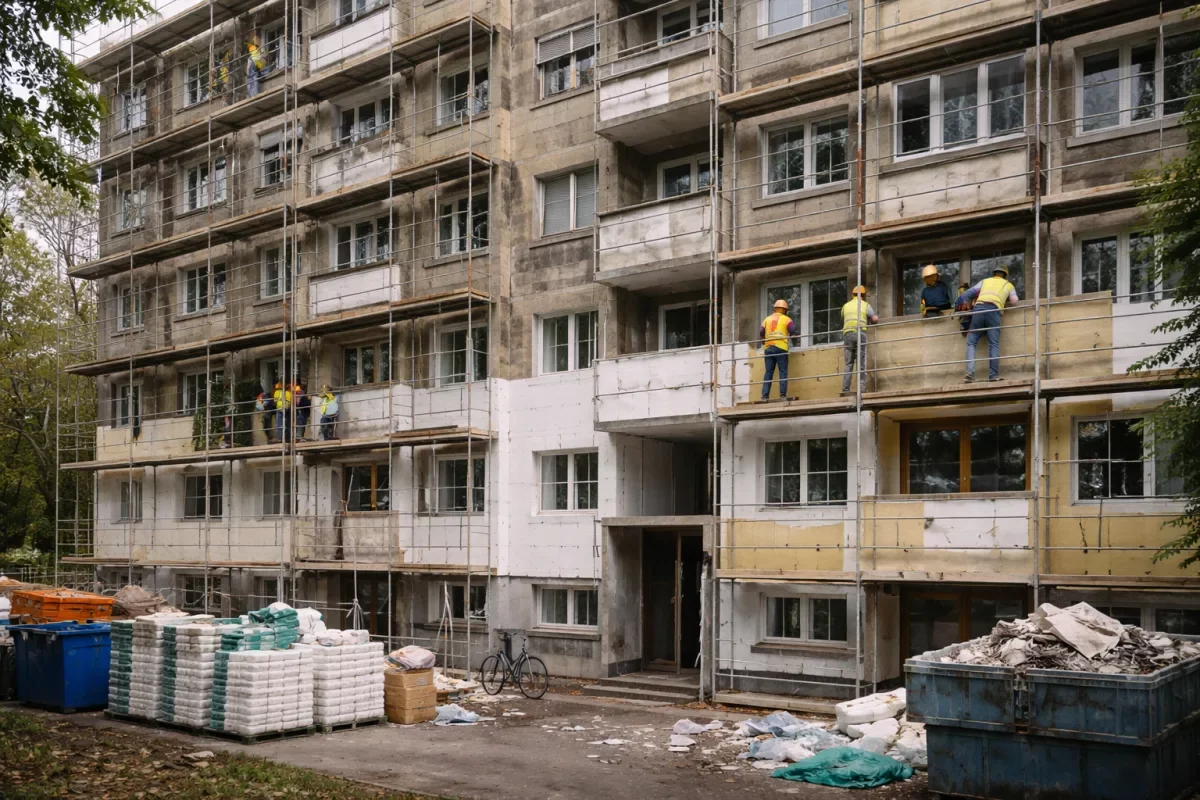
This evolution changes the market psychology. Before, a bad DPE weighed mainly on the image of the property. Now, it can delay a rental, complicate a resale, or force accelerating a work program. The DPE thus becomes an instrument of regulatory pressure, but also a revealer of upcoming trade-offs.
An energy sieve is no longer just a costly-to-heat home; it is an asset that can lose management latitude.
In this context, owners have an interest in anticipating. Waiting until the last minute often means paying more for works done in urgency, with less room for negotiation and more technical constraints.
Why does the reliability of the diagnosis depend so much on the field?
Because a good DPE is not decreed: it is built on serious surveys, clean entries, and solid technical skills. The method is regulated, of course, but its quality depends greatly on the diagnostician, the rigor of observations, and the quality of information collected on site.
In other words, the mechanism can be good, but if the input data are weak, the result is too. That is why professionals insist on the upskilling of the sector and on the reliability of controls.
The quality of a DPE is first played out with the tape measure, the diagnostician’s eye, and the coherence of the surveys.
Some criteria make the difference:
- Complete surveys: surfaces, walls, equipment, and systems must be properly documented.
- Coherent data entry: discrepancies between field and software create fragile diagnoses.
- Technical reading: knowing how to distinguish a visible symptom from a real cause avoids hasty conclusions.
- Methodical verification: reliability increases when elements are cross-checked and not simply ticked off.
This point is crucial because the DPE increasingly feeds decisions with heavy consequences. If it lacks precision, the entire renovation chain is disrupted.
How to verify gains after renovation?
The DPE remains useful after renovation work, but it is important to understand what it measures. It verifies an updated theoretical performance, not an absolute promise of a low bill. However, it provides a solid benchmark to know if the renovation has effectively changed the housing class.
Post-renovation monitoring should always combine several readings: new DPE, observation of residual discomforts, consistency of equipment, and, when possible, comparison with actual consumption over a sufficient period. This cross-check prevents optical illusions, which are common when a project is judged too quickly.
It should be noted that the increase in the volume of diagnostics also shows the growing importance of this tool in national management. Going from 120,000 monthly diagnostics in 2018 to more than 350,000 in 2025 is not just a volume effect: it is a sign that an entire system is organizing around the DPE to accelerate the energy renovation of the housing stock.
From this perspective, the DPE plays a dual role: it helps to launch the project and allows checking its consistency, even if actual consumption must always be interpreted with caution.
Ultimately, the DPE has changed the way renovations are done. It requires thinking of the housing as a system, not as an addition of isolated components. When well used, it prevents blind spending, highlights available aids, and allows energy leaks to be addressed with a finally structured logic.
Key points to remember
To remember
- 🔍 The DPE classifies a dwelling but does not predict its actual consumption.
- 🧱 Effective work often starts with the building envelope.
- ⚙️ The energy audit complements the DPE to build a solid renovation plan.
- 🏦 Public aids are better used when the project is technically coherent.
- 📉 Energy leaks are now subject to increasing regulatory pressure.
FAQ
Is the DPE sufficient to decide on renovation work?
No, not always. The DPE provides a useful regulatory reading to identify weaknesses, but it does not replace an energy audit when the dwelling is very degraded or the project is complex. It mainly serves as a serious starting point.
What is the difference between the DPE and the energy audit?
The DPE classifies the dwelling and informs about its overall performance. The energy audit goes further: it proposes more detailed renovation scenarios and helps build a work plan. The two tools are complementary, not competing.
Does a poor DPE block a rental?
It can complicate or even restrict rental depending on the regulatory timetable in force. Since January 2025, the most energy-consuming dwellings are progressively subject to restrictions extending until 2034. It is therefore better to anticipate than to suffer.
Why can the DPE vary from one assessor to another?
Because the quality of the result depends on the surveys, data entry, and interpretation of field data. The method is regulated, but practical accuracy strongly depends on the professional’s skill and the quality of the information collected.
Can you improve your DPE class without major work?
Sometimes, yes, but the most solid gains rarely come from small isolated adjustments. Settings, regulation, or certain technical optimizations can help, but real progress often relies on structural energy renovation work.