History of Ostwald: from medieval origins to the modern city
Ostwald, a commune located in the Bas-Rhin department, has a particularly rich history dating back to the Middle Ages. The first written mentions of the locality date from the 13th century, where it appears under the name Osthoven, meaning “farm of the east.” This name perfectly reflects its geographical position relative to Strasbourg.
Over the centuries, Ostwald experienced several lords and was marked by the many conflicts that shook Alsace. The commune notably suffered the consequences of the Thirty Years’ War (1618-1648), a period during which it was partially destroyed and depopulated. It was only in the 18th century that Ostwald experienced real demographic and economic growth.
The 19th century marked a decisive turning point for the commune with industrialization. In 1871, following the Franco-Prussian War, Alsace became German and Ostwald gradually transformed. The annexation by Germany profoundly changed the architectural and cultural landscape of the city, as evidenced by some buildings still visible today.
The contemporary period of Ostwald is marked by significant urban development. After its return to France in 1919, then another period under German occupation during World War II, the commune experienced notable expansion from the 1960s onward. The year 1992 is a key date in Ostwald’s recent history: it officially obtained city status, thus rewarding its demographic growth and economic development.
If you wish to discover the hidden treasures of this authentic Alsatian region, Ostwald represents an essential stop to understand the evolution of a typical Alsatian commune.
Geographical and natural features of Ostwald
The geographical location of Ostwald is one of its main features. Situated only a few kilometers southwest of Strasbourg, the commune benefits from a privileged location in the Alsace plain. This proximity to the European capital gives it a particular appeal, while allowing it to maintain a peaceful atmosphere.
The most remarkable natural element of Ostwald remains undoubtedly the Bohrie pond, the true green lung of the commune. This 13-hectare body of water constitutes a precious ecosystem that hosts exceptional biodiversity. Here are some remarkable species that can be observed there:
- The grey heron, a majestic wading bird frequently seen near the pond
- The kingfisher, recognizable by its shimmering blue plumage
- Various species of dragonflies, some of which are rare in Alsace
- A varied aquatic flora including water lilies and reeds
The climate of Ostwald, typically continental, is characterized by cold winters and hot summers, with precipitation distributed throughout the year. This climatic peculiarity influences not only the local vegetation but also the traditional architecture of Alsatian houses that can still be seen in certain neighborhoods.
Another notable geographical feature: Ostwald is crossed by the Ill, a tributary of the Rhine, which greatly contributes to shaping its landscape. This river played a crucial role in the historical and economic development of the commune, once serving as a communication route and energy source for early industrial activities.
| Feature | Description |
|---|---|
| Area | 7.24 km² |
| Average altitude | 140 meters |
| Main watercourse | The Ill |
| Iconic natural space | Bohrie Pond |
Cultural and architectural heritage of Ostwald
The heritage of Ostwald perfectly reflects its turbulent history between France and Germany. The most emblematic element remains the Ostwald castle, a building dating from the 18th century that testifies to the aristocratic past of the commune. Built by the Dieffenthal family, this castle had several owners before being acquired by the municipality in 1976. Today transformed into a cultural center, it hosts numerous events and represents the beating heart of Ostwald’s cultural life.
The Saint-Ostwald church constitutes another major architectural testimony. Built in 1896 in a neo-Romanesque style typical of the German era, it replaced an older building that had become too small for the growing population. Its imposing bell tower dominates the urban landscape and serves as a visual landmark for residents.
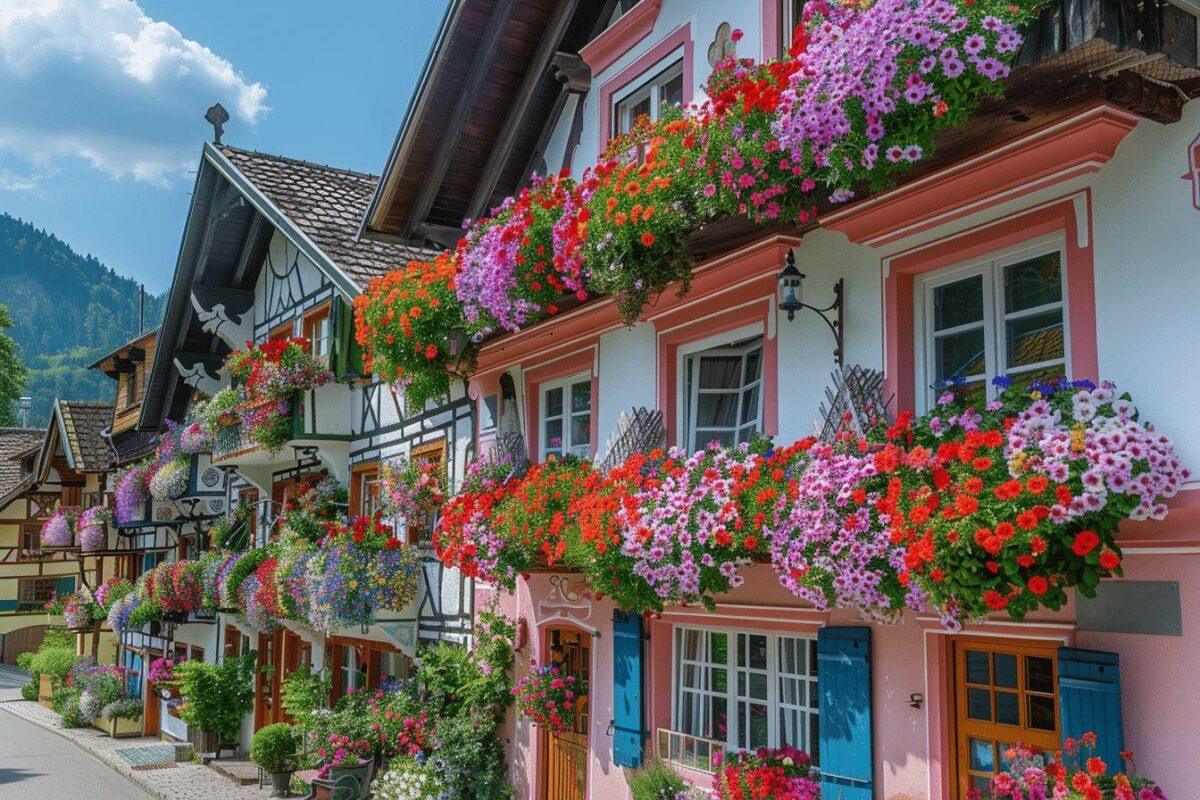
The half-timbered houses, although less numerous than elsewhere in Alsace, still dot certain neighborhoods of Ostwald. These traditional constructions with exposed beams and colorful facades recall Alsatian vernacular architecture. Their preservation is an important heritage challenge to maintain the historical identity of the commune.
In terms of traditions, Ostwald perpetuates several Alsatian customs such as the sauerkraut festival, organized every year since 1935. This festive event celebrates not only the region’s emblematic dish but also the Alsatian cultural identity. The commune also honors other traditions such as the Christmas market, which attracts many visitors every winter.
Ostwald today: a dynamic town at the gates of Strasbourg
With nearly 12,500 inhabitants in 2023, Ostwald has experienced steady demographic growth for several decades. Its immediate proximity to Strasbourg and excellent transport network make it a particularly attractive commune. The tramway, which connects Ostwald directly to the center of Strasbourg in less than 20 minutes, has considerably strengthened its residential appeal.
Ostwald’s economy today mainly relies on the tertiary sector, with many shops and services. The Gérig business area hosts several companies and contributes to the local economic dynamism. Traditional Alsatian craftsmanship also retains an important place there, notably in the fields of gastronomy and decoration.
In terms of education, Ostwald has comprehensive facilities ranging from kindergarten to middle school. The sports and leisure center offers residents many activity options, while the municipal media library plays a central role in the city’s cultural animation.
The municipality is actively engaged in sustainable development projects, as evidenced by the creation of an eco-district around the Bohrie pond. This ambitious project aims to reconcile urbanization and environmental preservation, reflecting the desire to build a city respectful of its natural heritage.
FAQ about Ostwald
What is the origin of the name Ostwald?
The name Ostwald derives from the old “Osthoven,” meaning “farm of the east” in reference to its position relative to Strasbourg.
How to get to Ostwald from Strasbourg?
Ostwald is directly connected to Strasbourg by tram line B, as well as by several bus lines and a network of bike paths.
What are the major cultural events in Ostwald?
The Sauerkraut Festival, held since 1935, is the main event of the town. The Christmas market and various events at the Ostwald castle complete the cultural calendar.
What can you visit in Ostwald?
The main points of interest are the Ostwald castle, Saint-Ostwald church, the Bohrie pond and its walking trails, as well as some traditional half-timbered houses.