
| Key Points | Details to Remember |
|---|---|
| 📜 Medieval Christianization | Expansion of Catholicism after Clovis and spread by monastic orders |
| 🕍 Protestantism | Diversification of the religious landscape during the 16th century Wars of Religion |
| 🔯 Islam in France | Immigration and mosque construction since decolonization |
| ⚖️ Law of 1905 | Separation of Church and State, establishment of secularism |
| 🌍 Modern Pluralism | Coexistence and current debates on religious symbols |
From the baptism of Clovis to the law of 1905, through the rise of Protestantism and the arrival of Islam, the French religious landscape is constantly changing. One might think everything is already written, but each period reveals new balances between belief, politics, and society. Throughout this guide, you will discover how these major moments shaped mentalities, fueled conflicts, and inspired legislative advances. No formal lesson here, rather a journey punctuated with anecdotes, factual landmarks, and reflections on the place of faith in France yesterday and today.
Sommaire
The Christian Roots and the Construction of the Kingdom
At the fall of the Roman Empire, Gaul shifts into an unstable political environment. Clovis, king of the Franks at the turn of the 5th century, chooses Catholicism rather than the Arianism of his Burgundian neighbors. This political and spiritual choice is not trivial: it affirms an alliance with the papacy and legitimizes the Merovingian dynasty. The accounts of the conversion are written in the chronicles, but it is especially thanks to monasteries that Christian culture spreads. In the 6th and 7th centuries, these establishments become centers of teaching, hospitality for travelers, and manuscript copying.
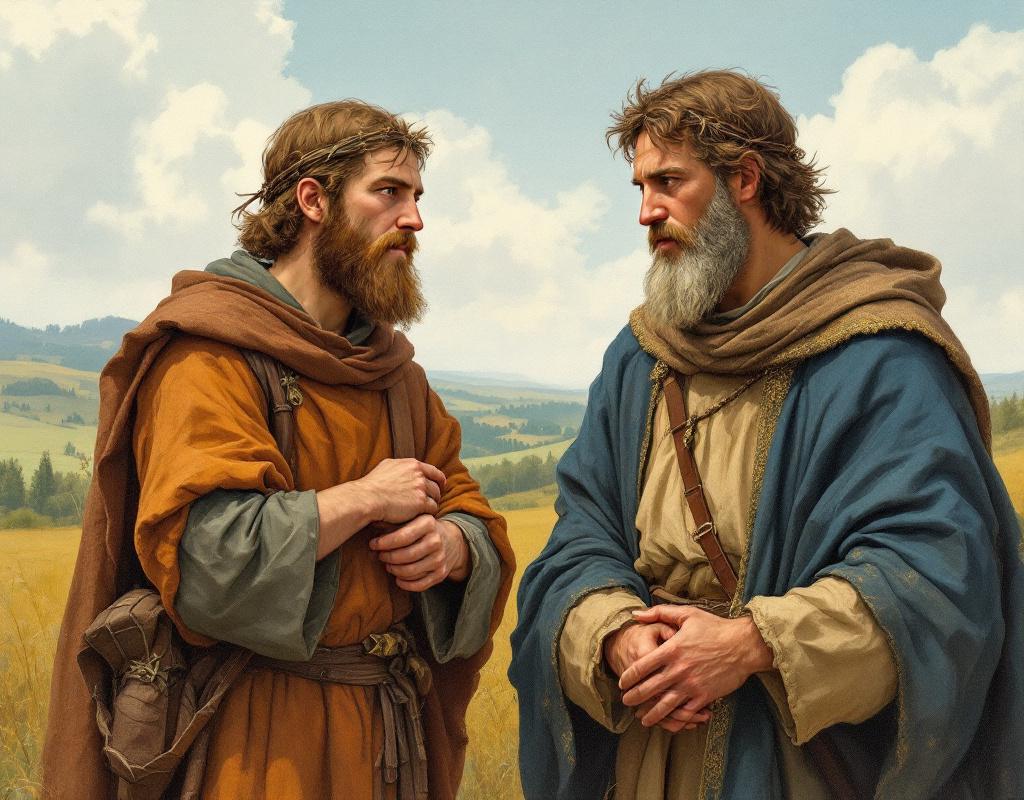
Gradually, the Church inserts itself into every social layer: bishops, abbots, and clerics advise lords, instruct peasants, and animate a network of relationships that goes beyond regional borders. Pilgrimages, notably to Santiago de Compostela, further strengthen this Christian unity and spread Romanesque art marked by intensive use of stone and biblical iconography. Despite the omnipresence of faith, local cults and pagan survivals persist in some rural areas, reminding us that Christianization remains a long and fragmented process.
The Christianization of the Frankish Kingdom
A few decades after Clovis, baptism has more symbolic significance than mass conversion. The new Christian communities organize themselves around bishoprics, and faith spreads thanks to missionary campaigns led by itinerant bishops. Religious instruction relies on Latin, the liturgical language, and faces challenges from vernacular dialects. The first oral catechisms emerge, adapted for an often illiterate audience.
The Role of Monasteries and the Feudal Church
In the 11th century, the rise of the Benedictine and then Cistercian orders gives monastic life a new economic and spiritual dynamism. The abbeys, often built in isolated areas, become centers of agricultural innovation (hydraulic aspects, crop rotation). The prelates also play a political role: when a lord seeks legitimacy, he solicits the support of an influential abbot. This “sacred diplomacy” foreshadows the powerful link between throne and altar that will dominate the entire medieval period.
Religious Transformations in the Modern Era
The 16th century shakes traditional Catholicism with the Reformation. Luther, Calvin, and Zwingli launch a radical critique of the clergy, hierarchy, and indulgences. In France, Protestantism gains urban and rural elites, quickly causing tensions. The Wars of Religion (1562-1598) pit Catholics against Huguenots in violence that affects all the kingdoms. Ultimately, the Edict of Nantes grants measured coexistence, before its revocation in 1685 drives Protestants into clandestinity or exile.
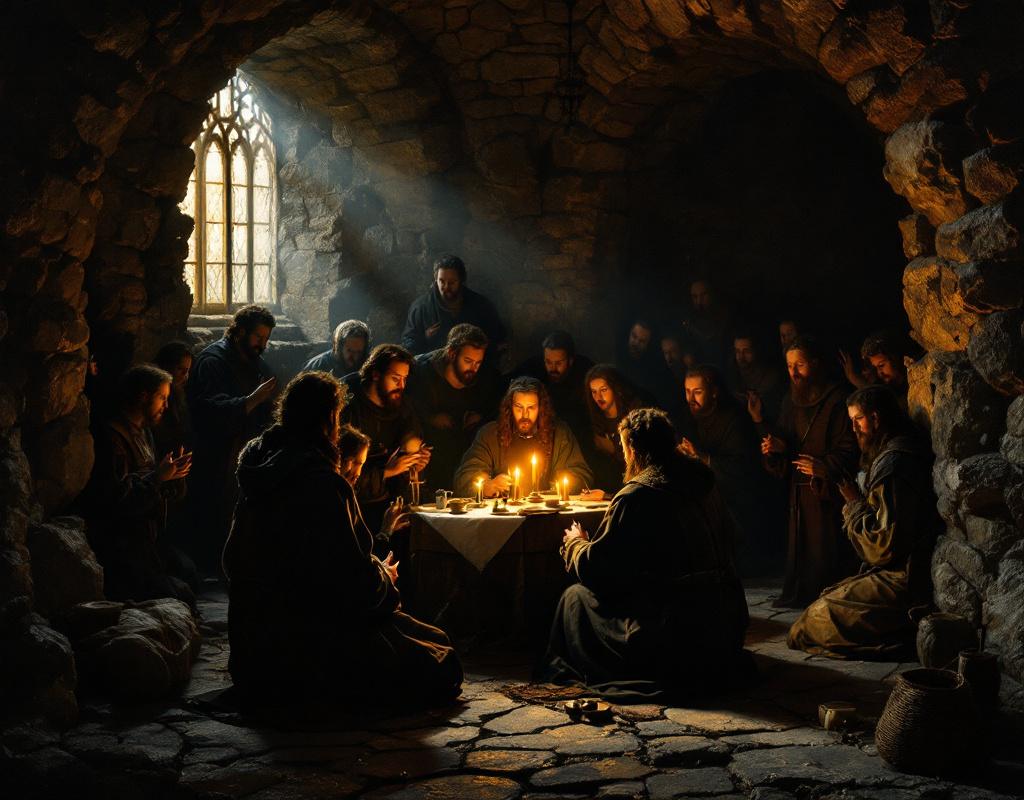
The religious landscape becomes more complex: newly created orders (Jesuits, Oratory) engage in the Counter-Reformation to reclaim souls. Internal missions seek to reaffirm Catholic identity, while the Huguenot diaspora spreads craftsmanship and know-how abroad, notably in England and Prussia.
The Emergence of Protestantism
Calvin establishes a model of ecclesiastical republic in Geneva that serves as a political and theological example. In France, Protestantism relies on organized synods and a network of often hidden temples. Figures like Jeanne d’Albret in Béarn or Admiral Coligny embody this desire to reform the Church and establish strict religious discipline.
The Wars of Religion and the Edict of Nantes
| Edict | Date | Impact |
|---|---|---|
| Milan | 313 | Freedom of worship for Christians |
| Nantes | 1598 | Partial protection of the Huguenots |
| Fontainebleau | 1685 | Revocation and exile of Protestants |
The Edict of Nantes marks an unprecedented compromise: it recognizes a certain religious freedom, creates Protestant strongholds, and guarantees access to public offices. This precarious coexistence proves fragile; upon revocation, thousands of Protestants choose exile, weakening the kingdom economically and intellectually. Yet, these legal practices will leave traces in the evolution of French law.
The Arrival and Establishment of Islam in France
It was not until the end of the 19th century that the first Muslim communities settled permanently, often brought as labor in railways or mines. After World War II, the influx intensifies: Algerians, Tunisians, Moroccans join the shantytowns, often without suitable places of worship. Families gather around a few cafés or apartments converted into informal prayer rooms.
Migratory Context and Decolonization
The Algerian War and the Évian Accords (1962) accelerated the movement: immigrant workers benefited from family reunification. Mosques multiplied thanks to local associations sometimes funded by countries of origin. This process, far from being homogeneous, varies according to territories: large cities like Marseille or Paris concentrate most of the establishments, while rural areas remain a challenge for reception.
From the Mosque to the Community
The construction of permanent places of worship – mosques, Islamic cultural centers – transforms the visibility of Islam. The issue of funding, often mentioned in public debate, mainly reflects the difficulty of reconciling autonomy and transparency. As generations succeed one another, youth associations, halal shops, and Muslim schools emerge. Each initiative gradually weaves a social, economic, and cultural network.
Secularism and the Contemporary Religious Landscape
The law of December 9, 1905, is intended to be revolutionary: it “guarantees freedom of conscience” while establishing a principle of State neutrality. Religions become independent of public funding, and ecclesiastical properties prior to 1905 are managed by religious associations. This text, often reduced to the sole prohibition of displaying religious symbols at school, actually has a broader scope: it secures diversity by limiting the interference of any religion in public affairs.
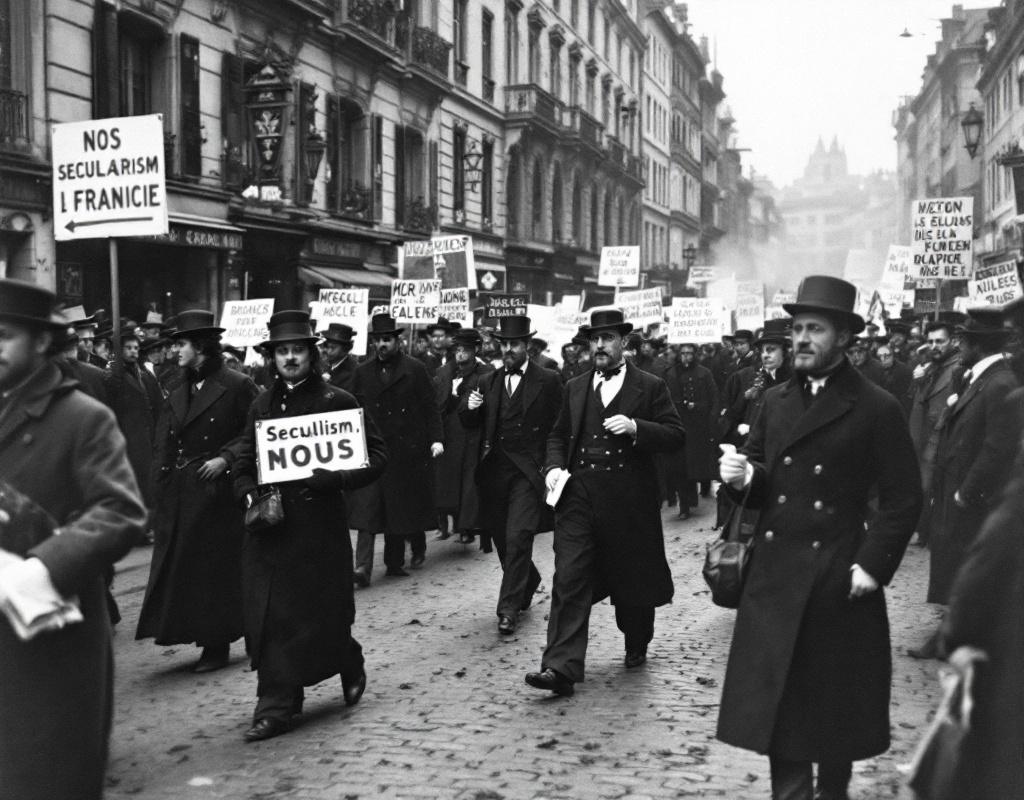
In the 21st century, secularism reinvents itself in the face of new challenges: religious pluralism, radicalization, wearing of conspicuous signs. Debates extend from schools to public services, from the place of the veil to that of street prayer. This ongoing tension reflects a society constantly seeking to reconcile individual freedom and cohesion. In truth, secularism remains above all an art of balance, useful for thinking about neutrality without erasing identities.
The 1905 Law and Its Implications
- Consecration of the neutrality of the State
- Creation of religious associations to manage properties
- Freedom of conscience guaranteed for all
- Clear distinction between private and public spheres
Current Challenges and Issues
Pluralism is enriched but also raises questions: how to accommodate religion in public space? What place for prayer in city centers or businesses? The laws of 2004 (ban on religious symbols at school) and 2010 (ban on face covering) extend the reflection, without resolving all tensions. Implicitly, they invite defining, generation after generation, the rules of living together.
FAQ
What is the Edict of Nantes?
The Edict of Nantes, signed in 1598 by Henry IV, establishes a civil and religious status for Protestants in France. It ensures freedom of worship in certain cities and judicial protection for Huguenots.
Why is the 1905 law so significant?
By establishing the separation of State and religions, this law guarantees public neutrality and freedom of conscience. It creates a legal framework that endures and structures the debate around religion.
How did Islam establish itself in France?
Primarily through the immigration of workers from North Africa in the 20th century. The communities initially practiced informally, then built mosques and founded associations to organize their worship.
What traces of Protestantism remain today?
The temples, some active communities, but above all an intellectual and social heritage: the spirit of reform, the importance of individual Bible reading, and the establishment of solidarity structures.
{
“@context”: “https://schema.org”,
“@type”: “WebPage”,
“about”: {
“@type”: “Thing”,
“name”: “History of the main religions in France”
},
“keywords”: [“christianization”, “protestantism”, “Islam”, “secularism”]
}