
This article offers you a comprehensive view of Strasbourg at Christmas: geography, history, key figures, neighborhoods to explore, specialties to taste, and practical advice to prepare your stay in the Alsatian capital. 🎄
Sommaire
1. Strasbourg, “Christmas Capital”: geographical landmarks and winter atmosphere
Strasbourg is located in the far east of France, on the banks of the Rhine, at the border with Germany. The city is organized around the Ill, a river that encircles the Grande Île, the historic heart listed as a UNESCO World Heritage site. With 291,709 inhabitants in 2022, a density of about 3,700 inhabitants/km², and an area of 78.3 km², Strasbourg is one of the major French metropolises while maintaining a scale easily walkable on foot.
In December, temperatures often range between 0 °C and 5 °C. The humidity from the Rhine and the long nights enhance the feeling of cold, but it is precisely this climate that contributes to the very “Central European” atmosphere of the city center. Wooden chalets, the scent of cinnamon, and the noise of bundled-up crowds create a winter market atmosphere found as much in Strasbourg as in Vienna, Munich, or Nuremberg.
The “Strasbourg, Christmas Capital” setup mainly focuses on the Grande Île and its immediate surroundings (Neustadt, Krutenau, Petite France), which allows most markets to be visited on foot in one day, provided you organize your itinerary well.

2. A historic city that loves to dress up for Christmas
Long before becoming the European capital we know today, Strasbourg was first a crossroads city. An ancient Roman camp (Argentoratum), then a free city of the Holy Roman Empire, it came under French rule at the end of the 17th century. This eventful history has left an exceptional architectural heritage: Gothic cathedral, half-timbered houses, classical palaces, Wilhelminian buildings… all settings that naturally lend themselves to Christmas illumination.
The tradition of the Christkindelsmärik (market of the Christ Child) dates back to 1570, making it one of the oldest Christmas markets in Europe. Originally, it was held around the cathedral on the occasion of Saint Nicholas Day, before moving and evolving over the centuries. Today, the name “Strasbourg Christmas Capital” (launched in the 1990s) encompasses a much larger setup than the historic market alone, with about fifteen lively sites throughout the city.
This long history also explains the strong identity dimension of Christmas in Strasbourg: for the inhabitants, it is not just a tourist product, but a moment when the city highlights its dual Franco-German culture, its Protestant and Catholic traditions, and a certain winter way of life made of conviviality, light, and human warmth despite the cold.
3. The Strasbourg Christmas Markets: locations, organization, and key figures
Today, when people talk about the “Strasbourg Christmas market,” they are actually referring to a group of markets spread over several squares and streets in the city center. The main hubs are:
- Place Broglie: the historic Christkindelsmärik, with many artisanal and gastronomic chalets.
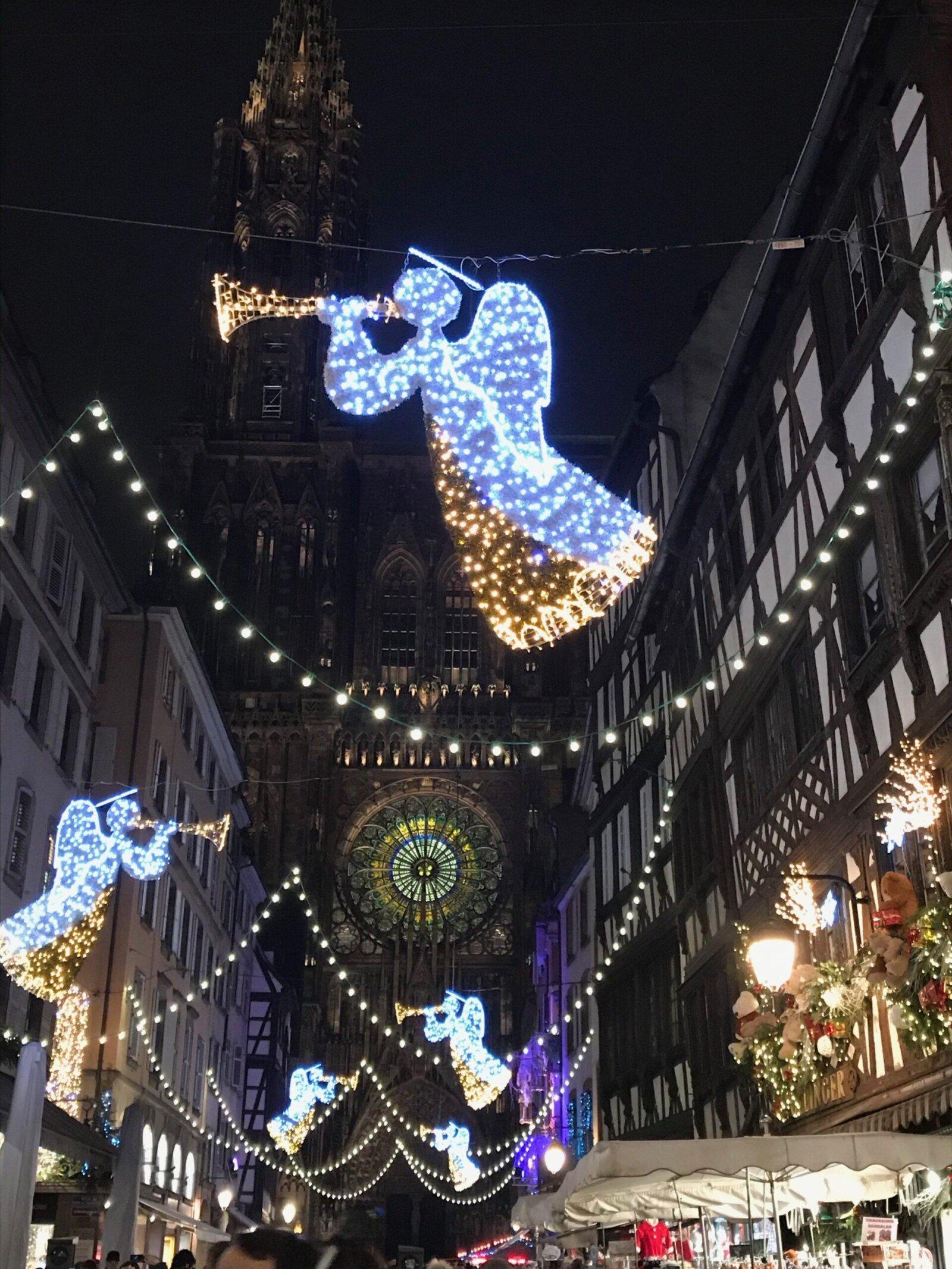
- Place de la Cathédrale and Place du Château: tightly packed chalets at the foot of the cathedral, very dense and photogenic atmosphere.
- Place Kléber: the large Christmas tree (about 30 m high) and a village dedicated to solidarity associations.
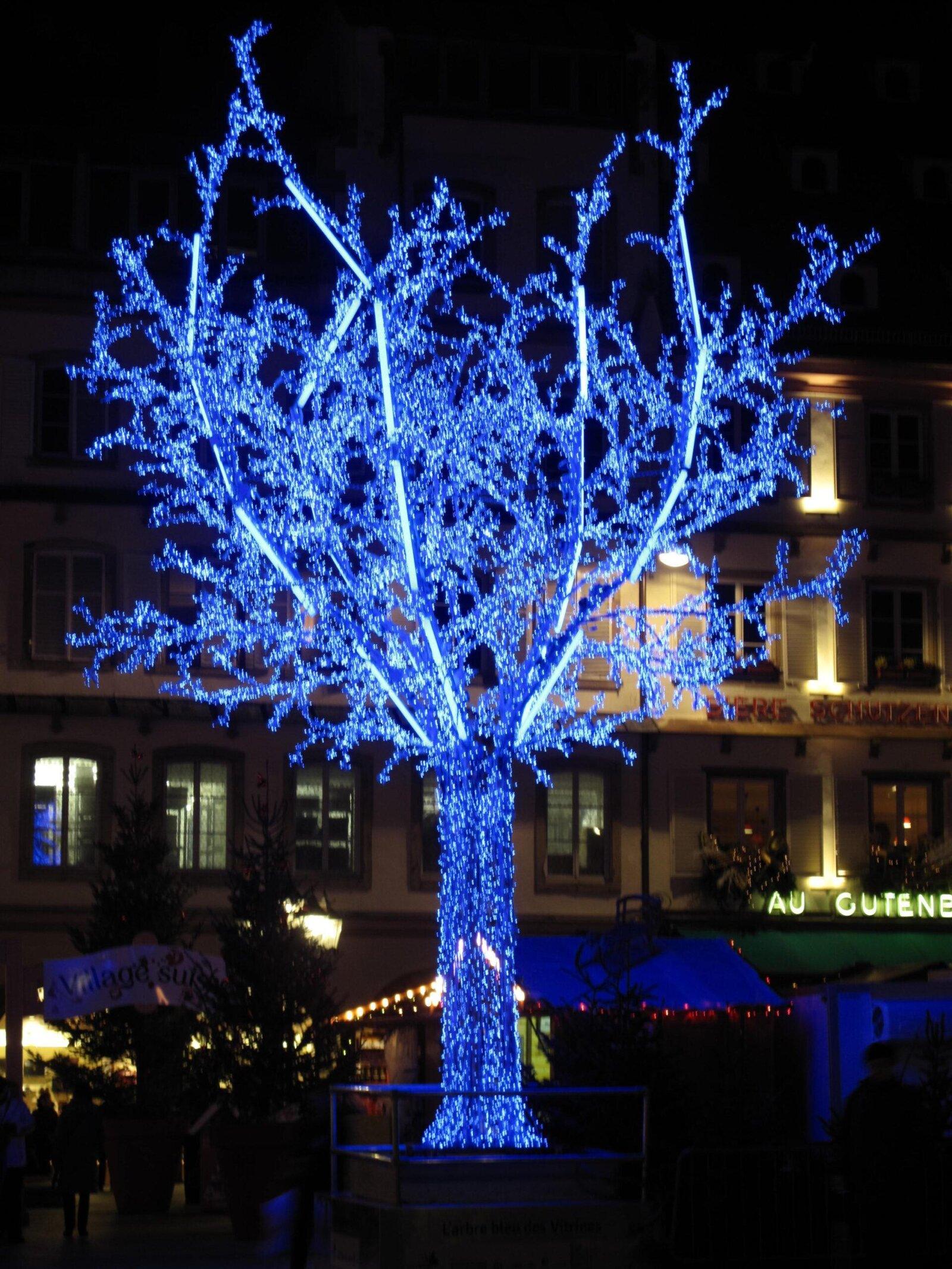
- Place Gutenberg: spectacular animations and decorations, notably the Blue Tree, as well as a market sometimes themed around a guest country.
- Place Grimmeissen (Petite France district): a more alternative “OFF market,” focused on responsible economy and short supply chains.
According to figures provided by the city and reported by the local press, Strasbourg welcomes more than 3 million visitors during the period from late November to Christmas, with about 300 chalets spread across the different sites. In 2024, attendance was thus estimated at 3.4 million visitors, confirming Strasbourg’s status among the major European Christmas markets.
The exact dates vary slightly each year, but the season generally runs from late November to December 24. For 2025, for example, the main market is announced from November 26 to December 24, with extended hours on weekends and evenings.
For several years, security has been particularly strengthened: pedestrianized areas, entrance controls, limited car traffic, visible police presence. This requires planning your trips in advance but allows you to enjoy a much calmer city center in terms of vehicles, making it very pleasant to explore on foot or by tram.


4. Christmas Flavors: Alsatian Specialties Not to Miss
A Strasbourg Christmas market is experienced as much with the eyes as with the nose and palate. Strolling from chalet to chalet, you will invariably encounter some great classics of Alsatian festive gastronomy:
- Bredele: small Christmas cookies in various shapes (stars, hearts, trees), flavored with cinnamon, spices, or hazelnuts.
- Mulled wine: often offered in red or white versions, with citrus, cinnamon, and cloves.
- Mannele: brioche shaped like a little man, traditionally enjoyed around Saint Nicholas Day.
- Flammekueche (tarte flambée): thin dough topped with cream, bacon, and onions, sometimes revisited in a festive version.
- Pretzels: plain, with cheese, gratinated… perfect for snacking while warming your hands.
For a more local experience, favor stands run by identified artisans (pastry chefs, brewers, producers) rather than highly standardized products. Increasingly, the city highlights a selection of chalets committed to responsible practices: products from Alsace, short supply chains, reduced packaging.
5. Population and Demography: The Face of Strasbourg
Understanding Strasbourg at Christmas also means understanding the city behind the decorations. According to Insee, the municipality has 291,709 inhabitants in 2022, with 141,240 households and more than 163,000 housing units. The population grew by about 0.7% per year between 2016 and 2022, mainly due to a positive natural balance.
The social structure is mixed: Strasbourg is both a major student city (University of Strasbourg, grandes écoles) and a working-class city, with a poverty rate of about 26% of households in 2021. The median disposable income per consumption unit is around €20,260 per year, below the national average, which reminds us that the illuminated center should not mask the social challenges of the metropolis.
| Indicator (Strasbourg municipality) | Recent value |
|---|---|
| Population (2022) | 291,709 inhabitants |
| Density (2022) | ≈ 3,727 inhabitants/km² |
| Registered births (2024) | 3,142 |
| Registered deaths (2024) | 2,194 |
| Unemployment rate for ages 15-64 (2022) | ≈ 15.9% |
For the visitor, these data remind us that Strasbourg is not a “Christmas theme park,” but a real city, with very real issues of housing, employment, and purchasing power. The massive attendance at the markets can be an economic opportunity but also a source of pressure on the daily lives of residents, especially regarding real estate prices and public space saturation.
6. Economy, Employment, and the Weight of the Year-End Festivities
Strasbourg is a major economic hub of the Grand Est region. In 2022, the municipality has about 177,000 jobs at workplaces, of which more than 89% are salaried positions. The dominant sectors are commerce, transport, and services (about 75% of establishments), followed by public administration, education, health, and social work (15%).
The port of Strasbourg, the second largest inland port in France on the Rhine, and the presence of numerous European institutions (Council of Europe, European Parliament, European Court of Human Rights, etc.) complete this profile. The city thus attracts a mix of civil servants, students, cross-border workers, and employees in the upper tertiary sector.
On this economic foundation, the end-of-year festivities play a role as a cyclical driver: hotels, restaurants, downtown shops, transportation, and cultural activities experience very marked peaks of activity in December. In retail, some players generate a significant portion of their annual turnover during the Christmas market period. The Place des Halles shopping center, for example, reports around 11 million visitors per year, with particularly high attendance at the end of the year.
Key figures (order of magnitude)
– > 3 million visitors during the Christmas market period
– ≈ 300 chalets spread over about fifteen sites
– 177,000 jobs at workplaces in the municipality
– 11 million annual visitors at the Place des Halles shopping center
7. Tourism and culture at Christmas: the must-sees
Even though the Christmas markets are the highlight of the season, it would be a shame to reduce Strasbourg to its chalets alone. Here are some must-sees to include in your itinerary:
- The Notre-Dame Cathedral: a Gothic masterpiece visible from afar, whose facade is adorned with light displays and stands out behind the decorations of the adjacent streets.
- La Petite France: a district of canals and half-timbered houses, enhanced by illuminations and reflections in the Ill River.
- Boat cruises on the Ill (such as Batorama): a comfortable way to discover the illuminated facades, even in cold or rainy weather.
- The museums (Alsatian, Historical, Tomi Ungerer, etc.): perfect during the day to alternate between outdoor strolls and warm visits indoors.
- The European institutions: although they are not directly part of the Christmas setup, their modern architecture strongly contrasts with the old town.
In just a few hours, you can move from a medieval alley saturated with garlands to an ultra-modern European district, all within the city limits. It is this diversity of atmospheres that makes the Strasbourg stay so special in December.
8. Access and transportation during the Christmas markets
Strasbourg is easily accessible by TGV from Paris (about 1h50), Lyon, Lille, or Marseille, but also by regional trains from neighboring Germany (Offenburg, Karlsruhe, Stuttgart). Strasbourg-Entzheim airport offers connections to several major European cities, supplemented by the Basel-Mulhouse and Baden-Baden airports accessible by train or bus.
During the market period, car traffic is strongly discouraged in the center. Large areas are reserved for pedestrians, with security checks at access points. The city recommends using the park-and-ride tram parking lots (P+R), which allow parking on the outskirts and reaching the Grande Île in a few minutes.
Once in the city center, the easiest way to get around is on foot, with possibly a few tram rides to reach the train station, the European quarter, or the Neustadt. Be sure to download a map of the tram and bus lines or use the official CTS (Strasbourg Transport Company) apps.
9. Accommodation, real estate, and budget for a stay in Strasbourg in December
On the accommodation side, Strasbourg offers a wide range of options: 2 to 5-star hotels, aparthotels, furnished rentals, youth hostels. In December, rates rise significantly, especially on weekends and around public holidays. It is not uncommon for 3★ hotels in the center to be fully booked several months in advance.
In the long term, the year-end holidays take place in an already tight real estate market. According to major real estate portals, the average price per m² for an apartment in Strasbourg is around €3,500 to €3,800/m², with higher values in the hyper-center and the most sought-after neighborhoods. Houses are somewhat cheaper per m² but obviously require a larger overall budget.
For a stay of a few days in December, plan overall:
- An accommodation budget that can easily be 30 to 50% higher than in the low season.
- Restaurant prices in line with major French cities, with an additional “location” surcharge for establishments directly on market squares.
- A “gifts & crafts” category that varies greatly depending on your shopping appetite: it is wise to set a budget from the start to avoid impulsive overspending.
10. Local life, events, and atmosphere beyond the chalets
During the holidays, Strasbourg’s programming is not limited to the markets. Every year there is a dense cultural and festive offer: Christmas concerts in churches, organ recitals, children’s shows, themed guided tours (Christmas history, decorations, Alsatian traditions), temporary exhibitions.
The city is gradually seeking to balance the tourist offer and the quality of life of residents: promoting events in less crowded neighborhoods, illuminated routes off the busiest axes, activities around contemporary creation or the social and solidarity economy (notably at the OFF market).
11. Practical tips to make the most of Strasbourg at Christmas
To optimize your stay, a few simple habits can really change the experience:
- Choose your dates carefully: if possible, favor a weekday stay (Monday to Thursday) rather than the crowded December weekends.
- Come early or late: the 4pm-7pm slot is the most crowded. Mornings and late evenings are more breathable.
- Dress warmly: hat, gloves, scarf, and good shoes are essential to stay outside for several hours.
- Prepare an itinerary: identify in advance the main squares (Broglie, Cathedral, Kléber, Gutenberg, Grimmeissen) and map out a walking route.
- Book restaurants: especially winstubs and establishments in the historic center, which are taken by storm in December.
- With children: locate toilets, quieter areas (parks, Ill riverbanks), and suitable activities (carousels, workshops, temporary ice rinks).
One last point: remember to alternate moments of “total immersion” in the crowd (lighting ceremonies, activities around the grand Christmas tree) and quieter breaks in less frequented streets or by the water. This balance will allow you to savor Strasbourg at Christmas without exhausting yourself.
Conclusion: Strasbourg at Christmas today and tomorrow
Strasbourg has succeeded in transforming a centuries-old tradition into an international event without completely losing its Rhineland city soul. The Christmas markets now attract visitors from all over Europe, and beyond, but the place’s DNA remains made of half-timbered houses, narrow alleys, songs, the smell of spices, and lights reflected on wet cobblestones.
The coming years will be marked by several challenges: managing tourist flows, ecological transition of facilities (more modest lighting, short supply chains, waste reduction), diversification of the cultural offer for residents, but also maintaining a high level of security. If these issues are well managed, Strasbourg should retain its status as a benchmark among European Christmas cities for a long time.
For the visitor, the essential thing remains to take the time: look up at the facades, get lost in Petite France, listen to an improvised choir under the arcades, warm your hands around a cup of mulled wine… and tell yourself that here, on the banks of the Rhine, Christmas is much more than a date on the calendar.
FAQ
Sources and references
- Insee, Territory Comparator – Commune of Strasbourg (67482) (demographics, employment, income).
- Franceroutes.net – Top 10 Christmas markets in France
- City of Strasbourg, Christmas in Strasbourg – official site (dates, locations, “Capital of Christmas” arrangement).
- Wikimedia Commons & OpenStreetMap, files Strasbourg Christmas Market, Strasbourg Christmas, Blue tree (Strasbourg), Strasbourg OSM map (iconography and cartographic data).
- Regional and national press articles on Christmas market attendance and the “Capital of Christmas” event (Dernières Nouvelles d’Alsace, Pokaa, etc.).
- National real estate portals (SeLoger, Le Figaro Immobilier, etc.) for price per m² estimates in Strasbourg.