Strasbourg is a historic and institutional metropolis located on the Rhine, at the heart of Europe. This article offers a comprehensive and sourced overview: geography, history, figures (INSEE), urban heritage (Cathedral, Petite France, Palais Rohan), European institutions, tourism, culture, and contemporary issues.
Sommaire
Introduction
Prefecture of Bas-Rhin and cultural capital of Alsace, Strasbourg is both a French city with a rich medieval heritage and a European political center (seat of the European Parliament, the Council of Europe, and other institutions). Its location on the Franco-German border, at the confluence of the Rhône-Rhine canal and the Ill river, makes it a historic crossroads for commercial, cultural, and political exchanges. The city combines old stone and institutional modernity, which makes it unique among French metropolises.
Geography and climate
Strasbourg is located at approximately 48.5734° N, 7.7521° E, on the Alsace plain, on the banks of the Ill and in close proximity to the Rhine. The municipality covers an area of about 78.26 km² and the Eurometropolis encompasses a larger urban and suburban area. The relief is moderate, with little variation in altitude across the municipal territory, but the city’s position at the valley bottom favors climatic exchanges between the plains and the nearby Vosges mountains.
Climate: Strasbourg’s climate is temperate semi-continental: cool and sometimes cold winters, hot and stormy summers, springs and autumns marked by rapid transitions. Precipitation is moderate but can be concentrated during summer convective episodes. This climate has influenced local architecture (timber-framed houses, steep roofs) and agricultural activity around the city (vineyards on the outskirts).
History — key dates
The origins of Strasbourg date back to the Celtic and Gallo-Roman periods; the city developed particularly in the Middle Ages around its episcopal and commercial core. In the 13th–14th centuries, Strasbourg was a prosperous free imperial city, known for its craftsmanship, trade, and monumental Gothic cathedral.
Strasbourg underwent frequent political changes: it belonged to the Holy Roman Empire, then to regional powers, shifting several times between German and French domains. After the Thirty Years’ War, the Treaty of Westphalia (1648) marked a regional turning point; the city would eventually be definitively attached to France in the 19th century (1815–1871 conflicts and reconstructions), then alternating between France and Germany until the end of World War II.
20th century: reconstruction and modernization, the birth of European institutions after 1945, and urban growth shaped the contemporary city. Strasbourg has become a symbol of Franco-German reconciliation and European integration.
Demography — recent figures
The municipal population of Strasbourg is approximately ~291,700 inhabitants (2022 estimate), according to recent demographic series and censuses; the urban area and metropolis gather more than 500,000 inhabitants and the metropolitan zone reaches nearly 860,000 people, placing Strasbourg among the main French metropolises. These figures are documented by INSEE and local statistical publications.
Demographic structure: the city has a diverse population, with a significant proportion of students (strong presence of universities and higher education institutions), active families, and a notable number of elderly people. Recent demographic dynamics show a slight increase in the urban population linked to economic attractiveness and European functions.
Strasbourg and the European institutions
Strasbourg is famous for its institutional role: the European Parliament holds its regular plenary sessions there, and the city also hosts the Council of Europe and the European Court of Human Rights (located nearby). This concentration of institutions gives Strasbourg a special status on the European stage and attracts diplomats, officials, and associated activities (conferences, NGOs, international events).
Heritage, architecture, and must-see sites
The heritage of Strasbourg is rich and varied, blending Gothic architecture, half-timbered houses, and classical palaces. Here are the places not to be missed:
- Notre-Dame Cathedral of Strasbourg: a Gothic masterpiece, famous for its spire, astronomical clock, and stained glass windows. The cathedral dominates the city skyline and remains a major historical symbol.
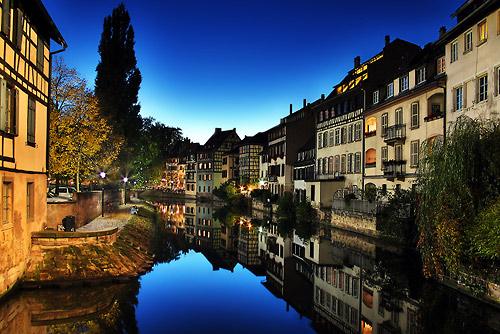
- Petite France: a picturesque district of Old Strasbourg, formerly the quarter of tanners and millers, with canals, half-timbered houses, and narrow streets.
- Palais Rohan: an 18th-century palace housing several museums (Fine Arts, Archaeology, Decorative Arts).
- Place Kléber and Place Gutenberg: historic central squares, commercial hubs and urban meeting points.
- European institutions: the district of the European Parliament and the European quarter, which form an essential part of Strasbourg’s contemporary face.

Economy and employment
The economy of Strasbourg is largely service-oriented: public administration, European institutions, research, health, education, tourism, and commerce. The role of European institutions stimulates a segment of qualified employment (European civil service, legal services, international relations). Furthermore, the local economy benefits from a residual industrial fabric, logistics activities due to the border position, and a dynamic tertiary sector.
The economic challenges concern youth employment, attractiveness for innovative companies, and the balance between tourist functions and residents’ quality of life. Local policies attempt to support innovation and ecological transition.
Tourism — Recommended itinerary (2–3 days)
Strasbourg can be easily explored on foot and by tram. Recommended itinerary:
- Day 1: Cathedral (visit and climb to the panorama if open), Gutenberg Square, stroll through Old Strasbourg and Petite France.
- Day 2: Rohan Palace (museums), walk along the quays, discover the European institutions and the Parliament district (external visits and museum route).
- Day 3: Excursion in the Eurometropolis (Montagne Verte, Robertsau) or visit the Alsace vineyards and typical villages (Ribeauvillé, Riquewihr) if time permits.
Practical advice: buy the Strasbourg Pass for museums and transport, book cathedral and museum visit slots during high season, taste the local gastronomy (sauerkraut, baeckeoffe, kougelhopf) in traditional winstubs.
Culture, festivals and local life
The cultural life in Strasbourg is rich: festivals (European Fantastic Film Festival), musical events, theater seasons and exhibitions. The Christmas market (Christkindelsmärik) is one of the most famous in Europe and attracts hundreds of thousands of visitors each year. Alsatian cuisine and local traditions also contribute to the city’s cultural appeal.
Contemporary challenges
Among the major challenges: managing tourist flows, protecting the historic center from wear and gentrification, energy transition (emission reduction, thermal renovation of old buildings), and mobility (balance between cars, public transport and soft mobility). The city implements strategies to strengthen the local economy while preserving heritage and quality of life.
FAQ
What is the best time to visit Strasbourg?
Spring (April–June) and early autumn (September–October) offer a good climate/attendance balance; the Christmas market is a must in December but very crowded.
How to get around Strasbourg?
The tram and bus network is dense; the city is very walkable and bike-friendly. Parking can be difficult in the city center.
Is Strasbourg family-friendly?
Yes: museums, parks, water activities and family events make the city pleasant for children.
Main sources and references
- INSEE — territorial data and files on Strasbourg (consulted for population and living areas). See INSEE publications.
- Wikipedia — entry “Strasbourg” (historical summary and institutions).
- Wikimedia Commons — image pages: Strasbourg Cathedral, Petite France, Palais Rohan (author and license pages indicated on Wikimedia).
- Official website of the City and Eurometropolis of Strasbourg — local and tourist information.
- Regional publications and analyses (Grand Est, development agencies).