
/* Css En-Bref */
| Key Points | Details to Remember |
|---|---|
| 🏠 Definition | Understand the purpose and mechanism of the PTZ |
| 💰 Benefits | Identify the financial gain and impact on your budget |
| 📋 Eligibility Conditions | Analyze your income, the type of housing, and location |
| 📐 Amounts | Calculate the financeable portion based on the zone and nature of the project |
| 🗂 File Preparation | Prepare the supporting documents and simulations |
| 🔍 Main Assistance | Discover supplements like the eco-PTZ and local aids |
Are you considering your first real estate purchase or looking to optimize the financing of your primary residence? The zero-interest loan (PTZ) remains an attractive scheme, but its terms evolve regularly. For the year 2025, several adjustments directly affect the granting conditions and the borrowable amount. This article answers the most common questions point by point, while also shedding light on other available aids to lighten your budget.
Sommaire
What is the zero-interest loan in 2025?
The PTZ is an interest-free loan designed to facilitate homeownership for first-time buyers. Introduced in the 1990s, it aims to complement a primary financing – often a conventional mortgage – without increasing the monthly burden. In 2025, the PTZ retains its basic structure, but certain geographic zones and income ceilings are changing. More than just aid, it acts as a lever to negotiate better terms with banks.
Eligibility Conditions
Income Criteria
Your household must not exceed an annual income ceiling, set according to family composition and property location. In zones A, B1, B2, or C, these thresholds are recalculated each year to account for inflation and regional disparities. Specifically, a couple with one child in zone A can qualify for a PTZ if their reference tax income does not exceed approximately €60,000.
Type of Property and Primary Residence
The PTZ mainly applies to new housing or old housing with major renovations. You must occupy the property as your primary residence within the year following the completion of the work or purchase. If you are considering intermediate housing, there are sometimes exemptions for high-demand zones, but they require a solid technical file and a clear implementation schedule.
First-time buyer or exceptional conditions
As a rule, it is intended for those who have not owned their main residence during the past two years. However, under certain conditions (for example, following a divorce or job loss), exemptions may be granted. In all cases, you will need to provide a detailed real estate history to justify your situation.
Amount and terms of the PTZ
Calculation according to the geographical zone
The maximum amount of the PTZ represents a percentage of the total cost of the operation, varying according to the zone. In zone A, this percentage can reach 40%, compared to 20% in zone C. For a new purchase valued at €200,000, a PTZ in zone A could thus cover up to €80,000 interest-free. These proportions take into account the tension of the real estate market and aim to encourage construction where prices are highest.
Deferment period and amortization duration
The PTZ often includes a deferment phase, during which you only repay the principal capital. Depending on your income, this period can range from 5 to 15 years, then give way to a standard repayment over a maximum duration of 20 to 25 years. This mechanism significantly eases the first years of repayment, crucial to stabilizing your budget in the face of uncertainties (rate changes, additional work, etc.).
How to prepare your file?
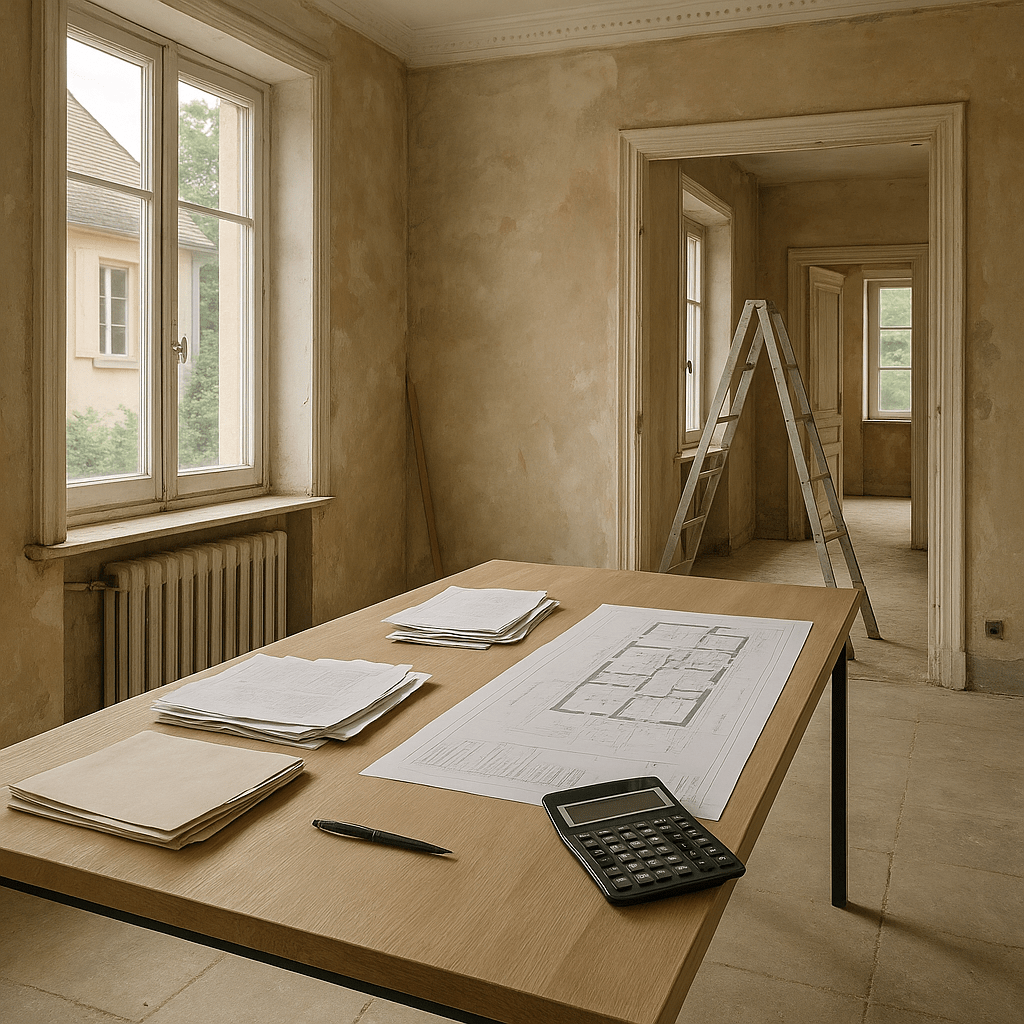
Preparing the PTZ file requires rigor: each supporting document (tax notice, work estimates, completion certificate) must be dated and complete. Start with an online simulation with your bank or a broker to assess your eligibility. Then gather the administrative and financial documents, not forgetting the overall financing plan, including the main loan and your personal contributions.
Other homeownership aids in 2025
Beyond the PTZ, several complementary schemes can support your project:
- Eco zero-interest loan: to finance energy renovation work without interest.
- Reduced VAT rate: applicable in certain zones for new housing, the rate can drop from 20% to 5.5%.
- Local aids: municipalities and departments sometimes offer subsidies, particularly for first-time buyers and rural areas.
- Homeownership APL: aid from the Family Allowance Fund accessible to low-income households subject to income and work conditions.
Combining these schemes requires careful analysis to avoid incompatibilities and optimize overall financing. A broker or energy advisor can provide valuable guidance.
FAQ: answers to frequently asked questions
1. Is the PTZ compatible with all bank loans?
Yes, it generally works alongside a main loan (classic or amortizable). Some assisted loans (conventional loan, action logement loan) can also be combined. However, avoid stacking several schemes that would require similar guarantees.
2. What are the conditions for the eco-PTZ and the classic PTZ?
The classic PTZ targets homeownership, while the eco-PTZ finances energy-saving work (insulation, high-performance boiler). They can be combined if your project includes both purchase and thermal renovation, provided the eco-PTZ is subscribed within two years following the purchase.
3. How are the areas eligible for the PTZ defined?
The zones A, B1, B2, and C result from an official mapping based on real estate pressure. The State updates these boundaries every three years. In 2025, most large urban areas remain in zone A or B1, where prices are rising.
4. Can I get an exemption if I was an owner less than two years ago?
Legitimate reasons include the death of a spouse, a life accident, or forced relocation. You must prepare a specific file with your lender, justifying the situation with official documents (court judgment, medical certificate, etc.).
5. What additional costs should be anticipated around the PTZ?
Besides notary and bank file fees, do not forget borrower insurance and, if your project requires it, fees related to technical diagnostics and ten-year guarantees for the work.