General Context of Conflicts in the Middle Ages
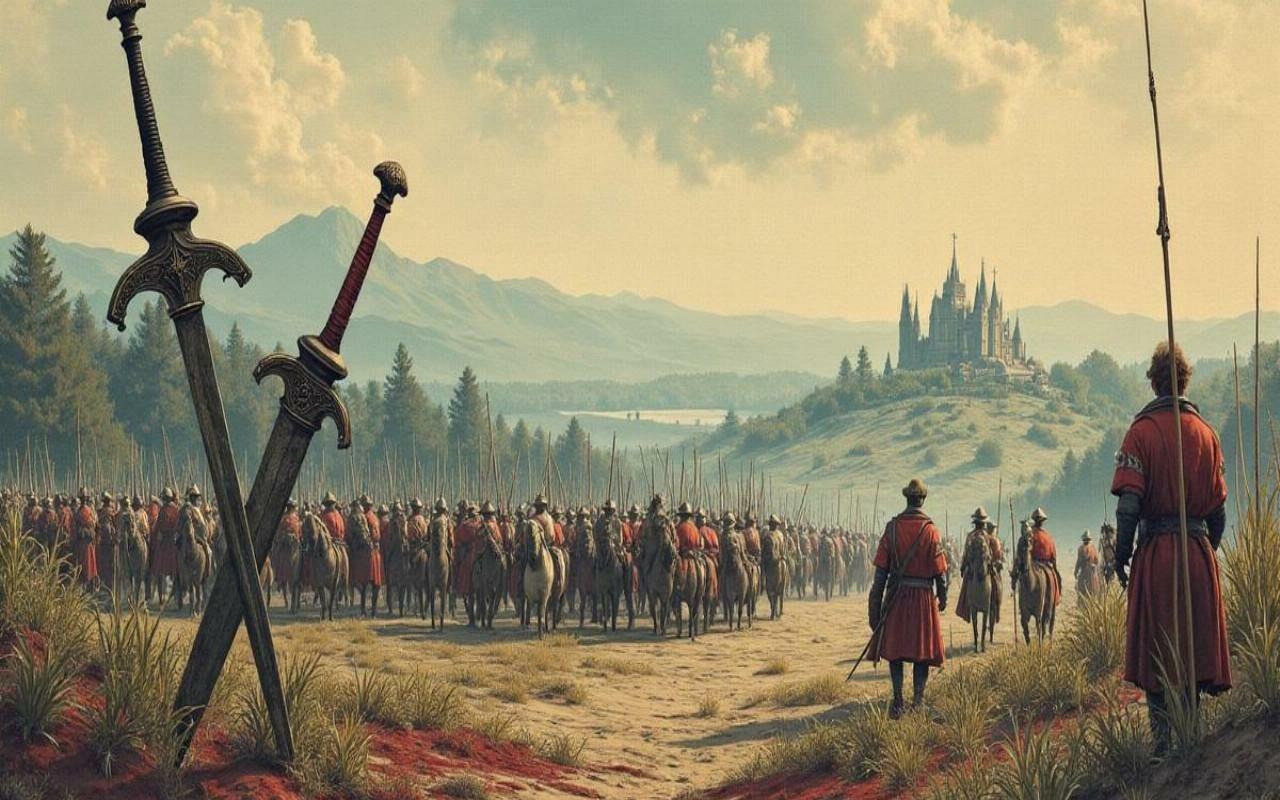
Between migrations of peoples, imperial disintegrations, and personal ambitions, the map of medieval Europe is a moving mosaic. Kingdoms sometimes arise from chance encounters between a landless heir and a conspiratorial nobility. Like the Normans in England or the Plantagenets in France, each monarch exploits political weaknesses to gain ground. On a battlefield, one does not merely win territory: one expands prestige, consolidates authority, and sometimes redraws the hierarchy of powers.
Combatants rely on tactics that evolve over decades: heavy cavalry, massed infantry, archers, and pikemen coordinate according to geography and military organization. The victory or defeat of a single day can overturn a kingdom, alter alliances, and fracture dynastic lines. Therefore, analyzing these battles is to delve into the mechanisms of the emerging state, understand how power is constructed, and how national identity is forged.
List of Major Battles
Battle of Hastings (October 14, 1066)
Duke William of Normandy lands on the English coast with an impressive fleet and knights ready to fight. Facing Harold Godwinson, freshly crowned king, the Normans deploy their light infantry mixed with cavalry: a tactical innovation for the time. Harold’s death, pierced by an arrow according to the chronicle, seals the Norman victory.
Political consequences:
- Cultural fusion: the Anglo-Saxon nobility is replaced by Norman lords, disrupting language and customs.
- Increased centralization: William establishes a census (Domesday Book) to better tax and control his vassals.
- New feudal dynamics: the fief system becomes formalized, strengthening the “lord-vassal” bond as the foundation of power.
Battle of Legnano (May 29, 1176)
In Northern Italy, the Lombard League – a coalition of city-states such as Milan, Pavia, and Venice – faces Frederick Barbarossa, emperor of the Holy Roman Empire. The imperial knights, though reputed invincible, clash with a well-organized urban infantry. The armed and trained communal militias halt the Teutonic advance near Legnano, close to Milan.
Political consequences:
- Communal assertion: the cities gain autonomy, confirming their ability to resist the Emperor.
- Imperial weakening: Barbarossa must accept the Concordance of Venice, limiting his grip on northern Italy.
- Diplomatic model: the victory inspires other cities to negotiate collectively against feudal lords.
Battle of Muret (September 12, 1213)
At the heart of the conflict between King Philip Augustus of France and the Counts of Toulouse, Simon de Montfort, leader of the Albigensian Crusade, defeats King Peter II of Aragon and his Occitan allies before Muret. Montfort effectively exploits the discipline of his knights against the Aragonese cavalry, dispersing the opposing army in a few lightning charges.
Political consequences:
- Occitan weakening: the County of Toulouse comes under royal and papal control, marking the effective end of the independent southern culture.
- Capetian expansion: Philip II takes advantage of the conflict to consolidate Languedoc.
- Pontifical power: Pope Innocent III strengthens his authority over the political affairs of the South.
Battle of Bouvines (July 27, 1214)
Bringing together France, England, and the Holy Roman Empire, a coalition led by King John Lackland and Emperor Otto IV seeks to overthrow Philip Augustus. The King of France, though outnumbered, benefits from better coordination between horsemen and archers to repel the invader near Lille.
Political consequences:
- Royal strengthening: the victory consolidates Philip Augustus’s image as the Father of the Nation and undisputed master of the kingdom.
- English crisis: John Lackland, defeated and ridiculed, is forced to sign the Magna Carta two years later.
- European balance: the Empire is temporarily weakened, and the pope regains a role as mediator between the Franks and Germans.
Battle of Crécy (August 26, 1346)
The conflict is part of the larger drama of the Hundred Years’ War. Edward III’s English, outnumbered, exploit the power of the longbow against the French knights. Positioned on a ridge, the English archers decimate the cavalry charges, illustrating the gradual end of the supremacy of heavy lances.
Political consequences:
- Clash of mentalities: the prestige of chivalry is dented, and the lesser nobles feel even more sidelined.
- Capetian fragility: John II the Good, taken prisoner, must pay a heavy ransom.
- Military innovations: increased use of infantry and light artillery becomes widespread.
Battle of Poitiers (September 19, 1356)
The second major English victory during the Hundred Years’ War, Poitiers sees the army of the Black Prince, Edward of Woodstock, capture King John II. Beyond the military trauma, an entire system of governance falters in France, between contested regents and populations exhausted by war.
Political consequences:
- Succession crisis: royal authority is in jeopardy, the minority of the dauphin creates tensions among barons.
- Fragile peace: the Treaty of Brétigny (1360) confirms major territorial concessions to the English.
- Emergence of the Estates General: to raise new taxes, the king convenes these assemblies, the forerunners of a modern Parliament.
Battle of Agincourt (October 25, 1415)
John of Lancaster, King of England, surprises a numerically superior French army in the mud of the fields of Agincourt. Once again, the effectiveness of the archers and the disorganization of the French cavalry tip the balance.
Political consequences:
- Treaty of Troyes (1420): Charles VI recognizes Henry V as heir to the French throne.
- Division of the kingdom: the opposition between Armagnacs and Burgundians plunges France into civil war.
- English strengthening: military control of northern France until the siege of Orléans in 1428.
Summary Table
| Battle | Date | Main forces | Political consequences |
|---|---|---|---|
| Hastings | 1066 | Normans vs Anglo-Saxons | Norman domination, English centralization |
| Legnano | 1176 | Lombard League vs H.R.E. | Communal autonomy, imperial weakening |
| Muret | 1213 | Crusaders vs Aragonese/Occitans | Capetian control of Languedoc, papal power |
| Bouvines | 1214 | France vs Coalition | Capetian consolidation, English crisis |
| Crécy | 1346 | English vs French | End of chivalric supremacy |
| Poitiers | 1356 | English vs French | Treaty of Brétigny, Estates General |
| Agincourt | 1415 | English vs French | Treaty of Troyes, civil war |
FAQ
- Why have these battles had such an influence on politics?
- Each battle allowed the victors to redraw borders, impose new treaties, or permanently weaken rival dynasties. The symbolic dimension is as important as the territorial stake.
- How did medieval tactics evolve?
- There was a shift from the dominant knightly charge to the gradual integration of infantry and archers. The success of the English longbow is a striking example, demonstrated by the battles of Crécy and Agincourt.
- Which periods are the most significant?
- The 12th and 14th centuries stand out for decisive conflicts: the Capet-Plantagenet rivalry and the Hundred Years’ War permanently reshaped the European map.
- Did medieval diplomacy take war into account?
- Declarations of war and peace treaties often went hand in hand. Monarchies negotiated during truces, adjusting alliances and princely marriages based on military outcomes.
{
“@context”: “https://schema.org”,
“@type”: “WebPage”,
“about”: {
“@type”: “Thing”,
“name”: “Great Battles of the Middle Ages and Their Political Consequences”
},
“keywords”: [“battles”, “Middle Ages”, “political consequences”, “chivalry”, “dynasty”]
}
{
“@context”: “https://schema.org”,
“@type”: “FAQPage”,
“mainEntity”: [
{
“@type”: “Question”,
“name”: “Why have these battles had such an influence on politics?”,
“acceptedAnswer”: {
“@type”: “Answer”,
“text”: “Each battle allowed the victors to redraw borders, impose new treaties, or permanently weaken rival dynasties. The symbolic dimension is as important as the territorial stake.”
}
},
{
“@type”: “Question”,
“name”: “How did medieval tactics evolve?”,
“acceptedAnswer”: {
“@type”: “Answer”,
“text”: “There was a shift from the dominant knightly charge to the gradual integration of infantry and archers. The success of the English longbow is a striking example, demonstrated by the battles of Crécy and Agincourt.”
}
},
{
“@type”: “Question”,
“name”: “Which periods are the most significant?”,
“acceptedAnswer”: {
“@type”: “Answer”,
“text”: “The 12th and 14th centuries stand out for decisive conflicts: the Capet-Plantagenet rivalry and the Hundred Years’ War permanently reshaped the European map.”
}
},
{
“@type”: “Question”,
“name”: “Did medieval diplomacy take war into account?”,
“acceptedAnswer”: {
“@type”: “Answer”,
“text”: “Declarations of war and peace treaties often went hand in hand. Monarchies negotiated during truces, adjusting alliances and princely marriages based on military outcomes.”
}
}
]
}