Sommaire
The Impact of the 2024 Olympic Games on French Tourism
The Paris 2024 Olympic Games are set to be a major catalyst for tourism in the Hexagon. This global event is expected to attract millions of additional visitors, generating a considerable windfall effect for the French economy. Forecasts indicate a significant increase in tourist attendance, with economic benefits expected to amount to billions of euros. The enthusiasm for the Olympics is already reflected in a notable increase in accommodation bookings. Many residents of the Paris region are considering renting out their homes during the Olympic period, sometimes at rates three times higher than usual prices. This exceptional opportunity should stimulate the local economy and encourage the consumption of local products.- Expected increase in the number of foreign visitors
- Rise in rental prices during the Olympics
- Stimulation of the local economy and short supply chains
Key Tourism Figures in France for 2024
Projections for 2024 suggest a record year for French tourism. Estimates predict a number of visitors far exceeding 90 million, thereby surpassing pre-pandemic figures. This exceptional influx should translate into a substantial increase in overnight stays, with forecasts nearing 450 million across the entire territory. Tourism revenues are expected to reach historic highs, with estimates exceeding 60 billion euros. This financial windfall will contribute significantly to the national GDP and strengthen France’s position as the world’s leading tourist destination.- More than 90 million visitors expected
- Approximately 450 million overnight stays forecast
- Tourism revenues estimated at over 60 billion euros
Distribution of Tourists by Origin
The diversity of visitor origins in France continues to expand in 2024. While neighboring European countries remain the main sources of tourists, there is a notable growth in clientele from Asia and the Americas. The United States, the United Kingdom, and Germany remain at the top of the issuing nations, closely followed by China, whose market is experiencing a significant post-pandemic rebound. Emerging new trends reveal a growing interest from visitors originating from India, Brazil, and Gulf countries. This diversification of source markets helps strengthen the resilience of the French tourism sector against global economic fluctuations.- Europe: main source of tourists
- Notable growth of Asian and American visitors
- Emergence of new markets: India, Brazil, Gulf countries
Average Spending According to Tourist Origin
Tourists’ spending habits in France vary considerably depending on their country of origin. Visitors from Gulf countries and China stand out for their high expenditures, particularly in the luxury and high-end shopping sectors. Their average budget per stay can reach up to 3,000 euros, well above the national average. American and Japanese tourists also rank among the highest spenders, with a strong preference for French gastronomy and cultural experiences. In contrast, European visitors, although more numerous, tend to have more moderate spending, often favoring short circuits and local consumption.- Gulf and Chinese tourists: highest spending
- Americans and Japanese: strong gastronomic and cultural consumption
- Europeans: more moderate spending, attraction to local products
Tourist accommodation trends in 2024
The year 2024 marks a turning point in tourists’ accommodation preferences in France. Peer-to-peer rentals are gaining popularity, with 20% of French people choosing this option during their summer holidays, compared to only 15% for traditional hotels. This trend reflects travelers’ search for authenticity and flexibility. Short-term rental platforms, such as Airbnb, play a major role in this evolution. They often offer better value for money than traditional accommodations, while allowing a deeper immersion in local culture. However, this popularity raises challenges in terms of regulation and impact on the local real estate market.- Growing preference for peer-to-peer rentals
- Search for authenticity and flexibility
- Regulatory challenges related to the growth of short-term rentals
Airbnb: a major player in French tourism
Airbnb has established itself as a key player in the French tourism landscape. In 2023, the platform recorded 448 million nights booked worldwide, generating revenue close to 10 billion dollars. In Paris, the second European city in terms of listings after London, Airbnb had 74,329 accommodations offered in 2023. Airbnb’s impact on the local economy is significant, with the remittance of tourist taxes to French municipalities. On the other hand, its rapid growth raises concerns about the scarcity of year-round housing and the overtourism phenomenon in certain popular destinations. In response, an “anti-Airbnb” law was passed in January 2024 to regulate the growth of short-term rentals.- 448 million nights booked via Airbnb in 2023
- 74,329 listings in Paris in 2023
- Implementation of regulations to limit the impact on local housing
The economic impact of tourism on French regions
Tourism in France generates considerable economic benefits, but unevenly distributed across the territory. Coastal and mountainous regions, as well as Île-de-France, capture a significant share of tourism revenues. Paris and its region remain the main attraction hub, largely benefiting from the influx of international visitors and associated spending. On the other hand, there is a trend towards diversification of tourist destinations, with growing interest in rural regions and medium-sized towns. This development contributes to a more balanced distribution of the economic benefits of tourism and promotes local development in previously less frequented areas.- Concentration of revenues in coastal, mountainous regions and Île-de-France
- Emergence of new tourist destinations in rural areas
- Contribution to local economic development
New tourism trends in France
French tourism is experiencing a marked shift towards more sustainable and authentic forms of travel. Green tourism and ecotourism are gaining popularity, reflecting a growing environmental awareness among travelers. Stays focused on discovering local products and regional know-how are attracting more and more visitors seeking unique experiences. Slow tourism is establishing itself as a major trend, encouraging travelers to take the time to deeply discover the destinations they visit. This approach promotes short circuits, support for local producers, and a more authentic immersion in French culture.- Rise of sustainable tourism and ecotourism
- Growing appeal for authentic local experiences
- Development of slow tourism and short circuits
Business tourism in France in 2024
Business tourism in France is experiencing a significant rebound in 2024, after several years impacted by the pandemic. Major French cities, particularly Paris, Lyon, and Marseille, are regaining their attractiveness for organizing international congresses, seminars, and professional trade shows. This recovery is supported by investments in reception infrastructures and the modernization of conference centers. The evolution of professional practices post-pandemic has led to an increasing hybridization of events, combining physical presence and remote participation. This trend offers new opportunities for the sector, while posing challenges in terms of technological and logistical adaptation.- Dynamic recovery of business tourism in major cities
- Hybridization of professional events
- Adaptation of infrastructures to new sector requirements
The impact of digital technology on French tourism
The digital transformation is profoundly disrupting the French tourism industry. Digital technologies are redefining the traveler’s experience, from planning to the realization of the stay. Mobile applications and online platforms have become essential tools for booking accommodations, discovering local activities, and managing travel. The rise of augmented reality and virtual reality opens new perspectives for enhancing French cultural and natural heritage. These technologies allow immersive and interactive visits, enriching the tourist experience while contributing to the preservation of sensitive sites.- Ubiquity of mobile applications in the tourist experience
- Increasing use of augmented reality for heritage enhancement
- Greater personalization of offers thanks to big data
The challenges of overtourism in major French cities
The phenomenon of overtourism poses growing challenges for major French destinations, particularly Paris. The excessive concentration of visitors in certain neighborhoods leads to problems of congestion, degradation of the living environment for residents, and pressure on local infrastructures. This situation also exacerbates tensions in the real estate market, with a proliferation of short-term rentals to the detriment of housing for inhabitants.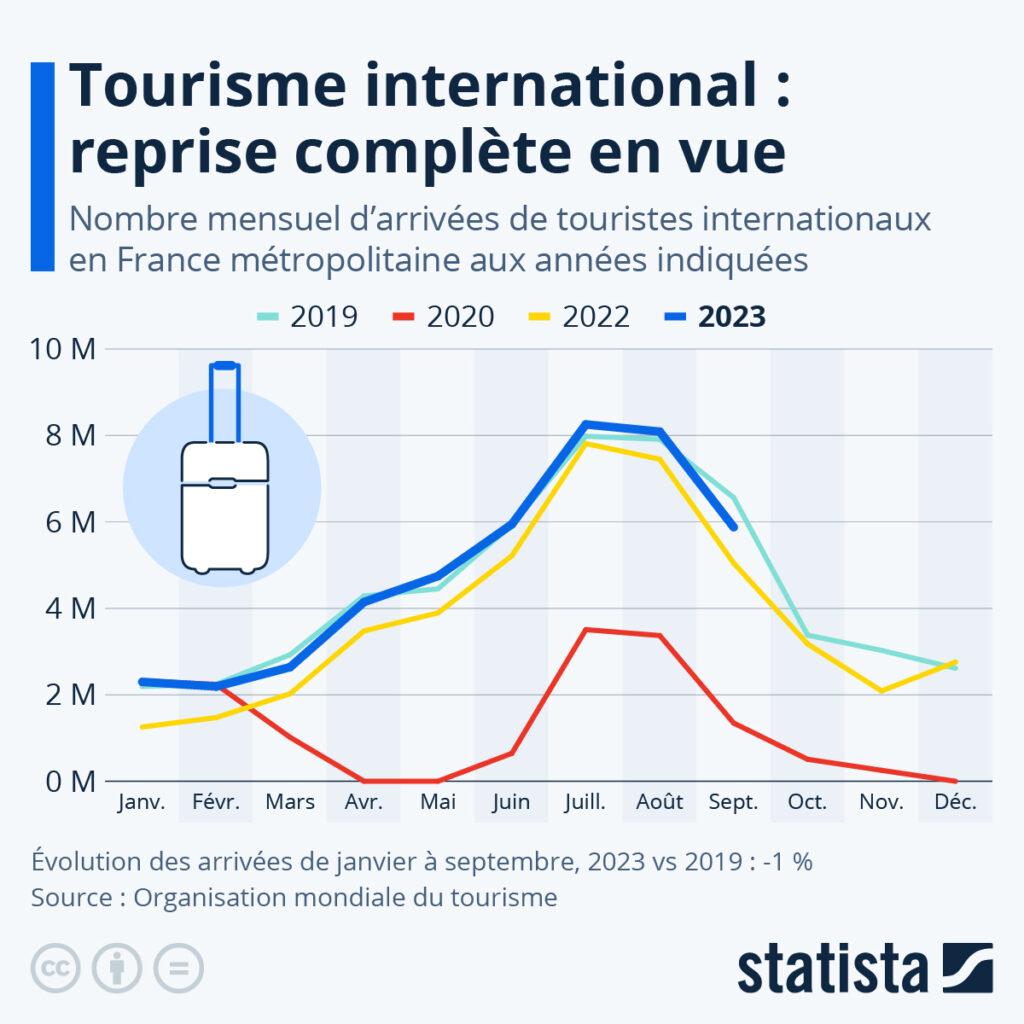 To address these issues, many cities are implementing measures to regulate and manage tourist flows. For example, Saint-Malo has introduced limits on the proportion of housing that can be rented as furnished tourist rentals. These initiatives aim to preserve the balance between tourist attractiveness and residents’ quality of life.
- Excessive concentration of tourists in certain neighborhoods
- Impact on the real estate market and local life
- Implementation of regulatory measures by municipalities
The seasonality of tourism in France
Seasonality remains a major issue for the French tourism industry. Summer and winter attendance peaks contrast sharply with low seasons, which poses challenges in terms of resource management and employment in the sector. This fluctuation has significant economic implications, especially for regions heavily dependent on tourism. Efforts are being made to mitigate these seasonal variations and promote more balanced tourism throughout the year. Initiatives include developing off-season offers, highlighting cultural and gastronomic assets during the low season, and diversifying activities offered to attract visitors at different times of the year.- High concentration of tourism activity in summer and winter
- Impacts on employment and the local economy
- De-seasonalization strategies to balance activity
The fiscal benefits of tourism for the French state
Tourism represents a significant source of tax revenue for the French state. The revenues generated mainly come from VAT on tourist expenditures, tourist taxes collected by accommodation providers, and taxes on the profits of businesses in the sector. These revenues contribute significantly to the national budget and the financing of public infrastructure.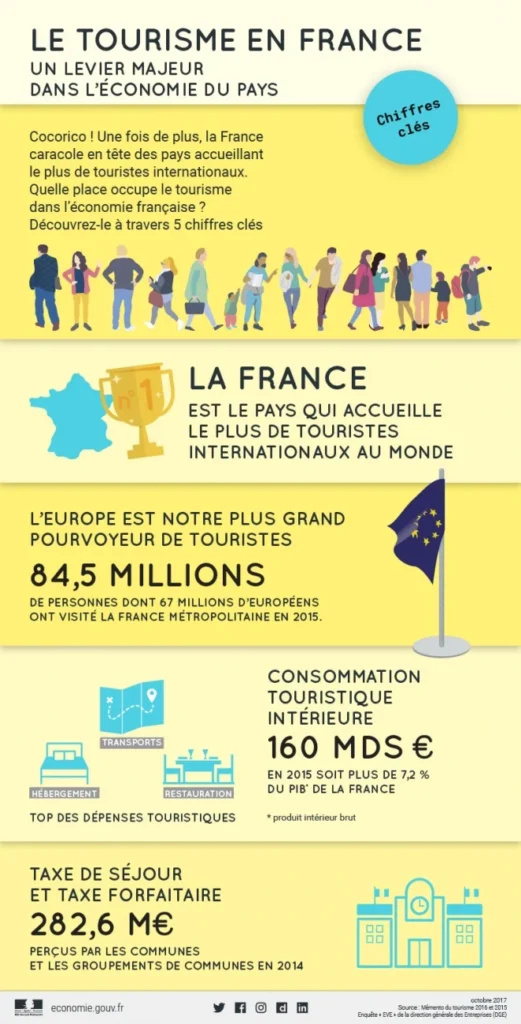
- Significant contribution of tourism to the state’s tax revenues
- Improvement in the collection of tourist taxes
- Financing of infrastructure and public services
The future outlook for French tourism
The future of tourism in France looks promising, but not without challenges. The transition to a more sustainable and responsible model is imperative, in response to growing environmental concerns and consumer demand for more ethical travel experiences. This evolution involves investments in green infrastructure, the promotion of more ecological modes of transport, and the enhancement of local natural and cultural heritage. The ongoing digitalization of the sector offers new opportunities to personalize the tourist experience and optimize visitor flow management. However, it also raises questions about personal data protection and equitable access to digital services. The challenge for the French tourism industry will be to find a balance between technological innovation and preserving the authenticity that makes France such a charming destination.- Transition to more sustainable and responsible tourism
- Opportunities and challenges related to the digitalization of the sector
- Balance between innovation and preservation of authenticity