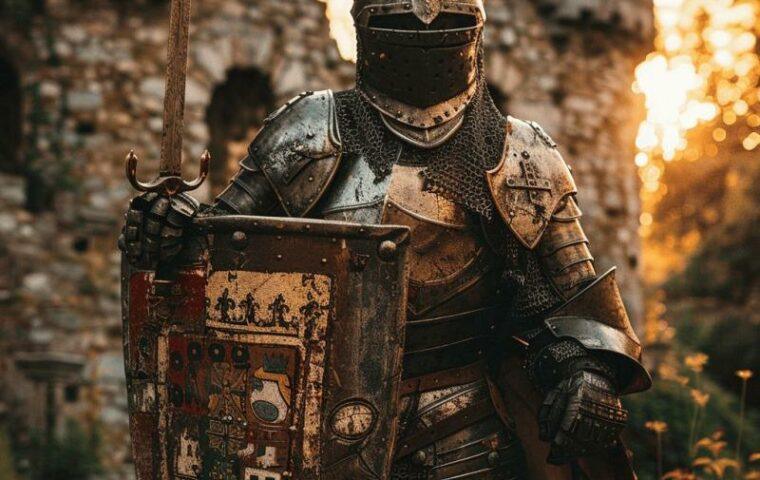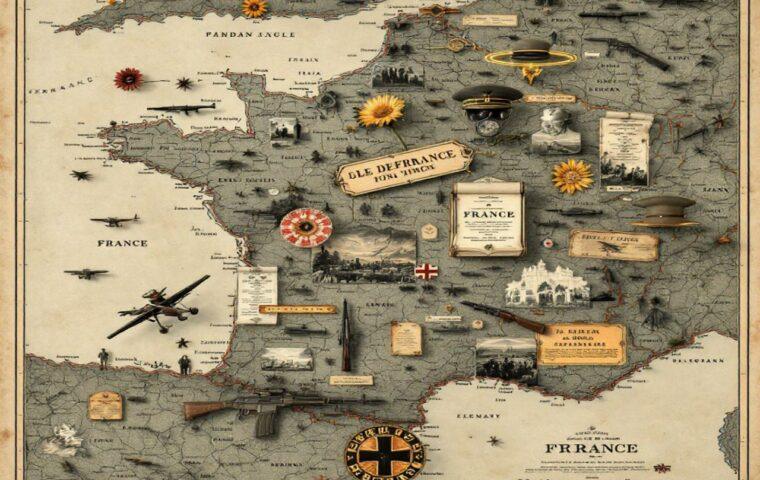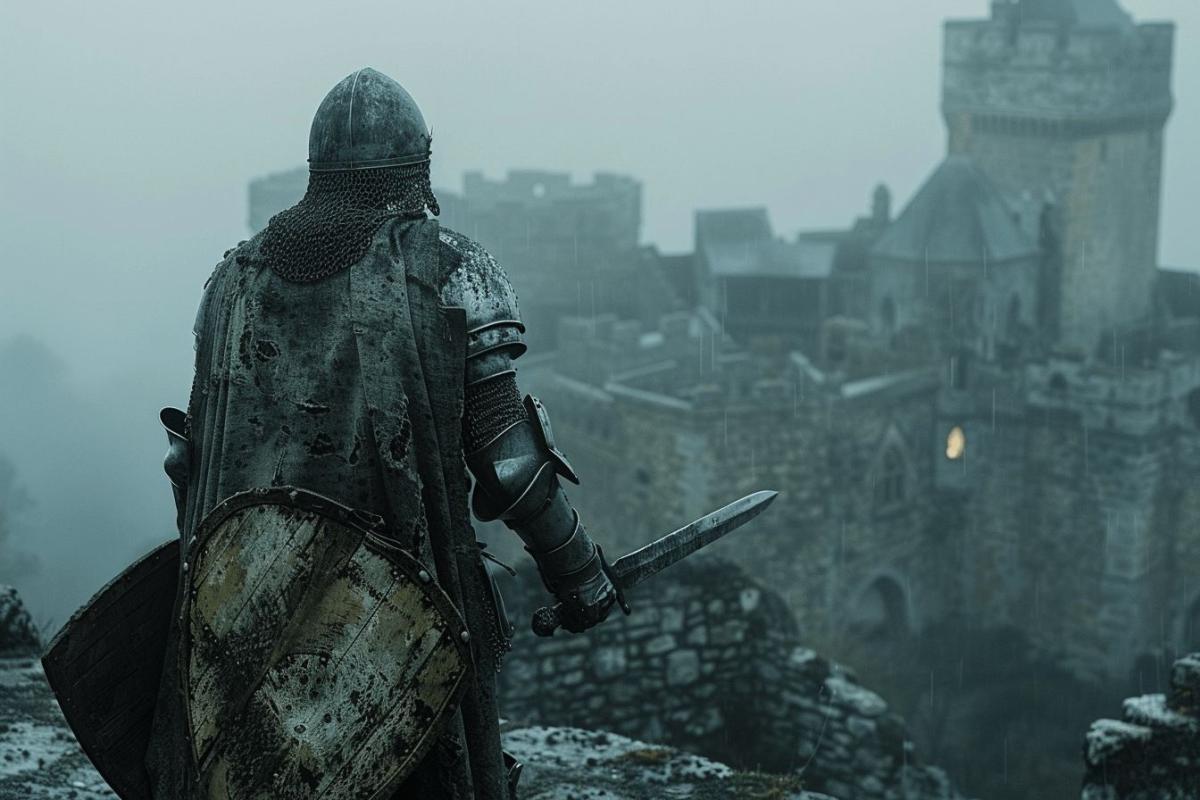
The French Middle Ages are full of interesting stories and iconic characters who shaped the history of our country. On the other hand, beyond the well-known great figures, there are forgotten heroes whose exploits deserve to be rediscovered. These brave men and women left their mark on castles and battlefields, but their names have often been overshadowed by time. Let us dive into these little-known stories that continue to captivate medieval history enthusiasts.
Sommaire
The unknown defenders of besieged castles
Castle sieges were common during the Middle Ages, testing the bravery and ingenuity of the defenders. Among these forgotten heroes is Arnaud de Cervole, nicknamed “the Archpriest.” This 14th-century mercenary distinguished himself during the defense of Montpaon Castle in 1362, resisting for weeks against assaults by English troops despite shortages of supplies and reinforcements.
Another remarkable figure is Jeanne de Fougères, who defended Fougères Castle in Brittany in 1256. While her husband was absent, she organized the resistance against the troops of the Duke of Brittany, using innovative defense techniques for the time. Her courage allowed the siege to be held until reinforcements arrived, similarly saving the fortress.
These heroic defenders often showed great creativity in repelling attackers. Here are some of their most ingenious tactics:
- The use of beehives thrown at the enemies
- The pouring of boiling oil from the machicolations
- The creation of hidden traps in the moats
- The use of coded light signals to communicate with the outside
These bold strategies sometimes allowed castles reputed to be impregnable to withstand sieges that should have brought them down. As a curious journalist, I cannot help but be fascinated by the ingenuity of these forgotten defenders who faced adversity with limited means.
Legends and mysteries of French castles
French castles are not only the setting of epic battles, they also house many legends and mysteries that continue to intrigue visitors. One of the most famous is that of the White Lady of Puymartin Castle in Dordogne. According to tradition, Thérèse de Saint-Clar, an unfaithful wife of a local lord, was walled up alive in a tower of the castle in the 16th century. Her ghost has haunted the place ever since, appearing dressed in white to intrepid visitors.
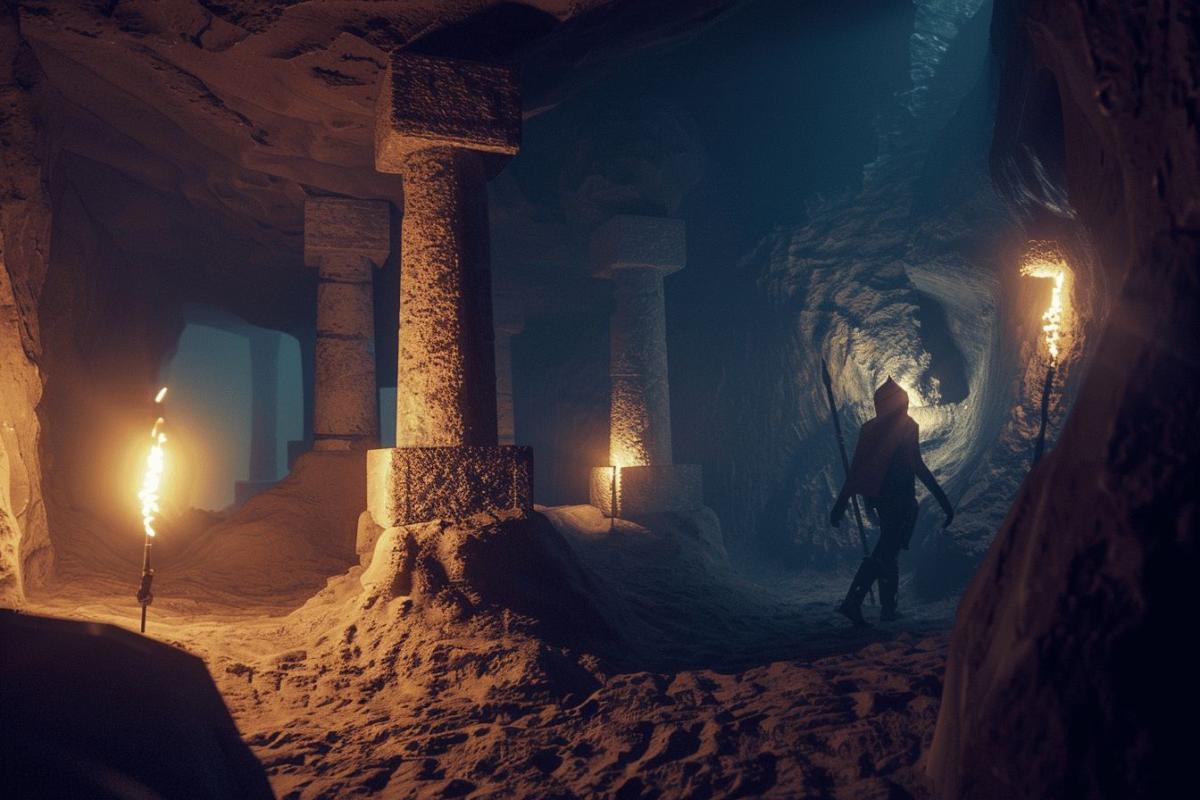
The Blandy-les-Tours Castle in Seine-et-Marne, for its part, harbors an even more mysterious legend. It is said that a secret passage connects the keep to an underground tunnel leading to the town of Melun, located several kilometers away. This tunnel supposedly served as an escape route for the lords in case of siege, but it has never been found despite numerous searches.
These legends, although often romanticized, sometimes rely on proven historical facts. They help maintain the aura of mystery surrounding these ancient buildings and stimulate the imagination of visitors. Here is a summary table of some of the most intriguing legends:
| Castle | Legend | Presumed Origin |
|---|---|---|
| Fougères Castle | The fairy Mélusine | 12th century |
| Coucy Castle | The Templars’ treasure | 14th century |
| Chambord Castle | The double-helix staircase | 16th century |
These legendary tales, passed down from generation to generation, help preserve the memory of these places steeped in history. They remind us that behind every stone of these imposing fortresses there may be a secret yet to be discovered.
Forgotten battles that shaped the history of France
While great battles like Azincourt or Crécy are known to all, other confrontations just as crucial to the history of France have fallen into oblivion. This is the case of the Battle of Cocherel, which took place on May 16, 1364, in Normandy. This decisive victory of the French troops commanded by Bertrand du Guesclin against the Anglo-Navarrese forces helped consolidate the power of the young King Charles V at the beginning of his reign.
Another little-known but decisive battle is that of Castillon, which occurred on July 17, 1453. This confrontation marks the end of the Hundred Years’ War, sealing the final victory of the French over the English. Yet, despite its historical importance, this battle remains far less famous than that of Azincourt or Joan of Arc’s chevauchée.
These forgotten battles were often the scene of tactical or technological innovations that changed the course of military history. At Castillon, for example, the massive use of artillery by the French played a decisive role in their victory. Here are some of the major military innovations that appeared during these little-known battles:
- The use of mobile cannons on the battlefield
- The development of new cavalry formations
- The improvement of siege techniques
- The emergence of the first professional infantry units
As a journalist passionate about surprising anecdotes, I cannot help but emphasize the importance of these forgotten battles. They remind us that history is often made up of crucial moments which, although less spectacular, had a lasting impact on the destiny of our country.
The little-known legacy of the heroes of the Middle Ages
Castles, legends, and battles of the French Middle Ages are not just remnants of a distant past. They continue to exert influence on our culture and contemporary society. The legacy of these forgotten heroes manifests itself in various, sometimes surprising ways.
Consequently, many popular expressions find their origins in the exploits of these little-known figures. For example, the expression “tenir la chandelle” (to hold the candle) would come from an anecdote involving a knight forced to light his lord’s chamber during his amorous escapades. Similarly, “être sur la sellette” (to be on the hot seat) would refer to the uncomfortable seat on which the accused sat during medieval trials.
The defensive architecture of castles has also left its mark on our vocabulary and modern practices. The terms “créneau” (battlement) or “meurtrière” (arrow slit) are today used in contexts far removed from their original military meaning. Even our modern security systems sometimes draw inspiration from medieval defensive techniques, as illustrated by the use of moats or checkpoints in certain sensitive installations.
Finally, the values embodied by these forgotten heroes—courage, loyalty, ingenuity—continue to resonate in our society. They still inspire works of fiction, video games, and historical reenactments that allow a wide audience to reconnect with this fascinating period of our history.
By rediscovering these forgotten heroes of the French Middle Ages, we do not just revive buried memories. We shed light on an essential part of our cultural and historical heritage, which continues to shape our collective identity. These tales of bravery, mysterious legends, and decisive battles remind us that history is a complex tapestry, woven from many threads, some of which remain to be examined.