
How Does a Condensing Boiler Work?
| 📌 Principle | The condensing boiler burns a fuel, then recovers part of the heat contained in the flue gases. |
| 🔥 Key point | The water vapor present in the flue gases condenses and releases latent heat, which is reinjected into the heating system. |
| ⚙️ Key elements | Burner, heat exchanger, condenser, and control system work together to maximize efficiency. |
| 💧 Condensates | The condensates are a normal byproduct of operation and must be properly drained. |
| 📉 Efficiency | Seasonal efficiency improves especially with colder return water and low-temperature emitters. |
| 🛠️ To watch | Settings, drainage slope, and maintenance determine daily performance. |
A condensing boiler does not just heat the water in the circuit: it captures heat where an old system would let it escape in the flue gases. In other words, it recycles part of the lost energy, which changes a lot in terms of consumption, comfort, and overall efficiency. 🔥
Sommaire
What is a Condensing Boiler?
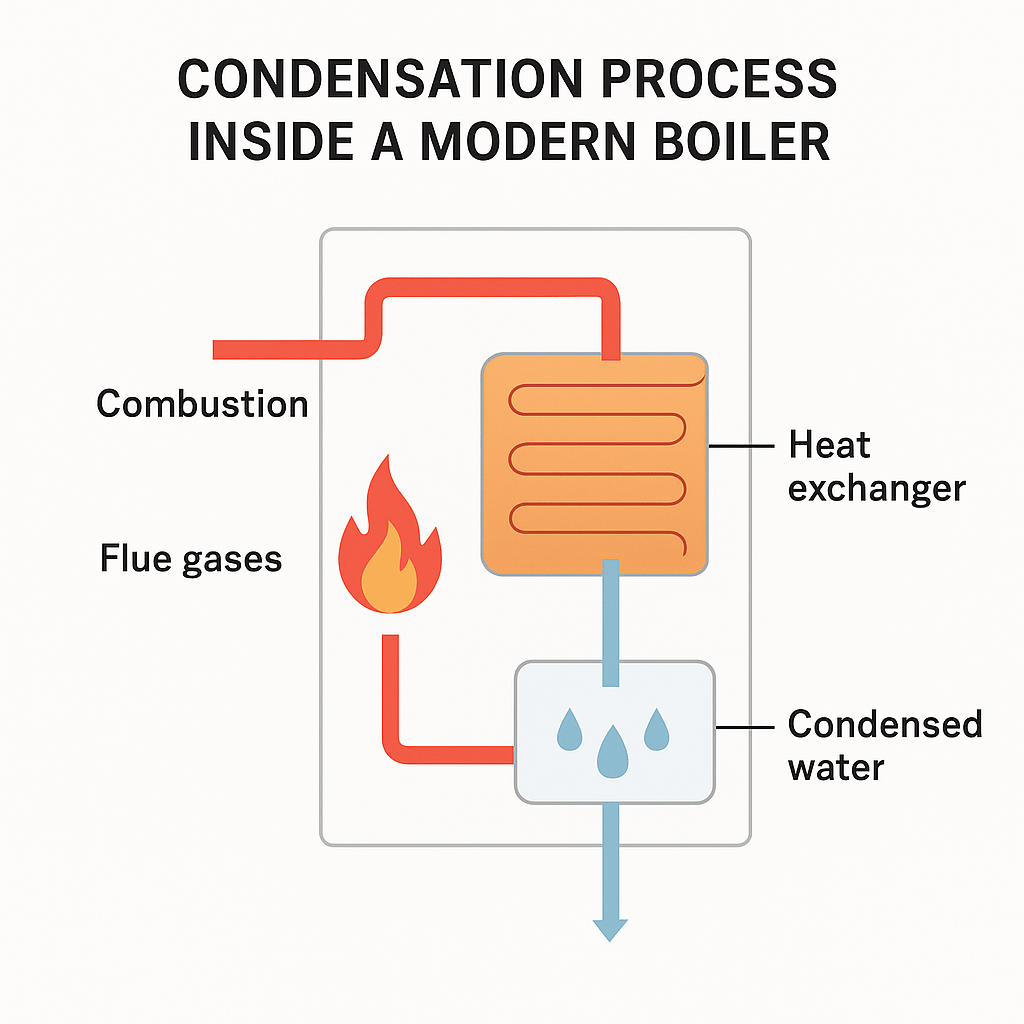
A condensing boiler first produces heat by combustion, then recovers energy a second time by cooling the flue gases until the water vapor they contain condenses. This difference from a traditional boiler is essential: it is not just a simple “brand gain,” but a true thermodynamic mechanism that improves the device’s efficiency.
The Difference with a Conventional Boiler
A conventional boiler heats well, but lets more energy escape in the hot flue gases. The condensing boiler cools these gases as much as possible to recover what is still usable. In practice, this means fewer losses, a lower exhaust temperature, and higher efficiency, especially when the heating circuit operates at low temperature.
| Criterion | Conventional Boiler | Condensing Boiler |
|---|---|---|
| Flue gases | Hotter | Cooled more |
| Energy recovered | Low | Latent heat reused |
| Efficiency | Good but limited | Higher, especially at low temperature |
| Condensates | Little or none | Yes, to be drained |
The Role of Water Vapor
Combustion naturally generates water vapor in the flue gases, whether the fuel is natural gas, propane, or fuel oil. When this vapor condenses, it releases latent condensation heat. It is this heat, invisible but very real, that is recovered by the heat exchanger and then sent back to the water in the heating circuit.
In other words, the condensing boiler does not “create” miraculous heat: it better recovers the heat that already exists. And it is precisely this recycling that makes it so interesting in well-adjusted homes.
What Elements Make This Operation Possible?
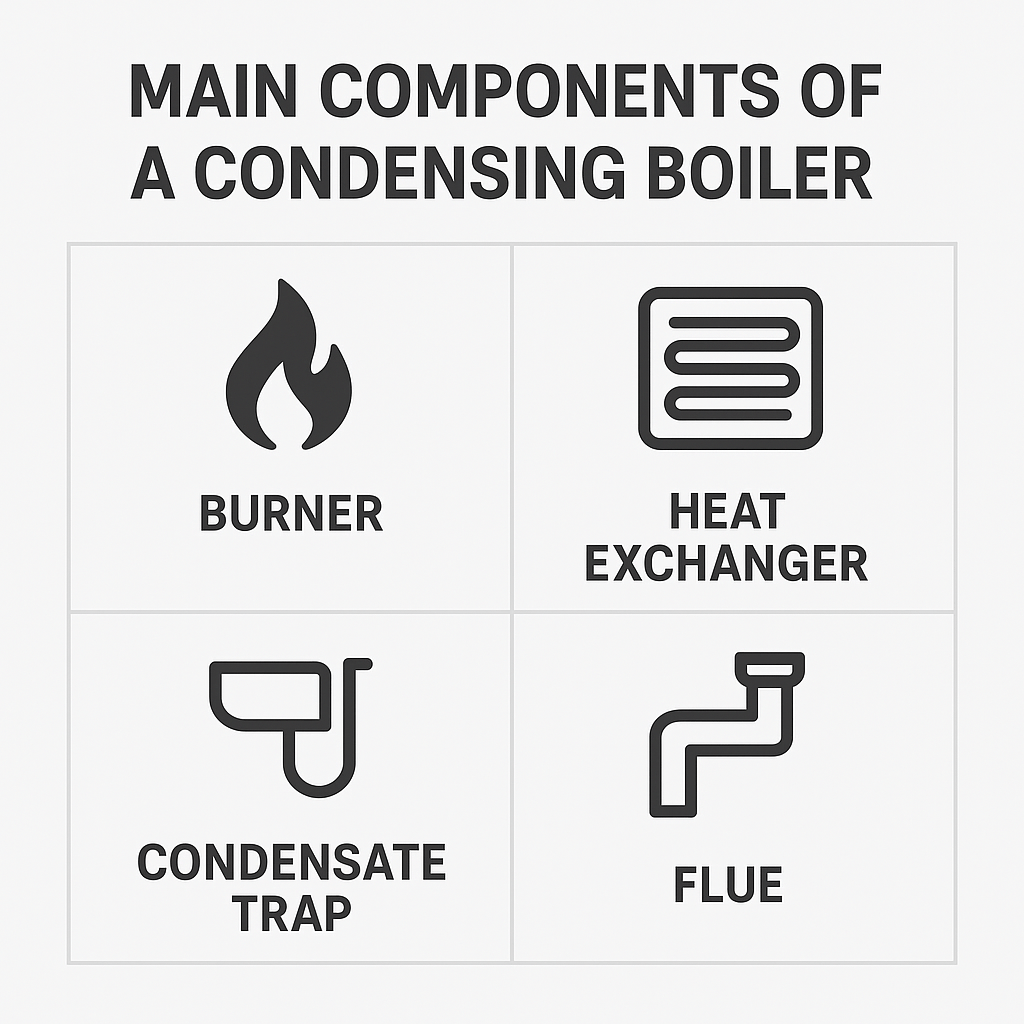
A condensing boiler works thanks to a chain of complementary components: the burner produces heat, the heat exchanger transfers it to the water, the condenser recovers the surplus from the flue gases, and the electronic control system orchestrates everything. Without this coordination, condensation would remain partial and the energy gain much less clear.
The path of water and flue gases
The return water from the network enters the device at a lower temperature than the water sent to the radiators. This is a crucial point, because the colder this return water is, the more the boiler can condense. The flue gases follow a separate path and first transfer their energy to the main heat exchanger, then to the condenser, without ever mixing with the circuit water.
- Colder return water: it promotes condensation.
- Cooled flue gases: they lose their residual heat.
- Separate circuits: no mixing between water and combustion gases.
If you are preparing a complete replacement, the guide on installing a condensing boiler details the installation constraints, notably condensate drainage and flue gas connection.
The burner and the main heat exchanger
The burner initiates the combustion of the fuel with the combustion air. The main heat exchanger captures the energy produced to heat the network water. Depending on the model, this water feeds the radiators, underfloor heating, or domestic hot water production. The design of the heat exchanger is very important: the more efficient the exchange surfaces, the less the losses at start-up.
The condenser and condensate drainage
The condenser is the component that really makes the difference. It lowers the temperature of the flue gases to trigger the condensation of water vapor and recover the associated heat. The water resulting from this transformation forms condensates, collected inside the device and then sent to a trap and a dedicated drain. Depending on the installation, neutralization may be necessary before discharge into the sewage system.
The real issue is not just the boiler, but the return temperature. It is what makes or breaks the actual efficiency, much more than a commercial slogan.
Electronic regulation
The electronic board controls the power based on the indoor temperature, the requested water temperature, and the heating/DHW priority. It allows the boiler to modulate its flame, avoid repeated ignitions, and remain stable. Without fine regulation, the device would work in jerks, with more noise, more wear, and less efficiency.
How does a condensing boiler operate?
The cycle starts with the ignition of the burner, then the heat is transferred to the water via the main heat exchanger. Next, the flue gases are cooled down to the dew point to cause condensation. The recovered heat is added to the water heating before the cooled gases are evacuated. It is a simple loop on paper, but very efficient in practice.

A condensing boiler burns a fuel to heat water, then recovers energy from the flue gases a second time by condensing the water vapor they contain. This “bonus” recovery increases efficiency and reduces losses, provided the return water is cold enough.
1. Combustion starts
The fuel is burned in the combustion chamber with the combustion air. This first step produces hot gases, water vapor, and thermal energy. It initiates the entire transfer chain, but this is still only half the work. The real advantage of the condensing boiler is what it does next with the flue gases, not just the primary heat from the combustion chamber.
2. Heat is transferred to the circuit
The heat exchanger captures energy from the flue gases to heat the network water. This water rises in temperature before being sent to the heat emitters. In some models, domestic hot water production becomes a priority at this stage, temporarily altering the internal operation. The system then adjusts its power to respond more quickly to the demand.
3. The flue gases are cooled and condensed
The flue gases then pass through a cooler zone of the boiler. When their temperature drops below the dew point, the water vapor turns into liquid. This transformation releases latent heat, which is in turn recovered by the device. It is this second energy capture that explains the performance gap compared to an older boiler.
4. Residues are evacuated
The cooled flue gases are expelled outside through the flue pipe, while the condensates are collected and then discharged into the sewage system. The cycle restarts as long as the heat demand persists. In practice, the boiler repeats this sequence dozens of times a day during the heating season, with phases of varying length depending on the actual need.
In which homes does the condensing boiler really condense well?
Condensation works all the better when the return water is cold and the heat emitters require modest temperatures. In other words, a condensing boiler is advantageous in a well-insulated home, with underfloor heating or low-temperature radiators. In an old apartment in Lyon or a 1970s house near Nantes, it can also work very well, but only if properly adjusted.
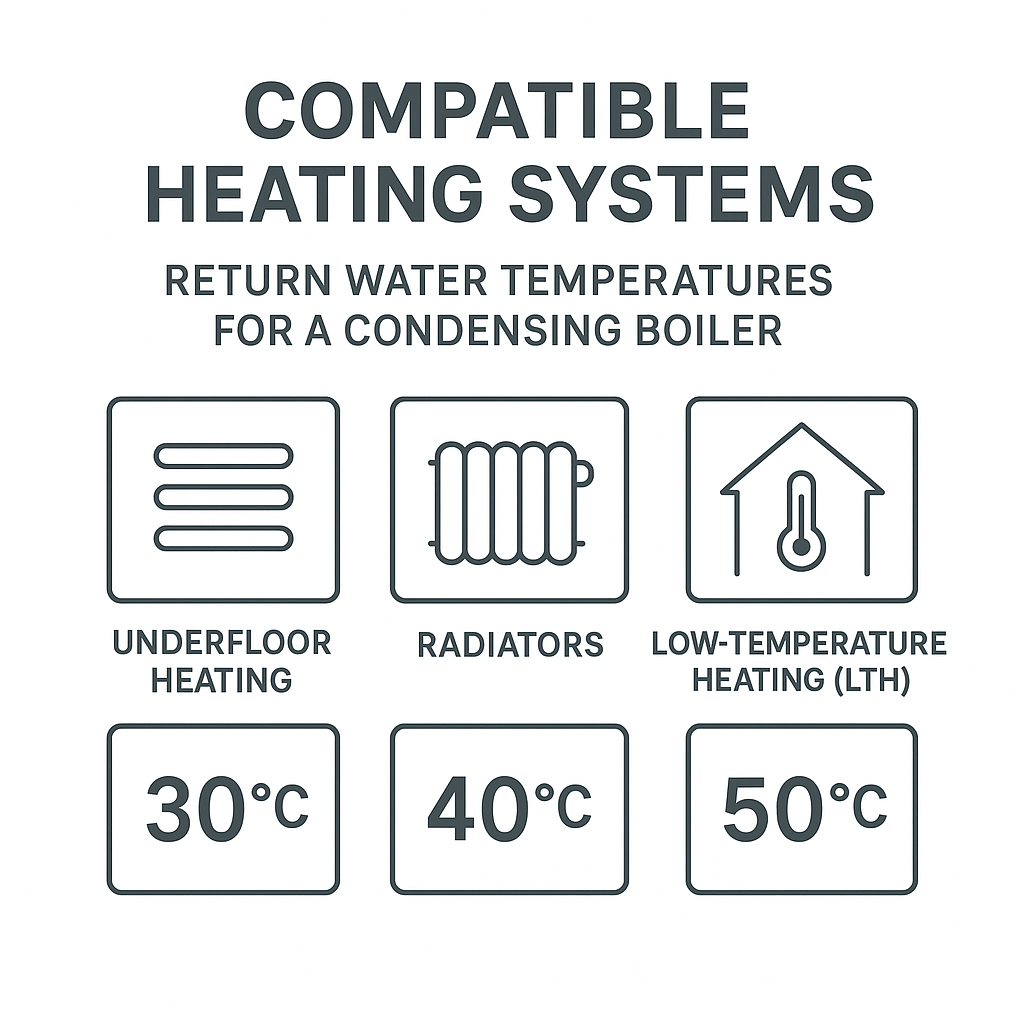
Field observations show that in several 1970s houses around Lille and Rennes, the boiler condenses much better after a simple heating curve adjustment. Conversely, when the water leaves too hot towards oversized radiators, recovery quickly drops.
Return water to the boiler and the dew point
Colder return water promotes condensation in the secondary heat exchanger. When the flue gases drop below their dew point, they release recoverable latent heat. The more favorable the temperature difference, the greater the energy recovery. That is why a low-temperature installation is often more efficient over time.
Power modulation
The boiler can reduce or increase its power according to the home’s needs. This adaptation limits frequent stops and restarts, which are often detrimental to efficiency and wear. Operation becomes more stable when demand is steady. Conversely, sudden indoor temperature variations cause shorter and less efficient cycles.
The link with seasonal efficiency
Seasonal efficiency takes into account the real-life operation of the device throughout the entire heating season, not just a theoretical test. Heat recovery from the flue gases limits losses through evacuation, but this gain strongly depends on the supply and return temperatures. This is where well-adjusted regulation makes all the difference, especially in homes already partially renovated.
If you compare several solutions, the article on the gas, oil, or hybrid condensing boiler helps to see which fuel really fits your home and your existing network.
Heating and domestic hot water
The heating mode and the production of domestic hot water stress the appliance differently. For hot water, the requested temperature is often higher and condensation may be less continuous than for heating alone. The regulation then automatically adjusts the internal cycle according to the chosen priority. This is why the same appliance can display very different behaviors depending on the time of day.
What happens to the condensates and how are they evacuated?
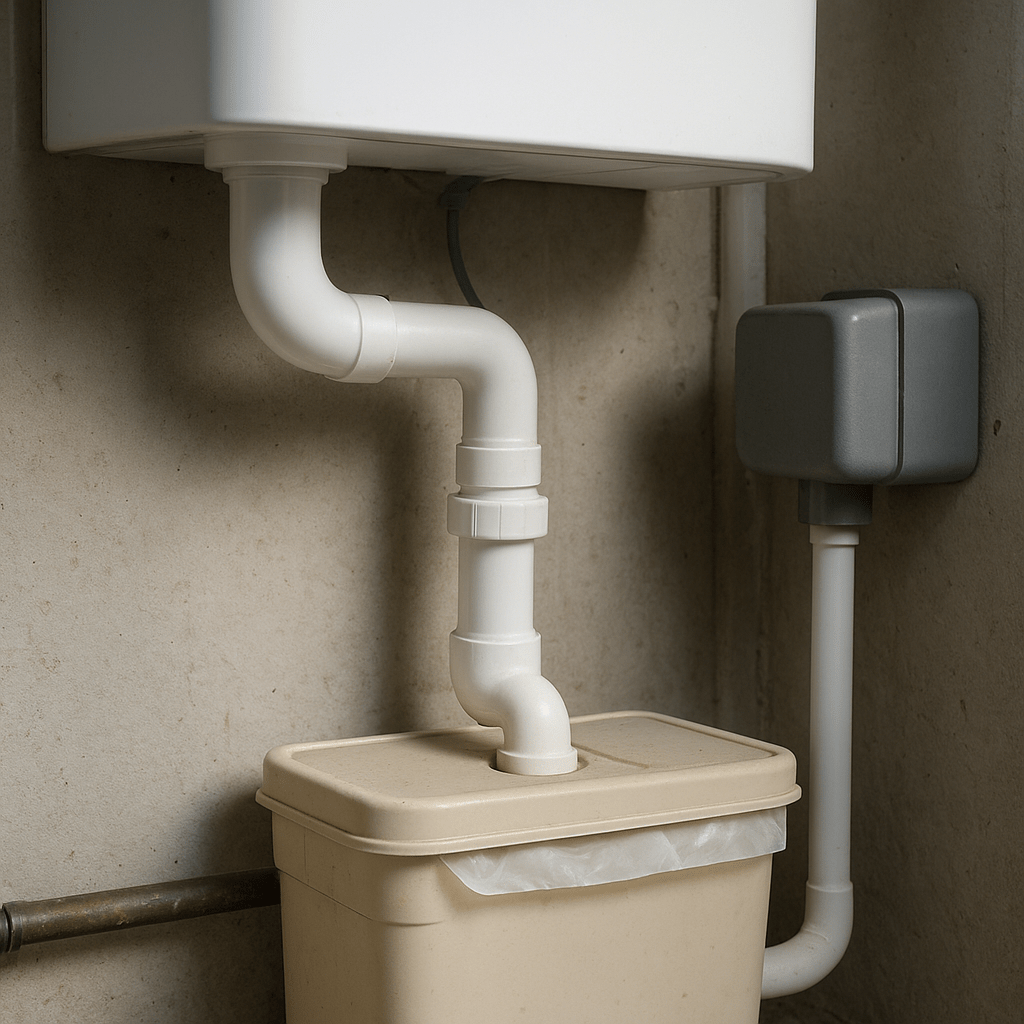
Condensates are a normal by-product of a condensing boiler. They are collected inside the appliance, pass through a siphon, then are sent to an appropriate drainage. Depending on the configuration, they can be slightly acidic, which requires a clean installation, reliable drainage, and sometimes a neutralizer before discharge. A poorly thought-out drainage can quickly become a source of breakdown or odors.
Condensate collection
Condensed water is recovered inside the appliance as the cycle progresses. The siphon prevents gas backflow into the installation room, which contributes to overall safety. The volume produced varies according to the operating time, the power called, and the intensity of condensation. In winter, a boiler that runs often obviously produces more than in the off-season.
Evacuation to sanitation
Condensates are directed to a drainage connected to the wastewater network. The layout must respect the slope, tightness, and proper flow to avoid stagnation. Regular maintenance limits the risk of blockage, especially if the pipe is long, hard to access, or poorly installed. On site, a simple clog can be enough to disrupt the entire start-up.
Annual maintenance is not a detail, especially if the boiler runs a lot. The guide on maintenance of a condensing boiler details the checks that prevent unpleasant surprises, from the burner to the condensate siphon.
Possible neutralization
In some installations, condensates are acidic enough to justify a neutralizer before discharge. This step depends on the type of boiler, power, materials present in the drainage, and local requirements. In practice, this mainly concerns configurations where the installation has been carefully planned, with well-identified technical constraints.
If you need to replace your old appliance, the aids described by ANAH can lighten the overall budget, especially when the project also includes better hydraulic adjustment or a change of emitters.
Are special settings needed to benefit from it daily?
Yes, and this is even where many installations gain or lose their interest. A condensing boiler works better when the departure temperature is just high enough, when the heating curve is well chosen, and when the thermostat avoids jerks. In short, the right appliance is not enough: the right setting is also necessary.
- Reduce the departure temperature when comfort allows.
- Avoid short cycles by letting the boiler modulate.
- Adjust the water law to adapt heating to the weather.
- Monitor the water return to promote condensation.
If you compare models before purchasing, the guide on choosing your condensing boiler reviews the useful criteria: power, type of emitters, hot water production, and housing configuration.
To go further on costs, aids, and system choice, the key guide condensing boiler operation remains the best starting point, especially if you are hesitating between several configurations.
On a daily scale, the right reflex is therefore to think “balance” rather than “maximum power.” A well-adjusted condensing boiler heats more gently, condenses more, and consumes less. It is less spectacular than a big boost, but much smarter in the long run. The icing on the cake: comfort is often more stable.
Frequently Asked Questions about the Condensing Boiler
Does a condensing boiler work with cast iron radiators?
Yes, often, but not necessarily optimally. Cast iron radiators can work with a condensing boiler if the return temperature is not too high. In an older home, network balancing and finer adjustment of the heating curve sometimes make a big difference.
Is a specific exhaust duct required?
Yes, a duct compatible with colder fumes and condensate evacuation is needed. The material, tightness, and slope really matter. If the existing duct is not suitable, rehabilitation or lining may be necessary, especially during replacement.
Does the boiler also condense during domestic hot water production?
It can condense, but often less than in pure heating, because domestic hot water production requires higher temperatures. This depends on the volume drawn, the desired temperature, and the type of appliance. Models with tanks or micro-accumulation do not behave exactly the same.
Does hourly programming really make a difference?
Yes, because it avoids unnecessary starts and reduces overheating. A programmable or connected thermostat helps smooth demand, which favors modulation. In a well-insulated home, the impact on comfort and consumption can be very noticeable over a full season.
What is the minimal maintenance to plan for?
Annual maintenance is strongly recommended, including checking the burner, siphon, condensate evacuation, and safety devices. This check limits silly breakdowns, the ones that happen at the worst time, when it’s cold and everyone wants heating immediately.
Can this type of boiler be combined with a broader renovation?
Yes, and it is often where the project becomes interesting. Better insulation, some better-sized radiators, or smarter regulation can enhance condensation. Renovation aids from ANAH can also weigh in the financial balance.