
Dirty windows, windows clouded by lime scale or salt deposits: in Marseille, glass maintenance is a constant challenge. Between the mistral wind carrying dust and residues, the proximity to the sea, and the hardness of the local water, glazed surfaces suffer specific aggressions not found everywhere in France. Whether you are a private individual or a professional, knowing the best cleaning and washing practices for windows helps preserve the transparency, aesthetics, and longevity of your windows. Here’s how to go about it!
Sommaire
Calling a professional: when and why it makes all the difference?
Certain situations make calling a professional not only useful but essential. High glass surfaces, facades of professional buildings, glass roofs, or shop windows are cases where the intervention of a specialist is necessary for safety and quality reasons. A glazing company has the appropriate equipment (professional squeegees, telescopic poles, cherry pickers, etc.) and expertise that guarantees a streak-free and halo-free wash, even on hard-to-reach surfaces. For this type of intervention, calling a window cleaner in Marseille ensures an impeccable result in complete safety.
The services offered by a specialized company cover everything from apartment windows on upper floors to glazing of professional premises or large bay windows of villas. Before starting major maintenance work, it is advisable to request a quote to evaluate the proposed service and tailor the service to your actual needs. The know-how of a professional goes beyond simple cleaning: it includes joint treatment, care given to frames, and mastery of products adapted to each type of glazing. In Provence, where climatic conditions are particularly demanding, this level of expertise makes a real difference over time.

Common mistakes to avoid when washing windows
Cleaning your windows yourself seems simple, but several recurring mistakes compromise the result and can even damage glazed surfaces. Here are the main ones to know to improve your daily maintenance.
The wrong products
Using inappropriate products is one of the most frequent causes of halos and persistent deposits. Acidic products or those with a high alcohol content can damage the surface treatments of modern glazing and dull the frames. For effective cleaning, it is better to choose a product specially formulated for windows, diluted in demineralized water. This prevents lime deposits that appear with tap water, which is particularly hard in Marseille.
The wrong timing
Washing your windows in full sun is a classic mistake. The heat causes the product to dry too quickly, even before you have had time to squeegee it, which inevitably creates streaks. Favor interventions early in the morning or late in the afternoon, when the light is soft and the temperature milder; which, in Provence, generally represents the best time window.
The wrong technique
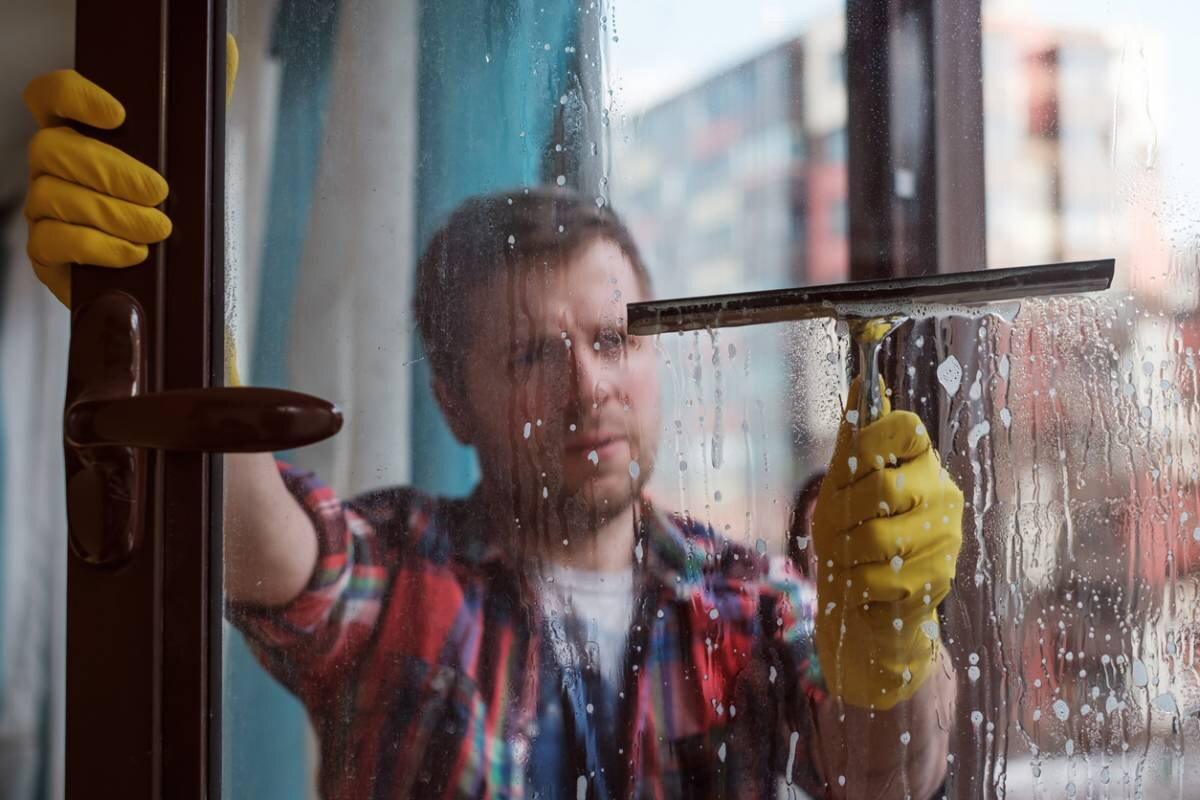
Circular movements, often instinctive, are nevertheless responsible for the majority of streaks. The proper method is to work in S shapes or horizontal lines with a squeegee, wiping the blade after each pass. Additionally, fluffy cloths leave fibers on the glass surface: prefer a microfiber cloth or a chamois leather. Finally, don’t forget the edges and joints, which accumulate dust and mold and end up dirtying the glass again a few days after cleaning.
What equipment should you choose for a streak-free and halo-free cleaning?
The equipment does a large part of the work. For effective domestic maintenance, a few basic tools are enough to achieve a satisfactory result on accessible windows. Here are the essentials for a successful window cleaning at home:
- a squeegee with a flexible rubber blade, sized appropriately for your windows,
- a quality microfiber cloth, rinsed and wrung out,
- demineralized water, alone or mixed with a glass cleaning product,
- a clean bucket and a wetting applicator for large surfaces.
The difference between consumer-grade equipment and that used by a professional glazing company is significant. Professional glazing squeegees have more precise blades, applicators are wider, and the products used are formulated for demanding glass surfaces. For high windows or facades, using a telescopic pole or a lift becomes essential. This type of specialized equipment, used during professional services in Marseille, guarantees both the safety of the operator and the quality of the service provided.
How does the Marseille climate accelerate window soiling?
Marseille has a climatic and urban profile that subjects glass surfaces to particularly intense stresses. Urban and port pollution deposits fine particles on glass surfaces, while the mistral wind carries dust and residues throughout the city. In coastal areas, salty sea spray accumulates on windows and forms stubborn deposits that require regular cleaning and suitable products. The hardness of the water in Provence further worsens the situation: each rinse with tap water leaves visible lime deposits, especially on glass exposed to the sun. These deposits, if not treated quickly, end up embedding themselves and require more intensive intervention to restore optimal transparency.
The recommended maintenance frequency varies depending on the type of dwelling and exposure. An apartment in the city center will benefit from cleaning every two to three months, while a villa by the sea or a very busy commercial premises will require more frequent interventions. For businesses, a service contract with a glazing company allows scheduling of services and ensures constant monitoring of the condition of the glass.
To best maintain your windows in Marseille, you must take into account its demanding environment, which accelerates dirt buildup and wears glass surfaces faster than elsewhere. Adopting the right techniques, choosing the appropriate equipment, and avoiding common mistakes significantly improves the results of DIY cleaning. For high windows, facades, or professional premises, entrusting maintenance to a specialized company remains the most reliable solution. A quote from a glass professional in Provence is enough to gauge the value of such a service.