1. Èze (Provence-Alpes-Côte d’Azur)
Perched on a hillside between Nice and Monaco, Èze offers a breathtaking view over the Mediterranean, like a balcony suspended above the azure blue waters. Its narrow streets, lined with stone houses and craft shops, invite aimless wandering through a true labyrinth where every corner of wall tells a page of history.
The ruined castle crowning the village summit transforms into an exotic garden where cacti and aloes stand alongside century-old succulents. At golden hour, the spectacle is striking: one might believe the eyes of the Mediterranean are resting on this perched village. To reach Èze, it is best to take the train to Nice then bus 82, or a steep road through the fragrant garrigue hills.
2. Gordes (Provence)
In the heart of the Luberon natural park, Gordes proudly overlooks the Durance valley. Its light façades seem to change color depending on the light, shifting from pale cream to burnt pink at dusk. Stone-carved stairs lead to the Church of Our Lady of the Assumption, whose bell tower was raised in the 19th century.
During lavender season, the surrounding fields dress in an enchanting purple, a photographic spectacle attracting amateurs and professionals alike. Saturday markets unfold a palette of local products: olive oils, goat cheeses, lavender honey. A detour to the Sénanque Abbey, a few kilometers away, adds an extra touch of serenity.
3. Collonges-la-Rouge (Nouvelle-Aquitaine)
Impossible to confuse this glowing village: all its buildings are erected in ferruginous sandstone, a stone that takes on carmine hues depending on the light. Its five medieval towers, remnants of an old castle, recall the strategic importance of the place in the Middle Ages.
Stroll under the arcades of the central square, enjoy an aligot peacefully seated on a bench – an authentic experience at the crossroads between history and local heritage. The alleys, sometimes so narrow that you almost brush against the facades, abound with details: carved lintels, discreet gargoyles, and ancient fountains that still whisper distant tales.
4. Saint-Cirq-Lapopie (Occitanie)
Clinging to a cliff overlooking the Lot, Saint-Cirq-Lapopie exudes an almost mystical charm. The Peyrolevado church, built directly into the rock, and the old ruined castle add an almost theatrical medieval dimension to the natural setting.
The small artist and artisan shops abound in the half-timbered houses. While wandering, one understands why the writer André Breton called this village “the most beautiful in France.” The path descending to the bank of the Lot, carved into the stone, reveals striking viewpoints for those willing to wear good shoes.
5. Riquewihr (Grand Est)
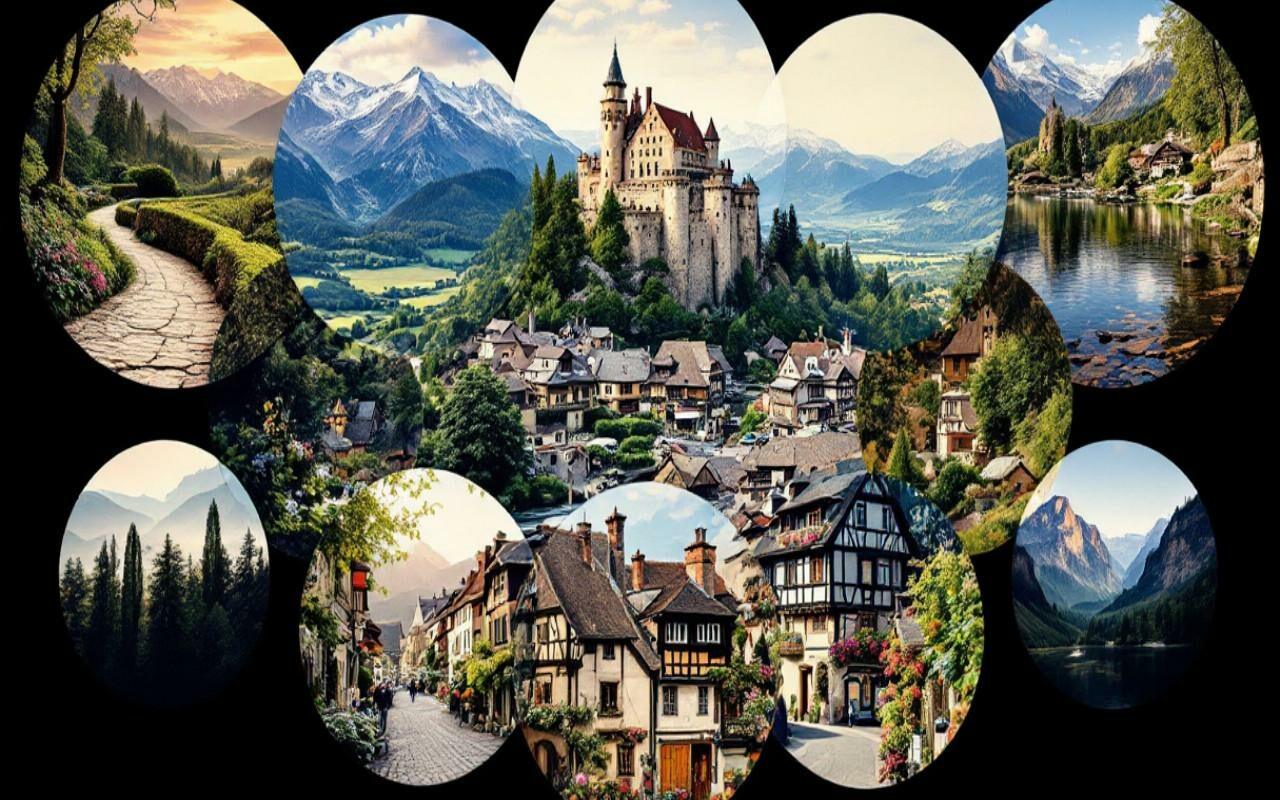
In the heart of the Alsace wine route, Riquewihr has managed to preserve its medieval spirit and its half-timbered houses with wooden beams. The atmosphere is almost timeless: the sound of footsteps on the cobblestones, shutters painted blue or yellow, and flowered barriers create a living picture.
Every door opened reveals a cellar where you will be explained the difference between a Riesling and a Gewurztraminer. In summer, the farmers’ market displays its stalls of local cheeses and smoked charcuterie. Not to be missed: the Thieves’ Tower, a small fortification turned museum, which evokes the daily life of former inhabitants.
6. Yvoire (Auvergne-Rhône-Alpes)
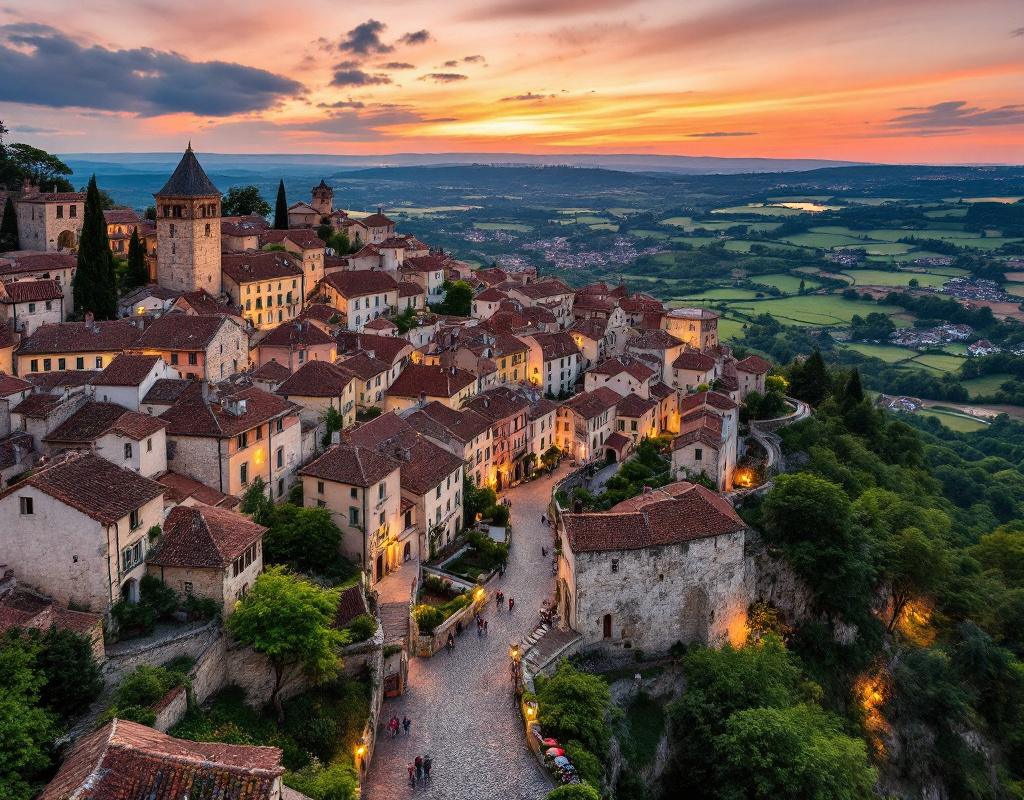
On the French shore of Lake Geneva, Yvoire unfolds its countless flowers in an explosion of colors. Its 14th-century fortifications, long forgotten, now offer a route where one can guess the defensive strategy that protected the Kingdom of France from Savoyard invasions.
The Garden of the Five Senses, the village’s centerpiece, is designed to engage sight, touch, smell, hearing, and taste. A true sensory workshop that reminds us that travel is not limited to contemplation. For gourmets, the restaurants showcase and offer for tasting the lake’s catch, while the alleys lined with hollyhocks invite a photographic pause.
7. Éguisheim (Grand Est)
The concentric alleys of Éguisheim, spiraling, create a unique, almost hypnotic atmosphere. Half-timbered houses painted in soft shades alternate with old signs of winemakers, bearing witness to a twelve-century-old wine tradition.
Every door opens onto a cellar where wine flows abundantly, accompanied by local stories about the grape harvests. The balconies are laden with red and pink geraniums that stand out against the dark wood. A carriage ride allows you to take a step back and capture the village’s geometric layout from above.
8. Séguret (Provence)
Snuggled against the Dentelles de Montmirail, Séguret has managed to preserve the soul of a fortified town: ramparts, watchtowers, machicolations, and bartizans invite you to imagine life in the Middle Ages. Around a corner, the Notre-Dame des Ermites chapel offers a panorama of the vineyards and the distant mountains.
Traditional pottery continues under the skilled hands of local artisans, whose workshops can be visited by appointment. After a day of hiking in the nearby hills, a stop at the village café-grocery allows you to taste homemade jams and a local wine served from the tap in a barrel.
9. Moncontour (Brittany)
Moncontour, a medieval town in Ille-et-Vilaine, radiates perspectives: circular towers, crenellated ramparts, and landscaped walks conducive to daydreaming. The half-timbered houses, often decorated with geometric patterns, range between warm and cool tones depending on the stone used.
Every summer, the village comes alive with street performances and historical reenactments. The local museum, housed in a former lordly residence, tells the story of daily life in the 16th century. For the more athletic, a mountain biking trail winds through the Couesnon valley and its lush landscapes.
10. Saint-Guilhem-le-Désert (Occitanie)
In the heart of the Hérault gorges, Saint-Guilhem-le-Désert evokes a world apart, shaped by the monks of the Abbey of Gellone since the 8th century. The abbey church, listed as a UNESCO World Heritage site, shines with its Romanesque sobriety and finely carved capitals.
The ascent to the Infernet cirque, via a rocky path, offers a dizzying panorama of the valley. The village’s alleys, almost deserted off-season, lend themselves to meditation. At the hour when the sun declines, some visitors still hear the echo of the Cistercians resonating between the centuries-old walls.
FAQ
What is the best time to visit these villages?
Spring and autumn offer soft light and pleasant temperatures while avoiding the summer crowds. The spring blooms of Provence and the autumn grape harvests in Alsace add an extra dimension to the trip.
How to organize your itinerary to see several villages?
Group stops by region to limit travel. For example, combine Riquewihr and Éguisheim in Alsace, or Gordes and Séguret in Provence. Renting a car remains the most flexible solution, although some villages are served by seasonal bus routes.
Are there typical accommodations to favor?
Many bed and breakfasts are set in tastefully renovated old buildings. Some villages also offer farm stays or small charming hotels, often run by local families, for a complete immersion.
What tips to make the most of the perched villages?
Wear comfortable shoes and bring a hat or cap: the sunshine can be intense. Carry water and a light snack, as shops sometimes remain closed between noon and 2 p.m., especially off-season.
{
“@context”: “https://schema.org”,
“@type”: “WebPage”,
“about”: {
“@type”: “Thing”,
“name”: “most beautiful villages of France”
},
“keywords”: [“most beautiful villages of France”,”picturesque villages”,”France tourism”,”medieval villages”,”visit”]
}