In brief
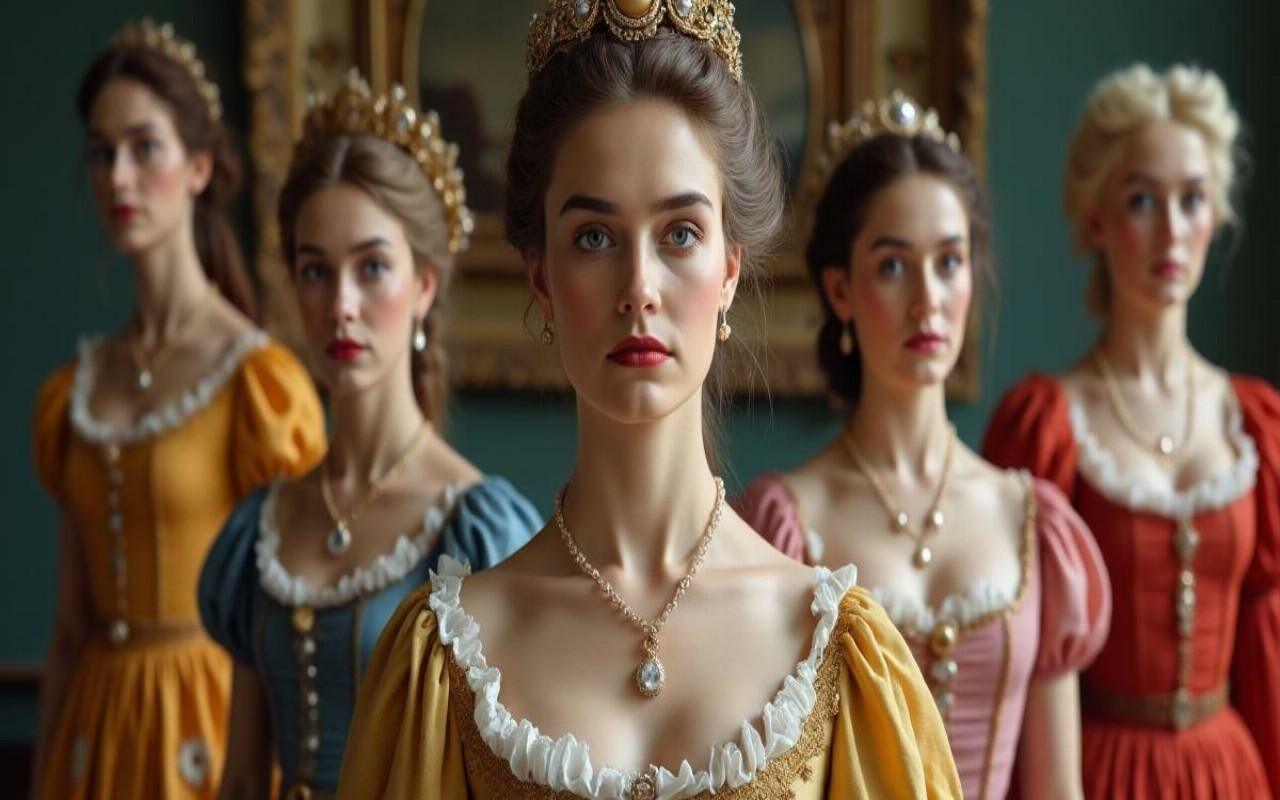
🌟 5 portraits of influential women behind the scenes of power.
🏰 Various roles: queen regents, favorites, or administrators.
💡 Their strategies determined royal alliances and domestic policies.
📜 Restoring their memory enriches our understanding of the Ancien Régime.
Queen regents too often overshadowed
Louise of Savoy (1476-1531): the firm hand of the regent
When Francis I was captive of Charles V after the Battle of Pavia (1525), it was his mother, Louise of Savoy, who assumed the regency. More than a mere transitional figure, she organized tax levies, ransom negotiations, and Italian alliances with remarkable balance. Graduated in canon law, she handled political correspondence with the same ease as a seasoned chamberlain. Behind the scenes, she established the royal library and supported humanists, laying the foundations of the French Renaissance.
One might think her influence was limited to succession affairs, but her cultural vision durably shaped the court, promoting the translation of Italian works and the patronage of artists such as Jean Clouet. It is in this dual role – political and cultural – that Louise of Savoy displayed the full dimension of her power.
Marie de Médicis (1575-1642): the Italian who knew how to impose her voice
Widow of Henry IV, Marie de Médicis took the regency for her son, Louis XIII, who was nine years old. She entrusted the government to her favorite Concino Concini, but her authority was truly exercised in managing internal unrest, notably the Huguenot crisis. She poorly tolerated the confrontation with the emerging power of Richelieu but managed to negotiate the Peace of Alès (1629) and stabilize royal finances.
Her artistic patronage, already in the tradition of the Médicis, energized literary salons and engaged Rubens to immortalize her family on monumental canvases. Long before the abdication of her mother from Poland, Marie de Médicis presented herself as a model of Franco-Italian hybrid diplomacy, a blend of authority and theatrical grandeur.
The Shadow Strategists
Madame de Maintenon (1635-1719): The Discreet Architect of the Court
Coming from a modest background, Françoise d’Aubigné became the secret second wife of Louis XIV. Without an official title, she nevertheless wielded considerable influence: choosing ministers, setting conditions for marital alliances, and directing religious policy. It was she who established, in the 1680s, the reform of education with the creation of the schools of the Royal House of Saint-Louis. In memoirs, she is mostly remembered as a pious and maternal figure, but her political role was as strategic as a diplomat’s maneuver.
More than a confidante, she was the king’s ear, capable of tempering his anger or guiding his decisions. Her direct style and moral stature pleased a sovereign seeking stability after Louis XIV’s wars; they made her a true “director of conscience” of the throne.
Marie Charlotte de La Trémoille (1633-1706): The Informal Ambassador
A member of one of the most prestigious noble lineages, Marie Charlotte stood out for her European network. In her Paris salon, ambassadors and ministers came to exchange court secrets and treaty projects. Behind the pomp, she negotiated via coded letters, supported the candidacy of Habsburg allies, and secured financial backing for the crown. Her influence does not appear in official records, but her correspondence, recently published by the French Society of Royal History, reveals a diplomatic strategy worthy of a Secretary of State.
Her watchword? Weaving lasting alliances. She encouraged political marriages and ensured the balance of power in Europe. A true conductor, but without protocol recognition, which probably explains her relative disappearance from the official narrative.
The Intrepid Administrator
Diane de Poitiers (1499-1566): The Intendant Ahead of Her Time
Favored by Henri II, Diane de Poitiers did not content herself with adorning the court with her grace: she managed vast estates, supervised the construction of the Château de Chenonceau, and collected royal revenues. She organized flour supplies during famines and distributed pensions to victims of the Italian wars. Beyond jewelry and sumptuous dresses, she took on the management of a complex financial machinery, a role close to that of a provincial intendant.
Her accounts, preserved in the national archives, show a keen sense of investment: roads, canals, private mansions… Everything was designed to strengthen the king’s hold over his lands. Diane was not just a Favorite; she was a true pragmatic administrator, capable of turning agricultural crises into local development projects.
Charlotte de La Motte Houdancourt (1654-1729): The Formidable Governess of the Throne
Appointed governess of the Children of France, Charlotte de La Motte Houdancourt oversaw the education of five royal generations, from Louis XIV to Louis XV. This educational role concealed a leading authority: by shaping the character of future sovereigns, she directed the political spirit of the monarchy. Her influence on Franco-Spanish diplomacy and the management of royal pensions is recorded in the registers of the Crown’s Furniture Keeper.
Her reputation, in Madame de Sévigné’s correspondence, is that of a woman “of firmness and finesse,” capable of tightening etiquette when it came to preserving the king’s image. She embodied soft power, exercised far from the pomp, and demonstrated that power can be exercised through education.
Comparative Table of Personalities
| Name | Period | Role | Main Action |
|---|---|---|---|
| Louise of Savoy | 1525-1531 | Regent | Surrender of the ransom and humanist patronage |
| Marie de Médicis | 1610-1617 | Regent | Peace of Alès and artistic promotion |
| Madame de Maintenon | 1683-1715 | Unofficial adviser | Reform of education and religious policy |
| Diane de Poitiers | 1547-1559 | Informal steward | Development of royal estates |
| Charlotte de La Motte Houdancourt | 1684-1729 | Governess | Training of the throne’s successors |
Why These Women Remain Unknown
Like many female figures, their power unfolded outside official records, behind canonical portraits and under the pen of historians who favor kings and wars. Archives have often preserved only administrative papers, financial accounts, private letters. Autograph memoirs are rare. Without flamboyant autobiographies or public speeches, they have been deemed secondary. Yet, by delving into these sources, one discovers an invisible network where diplomatic alliances and economic reforms are invented.
Their oblivion is therefore a historical construction, nourished by gender bias and the sacralization of male power. Restoring these paths is to acknowledge that the Ancien Régime was a collective edifice, where every woman of power laid an essential stone.
FAQ
- Who were these forgotten women of power?
Regents, favorites, and administrators, often discreet actors in the political and cultural strategies of their time.
- Why is their influence poorly documented?
Their authority was exercised outside the official arena, in salons, private correspondences, and intellectual circles.
- How to rediscover their history?
By exploring national archives, court letters, financial accounts, and the work of specialists such as Marguerite Tissier.
{
“@context”: “https://schema.org”,
“@type”: “WebPage”,
“about”: {
“@type”: “Thing”,
“name”: “Forgotten Women of Power of the Ancien Régime”
},
“keywords”: [“regent”, “favorite”, “administrator”, “Ancien Régime”, “influence”]
}
{
“@context”: “https://schema.org”,
“@type”: “Article”,
“headline”: “Striking portraits of forgotten women of power from the Ancien Régime”,
“description”: “Dive into the destinies of regents, favorites, and administrators who, outside official records, shaped the politics and culture of the Ancien Régime.”,
“keywords”: [“Ancien Régime”, “regent”, “favorite”, “female power”, “influence”],
“mainEntity”: {
“@type”: “FAQPage”,
“mainEntity”: [
{
“@type”: “Question”,
“name”: “Who were these forgotten women of power?”,
“acceptedAnswer”: {
“@type”: “Answer”,
“text”: “Regents, favorites, and administrators, often discreet actors in the political and cultural strategies of their time.”
}
},
{
“@type”: “Question”,
“name”: “Why is their influence poorly documented?”,
“acceptedAnswer”: {
“@type”: “Answer”,
“text”: “Their authority was exercised outside the official arena, in salons, private correspondence, and intellectual circles.”
}
},
{
“@type”: “Question”,
“name”: “How to rediscover their history?”,
“acceptedAnswer”: {
“@type”: “Answer”,
“text”: “By exploring national archives, court letters, financial accounts, and the work of specialists such as Marguerite Tissier.”
}
}
]
}
}