Step-by-step itinerary of the Loire Valley Castles route: plan, maps, and tips
Follow our detailed itinerary of the Loire Valley Castles route, with interactive maps, practical advice, and must-see stops for an unforgettable road trip.
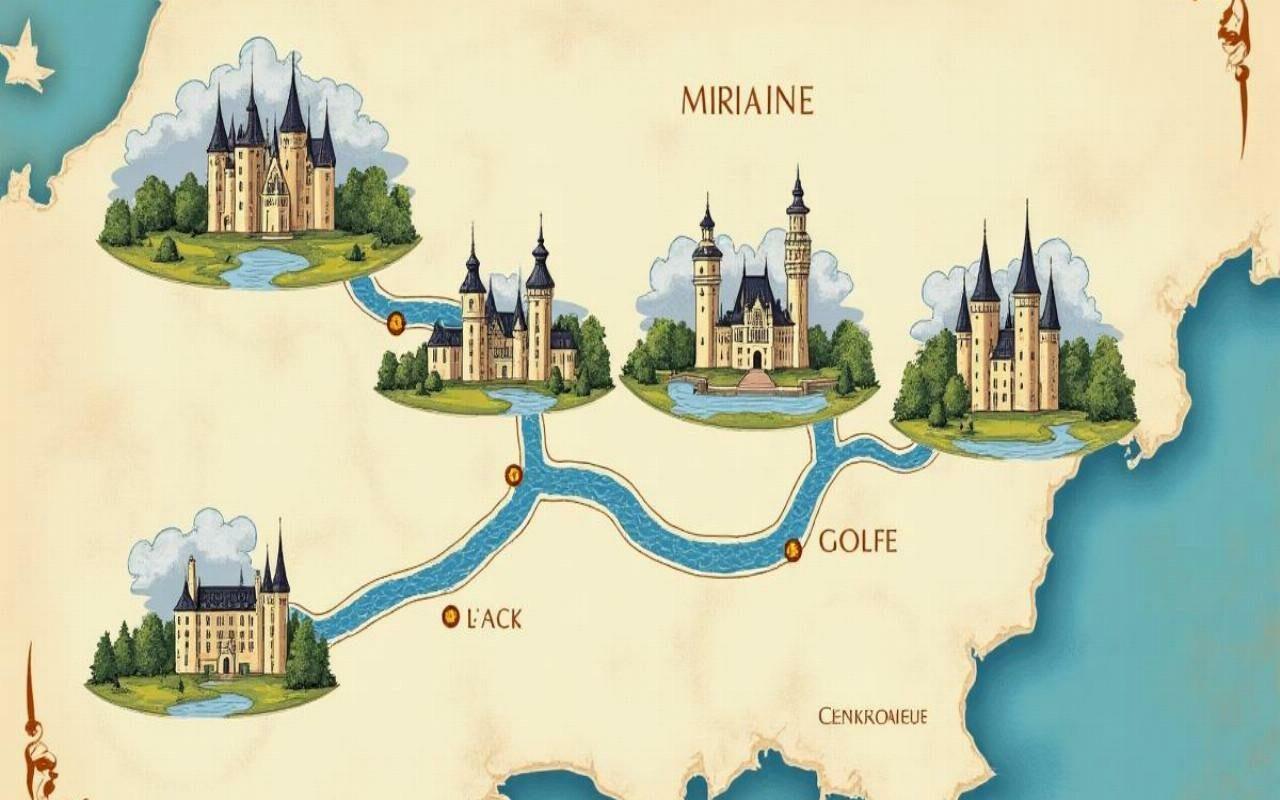
🌟 6 major stages to cover the main fortresses of the Loire, from Orléans to Angers, passing through Blois, Amboise and Tours.
🗺️ Interactive maps and a summary table of distances and durations, to organize your trip without surprises.
💡 Tips to choose the best season, optimize your budget and find gourmet addresses near the castles.
🚗 Suggestions to make your road trip more authentic and practical links to a complete guide to organize a road trip along the French Riviera.
1. Preparing your itinerary: foundations of an adventure on the Loire
Choosing the ideal period
Between mid-April and late June, the gardens are adorned with bright flowers, the days slowly lengthen and the quays come back to life. This is when the temperature oscillates between morning mildness and moderate warmth, ideal for alternating castle visits and bike rides along the banks. In summer, tourist crowds increase noticeably: parking lots at major sites are often full and accommodation prices rise. Autumn, for its part, lights up the valley with golden hues, offering a unique view of the ochre and gray walls of the fortresses.
Assessing budget and accommodations
To balance accommodation, fuel and visits, plan between €70 and €120 per day per person, depending on your comfort. Charming bed and breakfasts, chain hotels or family campgrounds: the Loire valley offers a varied palette. The trick is to stay halfway between two stages, for example near Blois or Amboise, to avoid too frequent moves. Booking in advance, especially in high season, allows you to lock in the best deals and secure a parking spot, sometimes rare near the largest castles.
Maps and online resources
Beyond the classic GPS, opt for a detailed 1/200,000 map, mixing secondary roads and bike routes. Local tourist offices often distribute a free paper map, perfect for zooming in on walking circuits around monuments. Finally, to refine your road trip, keep a smartphone app handy that offers guided routes and geolocated points of interest.
2. Detailed stages of the Castles route
Stage
Distance
Duration
Must-see
Orléans → Blois
65 km
1h15
Château de Chambord
Blois → Amboise
40 km
45 min
Château de Blois
Amboise → Tours
30 km
35 min
Clos Lucé
Tours → Chenonceau
25 km
30 min
Château de Chenonceau
Chenonceau → Chinon
65 km
1h10
Fortress of Chinon
Chinon → Saumur/Angers
60 km
1h
Château d’Angers
Stage 1: Orléans – Blois (65 km)
After an immersion in the history of Joan of Arc in Orléans, we take the road along the Loire. The first major stop is in Chambord. It is impossible not to stop in front of its double spiral staircase designed by Leonardo da Vinci. In the late morning, you can picnic on the esplanade, facing this massive silhouette outlined against the sky. Then, head to Blois, the end of the stage. Its castle reveals four wings built at different times, a true leap through architectural time.
Stage 2: Blois – Amboise (40 km)
The road gently heads towards Amboise, but several stops are essential. First, the small estate of Chaumont-sur-Loire, where an international garden festival is held every year. Then, Meung-sur-Loire, for a gourmet break on the terrace of a craft refreshment bar. In Amboise, the castle towers over the Loire, while the Clos Lucé, Leonardo’s last residence, reconstructs his models and inventions.
Stage 3: Amboise – Tours (30 km)
Less than thirty minutes separate Amboise from Tours, but the diversity of sites encourages varying the itinerary by opting for the bike route. By bike, you follow the islands, restored mills, and some troglodyte dwellings hidden under the cliff. Upon arrival, the old town of Tours charms with its cobbled streets and half-timbered houses. Here, you can taste the Tarte Tatin or the Touraine, a fresh white wine, perfect to end the stage.
Stage 4: Tours – Chenonceau (25 km)
This is one of the shortest stages, but the wow effect is guaranteed. The Château de Chenonceau spans the Cher like an elegant footbridge. Its French-style gardens, orangery, and gallery over the water make this building one of the most photographed in the region. Off the beaten path, you can also find a small trail leading to the opposite bank, offering a unique view of the Renaissance façade.
Stage 5: Chenonceau – Chinon (65 km)
We get back in the car to follow the valley towards Chinon. The ascent to the fortress is done on foot, through medieval alleys where the echo of footsteps resonates. From the top of the ramparts, the view embraces the confluence of the Vienne and the Loire, a panoramic glimpse over several centuries of history. Don’t leave Chinon without tasting its famous red wine in a troglodyte cellar.
Stage 6: Chinon – Angers (60 km)
The last stretch leads to Angers, city of the famous Apocalypse Tapestry. On the way, you can make a detour to Saumur to admire its castle perched on a rocky spur. In Angers, take time to stroll through the castle garden and admire the hundreds of medieval tapestries. A beautiful conclusion, between art and history.
3. Practical tips and good addresses
Tolls: none on the D 951 and D 765, but be cautious on narrow departmental roads.
Parking: favor official parking lots, often free a few minutes on foot away.
Hours: start visits early in the morning or late afternoon to avoid crowds.
Gastronomy: rillettes flutes, fouées, and goat cheeses for an authentic break.
Additional activities:
Gabare cruise (traditional boat) departing from Tours.
Crémant de Loire tasting in troglodyte cellars.
« Nothing equals the softness of the Loire, between architectural surprises and landscapes bathed in light. » – Chronicles of a passionate traveler
4. Alternatives on foot and by bike
Want to walk or pedal more? From Blois to Chaumont, a section of the GR 3 follows the river for 25 km, mixing wooded sections and historic passages. Further on, a developed bike path connects Tours to Amboise following the route of an old towpath. It’s an opportunity to change pace, feel the wind, and enjoy the panoramas differently.
FAQ
What is the ideal duration to travel the Loire Castles route?
Plan between 5 and 7 days to cover the essentials without rushing: this allows spending at least half a day in each castle and adding some nature excursions or tastings.
Should castle tickets be booked in advance?
For the castles of Chambord, Chenonceau, and Amboise in high season, online booking is highly recommended to avoid queues and access the desired times directly.
Can this itinerary be done by train and bus?
Several TER lines connect Tours, Blois, Amboise, and Chenonceau. However, for more freedom, car or bike remain the best allies, especially to reach some remote sites.
Which castles are most suitable for families?
Chenonceau, with its gardens and maze, as well as Chaumont-sur-Loire, which offers a playful trail in the gardens every year, are often favored by children.
{ “@context”: “https://schema.org”, “@type”: “WebPage”, “about”: { “@type”: “Thing”, “name”: “Route des Châteaux de la Loire” }, “keywords”: [“Loire”, “châteaux”, “itinéraire”, “road trip”, “carte”] }