
In brief
🧭 ITT covers temporary work incapacity, IPT total permanent disability, and IPP partial permanent disability.
💡 Coverage depends on the contract, not just the diagnosis: waiting periods, medical assessments, coverage percentage, and exclusions can all change everything.
🔎 Before signing, especially check the disability threshold, the duration of compensation, waiting periods, and how coverage is shared between co-borrowers.
ITT, IPT, IPP: what’s the concrete difference?
ITT, IPT, and IPP do not cover the same things. ITT takes over during a temporary work stoppage, IPT applies when the disability is long-lasting and total, and IPP when it remains partial but serious. The real difference lies in the disability rate, the waiting period, and how the contract reimburses.
On paper, the three guarantees seem similar. In practice, they correspond to very different situations. ITT concerns temporary total work incapacity: you are medically prevented from performing your job for a limited time, often after a fracture, surgery, or extended work stoppage.
IPT, on the other hand, applies when the health condition is long-lasting and the disability rate is high. In many contracts, the threshold is around 66%, although the exact scale depends on the contract. IPP covers a lighter permanent disability, often between 33% and 66%, but already serious enough to disrupt your ability to work normally.
Good to know: some documents sometimes mention ITP, but in French borrower insurance, the most common acronym remains IPT. The essence does not change: the higher the disability rate, the closer the guarantee is to substantial credit coverage.
| Guarantee | What it covers | Common reference | Compensation logic |
|---|---|---|---|
| ITT | Temporary work stoppage after illness or accident | Waiting period of 30 to 90 days | Monthly payments covered during incapacity |
| IPT | Total permanent disability | Rate often from 66% | Reimbursement as per contract, sometimes up to the insured capital |
| IPP | Partial permanent disability | Often between 33% and 66% | Partial or proportional coverage |
How does coverage for ITT, IPT, and IPP guarantees work?
The contract does not activate automatically on the date of the accident. First, a declaration is required, often a medical certificate, then an assessment and the respect of a deductible. Then, the coverage rate and the type of guarantee determine whether the bank reimburses part or all of the insured monthly payments.
The trigger almost always follows the same process: you report the claim, the insurer requests supporting documents, then verifies if you meet the contract criteria. For ITT, the question seems simple: are you truly unable to perform your activity during the specified period? For IPP and IPT, medical terminology is used, with an evaluation of the disability rate and, depending on the contracts, an examination of the ability to perform your usual profession.
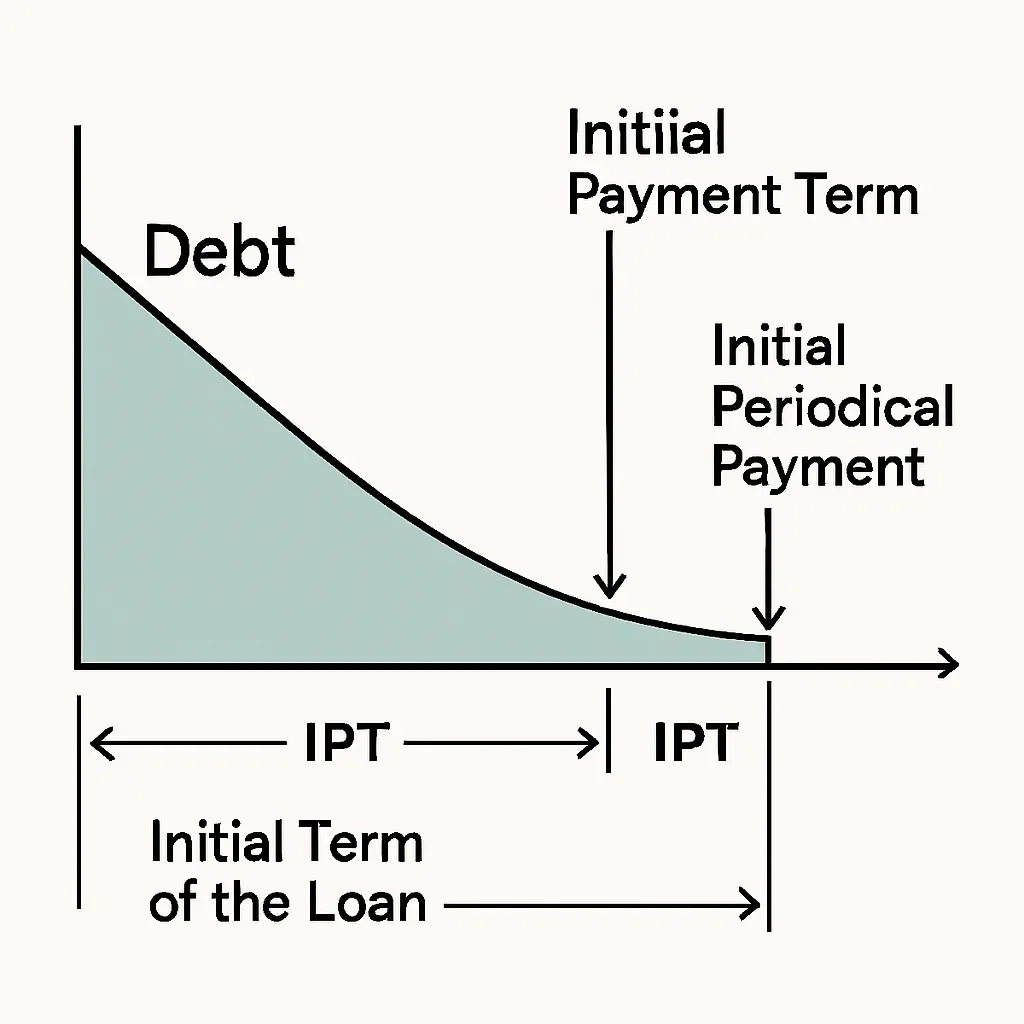
Here, two often underestimated concepts must be considered. First, the deductible: it is the period during which you are already stopped but not yet compensated. Then the reimbursement method: some contracts are fixed, so they pay the amount stipulated in the contract, others are indemnity-based, so they compensate the actual loss of income after deducting certain replacement incomes.
In practice, ITT, IPT, and IPP guarantees never operate alone. The bank also looks at the coverage rate of the loan, that is, the portion of the capital insured on each borrower. A loan with two borrowers can be covered at 100/100, 70/30, or 50/50. And here, no joke, the difference is huge the day one of the two can no longer work.
ITT, IPT or IPP: which guarantee to choose according to your profile?
The right choice mainly depends on your professional profile and your financial flexibility. An employee may seek solid ITT coverage, a self-employed person must monitor gradual recovery, and a couple has every interest in checking their coverage rate. For certain professions, IPP quickly becomes the most useful protection.
There is no magic combo valid for everyone. However, fairly clear trends can be identified. The idea is to match the guarantee to your real risk, not to a polished commercial brochure.
| Profile | Guarantee to prioritize | Why |
|---|---|---|
| Permanent contract employee | ITT | The main risk is often temporary work stoppage with immediate income loss |
| Self-employed / freelancer | IPT and IPP | Recovery can be gradual, and the impact on turnover is sometimes longer than the medical leave |
| Borrowing couple | Coverage rate + ITT | 100/100 sharing better protects the budget if one of the two falls ill |
| Manual profession | IPP | Partial disability can be enough to block certain tasks, even with possible work resumption |
| Rental investor | ITT or IPT depending on rent dependency | The coverage level depends on the portion of repayment truly absorbable by your other incomes |
On the ground, a broker based in Toulouse observes that manual profession cases more often shift towards IPP than ITT, because partial work resumption sometimes leaves a real loss of capacity. Conversely, a family who borrowed together in Nantes often discovers too late that 50/50 leaves much less margin than 100/100.
In other words, the right question is not just “which guarantee is the strongest?”, but “which guarantee protects my budget at the right time?”. For an employee, the ITT often remains the first checkpoint to verify. For a more exposed or more autonomous profile, the IPT and IPP quickly become decisive, especially if the contract provides for a lump-sum coverage.
What should be checked before signing borrower’s insurance?
Before signing, you need to look at what really triggers the compensation: waiting period, exclusions, age limit, activity performed, and level of proof required. Two contracts at the same price can protect very differently if one reimburses on a lump-sum basis and the other only after justified loss of income.
The price is only one part of the equation. An apparently “cheap” contract can become disappointing if the waiting period is long, if certain pathologies are excluded, or if the disability threshold is stricter than the competitor’s. That’s why you need to read the contract like an instruction manual, not just as a simple banking formality.
- The waiting period: 30, 60, or 90 days are common durations, and they greatly affect cash flow.
- The disability threshold: IPP, IPT, or professional disability can be assessed according to different scales.
- Exclusions: back diseases, mental disorders, risky sports, certain professions or occasional activities.
- Age limit: some contracts end before the loan term, especially on incapacity and disability guarantees.
- Compensation method: lump-sum or indemnity-based, the difference is huge at the time of the claim.
- Declaration: a delay or incomplete file can slow down or even complicate the coverage process.
To cross-check the general rules, it is useful to consult the fact sheets on Service-Public.fr, the texts available on Légifrance, and the Ministry of Economy’s guidelines on economie.gouv.fr. Since the Lemoine law of 2022, the conditions for changing insurance have also evolved on many real estate loans, which gives consumers a bit more breathing room.
In borrower’s insurance, the most reassuring coverage line is not always the most useful. What matters is how the contract really reimburses when the body says stop.
How much do these guarantees really reimburse on a real estate loan?
On a real estate loan, the difference is quickly visible: a 100% share can cover the entire insured monthly payment, whereas a 50% share only covers half. The gain therefore depends as much on the chosen guarantee as on the sharing between co-borrowers.
Let’s take a very classic example: a loan of €250,000 over 25 years with a monthly payment of €1,200 insured by two borrowers. If the contract is at 100/100, the work stoppage or disability of one of the two can, according to the contract rules, trigger very broad coverage of the monthly payment. At 50/50, the coverage is mechanically weaker, even if the contract remains the same otherwise.
You should also keep in mind a point often misunderstood: the guarantee does not always pay “the lost salary”, it pays what the contract provides. This is the difference between a lump-sum reimbursement and an indemnity logic. In the first case, the insured monthly payment is protected according to the share; in the second, the coverage can be adjusted according to the actually lost income, benefits already received, and the contractual framework. In other words, the same stoppage can lead to very different reimbursements depending on the signed contract.
In a well-calibrated file, the ITT, IPT, IPP guarantees therefore serve to avoid the risky scenario: continuing to pay a loan with reduced income. This is where the interest lies in comparing contracts on more than just the monthly premium.
FAQ on ITT, IPT, and IPP guarantees
Are ITT, IPT, and IPP guarantees mandatory?
Not legally, but the bank may require them depending on the project and the level of risk. The most common base remains death + PTIA, then some banks additionally request ITT, IPT, or IPP to secure the repayment of the mortgage loan.
Can one be covered in case of therapeutic part-time work?
Sometimes yes, but not automatically. It all depends on the wording of the contract and how it defines work incapacity. Some insurers only compensate for total stoppage, others provide partial coverage if the return to work remains medically supervised.
What is the difference between forfaitaire and indemnitaire?
In forfaitaire, the contract pays the agreed sum without recalculating all your income. In indemnitaire, the insurer compensates for the actual loss of income after taking into account any benefits or maintained salaries. This point can significantly change the amount paid.
Are high-risk professions penalized?
Yes, often by a premium surcharge, a targeted exclusion, or a more thorough medical examination. A manual job, frequent travel, or an exposed sports practice can affect the conditions. It’s not necessarily blocking, but you need to read the exclusions line by line.
Can one change borrower insurance during the loan term?
Yes, in many cases since the Lemoine law of 2022. However, you must offer a level of guarantees equivalent to that required by the bank. The change can reduce the premium, but you must not lose protection in the process.
IPP from what rate do we talk about partial disability?
The threshold varies according to contracts, but it is often found in a range around 33% to 66%. Attention: this is not just a medical figure, it is also a contractual scale. Two insurers may therefore not reason exactly the same way.