Get inspired by current white kitchen styles
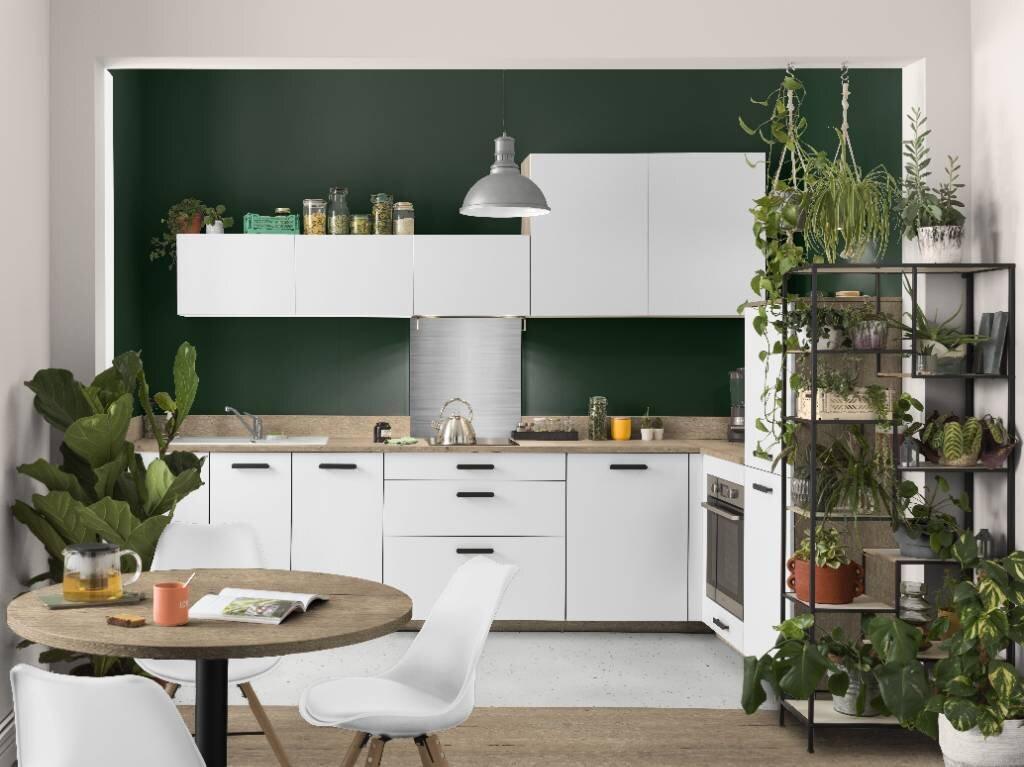
White offers a neutral base that lends itself to several major style families. A sleek modern kitchen focuses on straight lines, smooth fronts, and integrated or invisible handles. The Scandinavian style favors light wood, simple shapes, and a warm atmosphere. The chic country style pairs white with natural materials, subtle moldings, and artisanal details. The minimalist style reduces elements to the bare essentials and highlights uniform surfaces.
White acts as a light amplifier: it reflects natural brightness and visually enlarges the space. In a small kitchen, this property becomes an asset to gain a sense of openness. In a room open to the living area, white unifies volumes without partitioning the view. Style is first read through the shape of the fronts. Doors with pronounced frames evoke a classic or country universe, while flat fronts lean towards modern. Handles also play a decisive role:
- Absent or integrated for a sleek look;
- In brass or ceramic for a retro touch;
- In brushed stainless steel for a contemporary effect.
The balance between smooth surfaces and textures structures the composition.
Linking style to space constraints requires some simple guidelines. A dark kitchen benefits from glossy white to maximize light reflection. An open kitchen calls for visual coherence with the rest of the room. A small kitchen takes advantage of matte white to soften volumes without creating distracting reflections. Realizing an inspiration involves selecting a model and its options. As can be seen on SoCoo’c, don’t hesitate to consult examples on specialized sites to visualize different white kitchens and compare possible configurations. This step allows you to check the coherence between your desires and your space constraints before finalizing the plan.
Which materials to combine with white for more warmth?
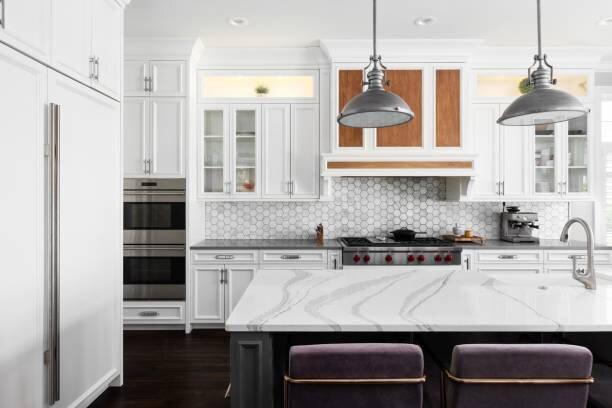
Combining white with other materials helps avoid a too clinical atmosphere and personalizes the kitchen. Wood remains the most natural ally to warm up a white base:
- A light wood brings softness and reinforces the Scandinavian spirit;
- A honey or natural oak wood creates a harmonious transition between modernity and tradition;
- A walnut or dark wood establishes a marked contrast and structures the composition.
The countertop also plays a central role in visual balance and daily use. A solid wood or wood-effect laminated countertop extends the warmth of the fronts and ages with character. Quartz offers a homogeneous, resistant, and easy-to-maintain surface. A stone or concrete effect anchors the kitchen in an industrial or mineral register, while remaining sober.
Note that the backsplash directly dialogues with the countertop and fronts. A white subway tile extends the chromatic unity while adding relief. Zellige introduces an artisanal texture and subtle nuances that catch the light differently depending on the angle. A lacquered glass backsplash unifies the surface and facilitates cleaning, while a brushed stainless steel backsplash adds a professional and contemporary touch.
Textures and reliefs give depth without overloading the room. A subtle veining on the countertop or backsplash is enough to break monotony. The grain of the wood, even painted white, remains perceptible and enriches the reading. A polished concrete effect provides a velvety matte finish that contrasts with the smooth surfaces of the fronts.
Play with matte and glossy finishes to achieve the desired effect
The choice between matte and glossy profoundly changes the ambiance of a white kitchen. A matte white produces a soft, muffled rendering that absorbs light and limits reflections. This finish suits kitchens bathed in natural light or those seeking a calming atmosphere. It better hides small surface imperfections and ages discreetly.
A glossy white, on the other hand, reflects light and visually enlarges the space. This finish energizes the room and reinforces the modern effect. It is particularly effective in poorly lit or small kitchens. However, it reveals fingerprints, splashes, and micro-scratches more, requiring more regular maintenance.
Mixing finishes allows structuring the space and creating distinct visual zones. You can opt for matte fronts and a glossy backsplash to concentrate light on the countertop while keeping a sober base. Conversely, glossy upper cabinets and matte lower elements balance volumes by drawing the eye upwards. Practical points of attention guide the choice according to kitchen use. If you cook a lot, favor matte on fronts near cooking areas to limit the appearance of splashes. If you lack natural light, reserve gloss for vertical surfaces that capture and diffuse brightness.
Optimize space and light for a balanced room
The layout of a white kitchen is based on proven implantation principles:
- A linear arrangement suits narrow spaces and organizes work in a straight line;
- An L-shaped layout frees a corner to install a dining area or circulation space;
- A U-shaped configuration maximizes storage and creates a closed workstation, ideal for dedicated kitchens;
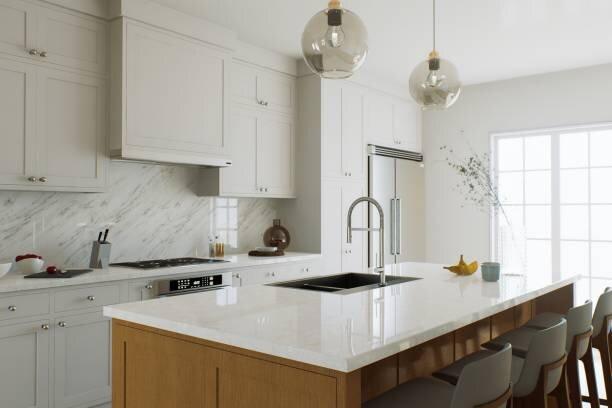
- The addition of a central island structures open kitchens and offers an additional workspace.
White visually enlarges a small kitchen by reflecting light and unifying surfaces. This property works all the better if fronts remain smooth and upper cabinets do not hang too low. Limiting the number of colors and materials reinforces this opening effect. Circulation also conditions comfort of use. Plan a clear passage between furniture to move without hindrance, especially if several people cook at the same time. The height of upper cabinets must allow easy access to storage while leaving the countertop space to breathe.
Lighting is thought of in overlapping layers. General lighting diffuses homogeneous light throughout the room and facilitates movement. Task lighting, often installed under upper cabinets, secures cutting and preparation tasks. Ambient lighting, via pendants or adjustable spotlights, creates an atmosphere and highlights certain elements. The impact of light colors on the rendering of white also deserves your attention. Warm light pulls white towards cream or beige, softening the ambiance but possibly dulling the sought purity. Cool light preserves the neutrality of white and reinforces the modern effect, but can seem clinical if too intense.
Add touches of color without breaking the white ambiance
Personalizing a white kitchen with colors requires a gradual method. Start with small touches easy to modify: textiles, chairs or stools, hanging lights, decorative objects. This approach allows testing a color without committing the whole space and adjusting over time. Choosing a coherent palette means starting from the targeted style and materials already present. If your kitchen combines white and light wood, natural tones like beige, linen, or sage green extend this softness. If you opted for metal and smooth surfaces, graphic black or anthracite gray reinforce the contemporary effect.
Some current combinations illustrate this logic. White and graphic black establish a sharp, structured contrast, suitable for modern kitchens and lovers of marked lines. White and sandy beige soften the whole and create a warm atmosphere, close to the natural spirit. White and sage green bring a vegetal and calming touch, perfect for kitchens open to a garden or bathed in light. White and terracotta warm the room with a Mediterranean note, to be dosed sparingly to avoid a cluttered effect.
A successful white kitchen balances style, functionality, and maintenance. White offers a neutral canvas that adapts to your desires but requires some reflection on materials, finishes, and colors to avoid impersonality. The best option remains the one that corresponds to your household’s uses: a family kitchen will favor durable and easy-to-clean surfaces, while a design enthusiast’s kitchen may dare more delicate finishes.
Composing a white kitchen that reflects you means going beyond simple neutrality to assert a style, chosen materials, and colors. White acts as a modular base, capable of hosting very different atmospheres depending on the finishes, textures, and personal touches you add. The balance between aesthetics, functionality, and maintenance guides every decision. The best option remains the one that adapts to your daily uses and reflects your preferences, without yielding to passing trends.