Understanding the Two Solutions Before Renovating
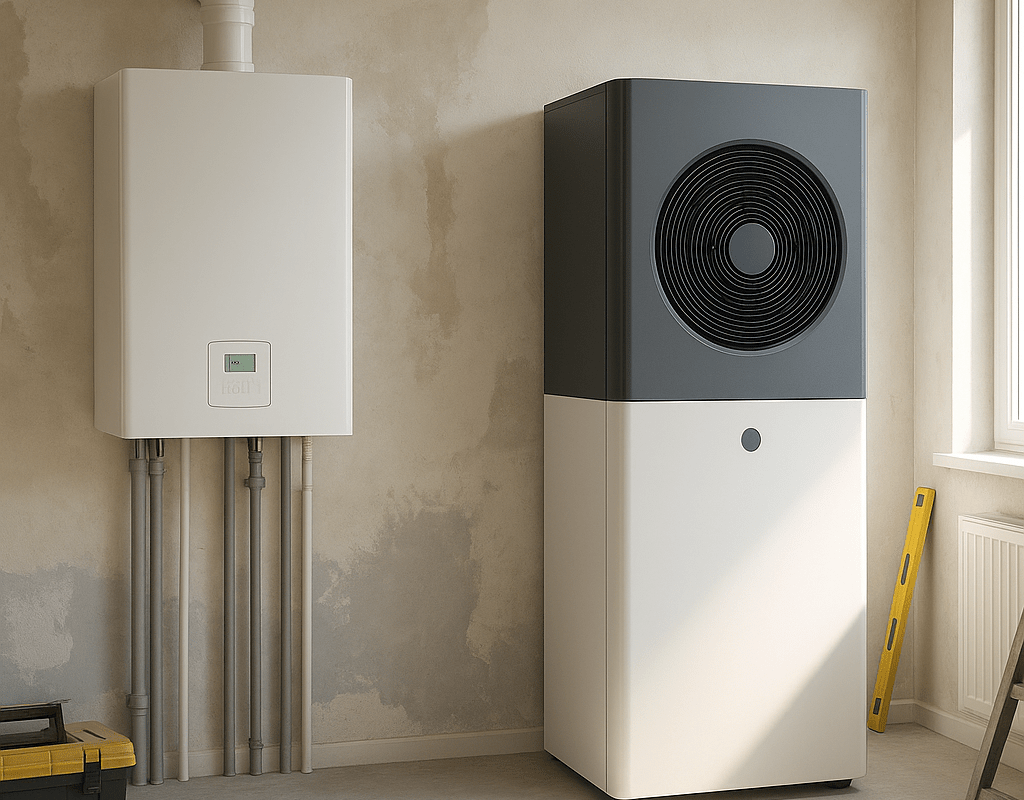
The Condensing Boiler recovers part of the heat contained in the combustion gases. Simply put, it cools the combustion gases further to condense the water vapor they contain, which improves efficiency. The air-to-water heat pump, on the other hand, transfers heat from the air to the water in the circuit through a refrigeration cycle. For technical details, keep handy this guide on the operation of a condensing boiler, because everything starts there.
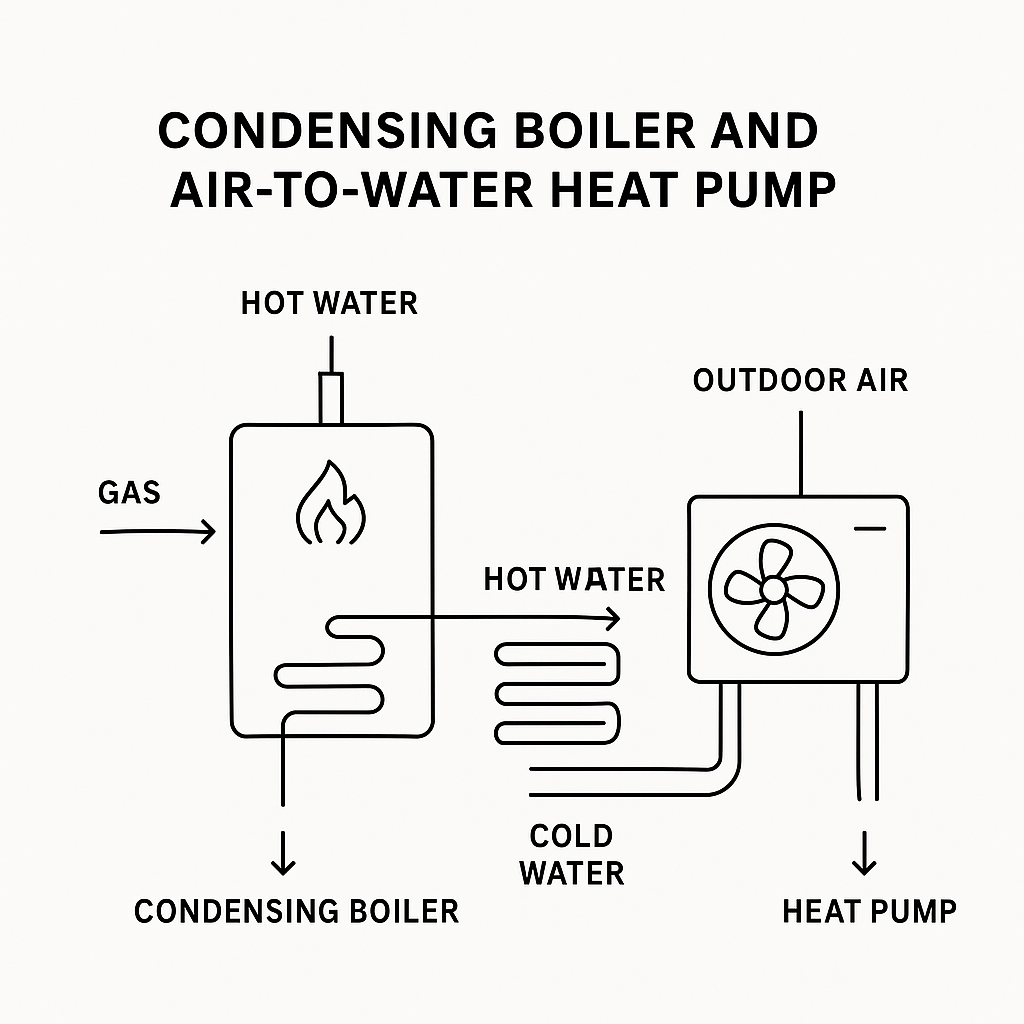
The key point is the operating temperature. A boiler really condenses when the return water is cool enough, which happens more easily with properly sized radiators or underfloor heating. A heat pump, for its part, becomes all the more interesting as the heating can operate with lukewarm water. That is why the level of insulation in the home changes everything: the fewer the heat losses, the easier it is to work at low temperature.
- Condensing Boiler: very suitable if the existing network is kept.
- Air-to-water Heat Pump: relevant if the home can accept a lower supply temperature.
- Efficient Renovation: the choice must follow the building envelope, not fashion trends.
Condensing Boiler or Heat Pump: Which Choice According to Your Home?
In renovation, there is no magic answer. First, look at the house, the apartment, the heat emitters, and the site constraints. Only then compare the equipment. It is a global renovation logic, not a simple like-for-like replacement.
Old house or partial renovation
In an old poorly insulated house, especially if the radiators were sized to operate at 60 or 70°C, the condensing boiler often remains the simplest option. It fits more easily into replacing an existing gas boiler, without redoing the entire network. In terms of work, it is often the most economical, fastest, and least risky scenario.
The heat pump can still make sense, but it must then be perfectly sized. If the supply temperature remains high, its consumption rises and the expected gain diminishes. In other words, it loses part of its appeal. In this case, it is better to look at the project calmly, not through the catalog glasses.
Well-insulated housing or full renovation
When the housing has been seriously insulated — attic, walls, joinery, airtightness — the heat pump gains a clear advantage. Heating needs decrease, emitters can operate at lower temperatures, and the machine works in its comfort zone. This is where you start to see a real difference on the operating bill.
Houses renovated with underfloor heating or low-temperature radiators are particularly well suited. In practice, an air-to-water heat pump often shows a SCOP around 3 to 4 when the system is well designed, which means it delivers several kWh of heat for 1 kWh of electricity consumed. Of course, this ratio varies with the weather and the quality of the adjustment.
Apartment or constrained space
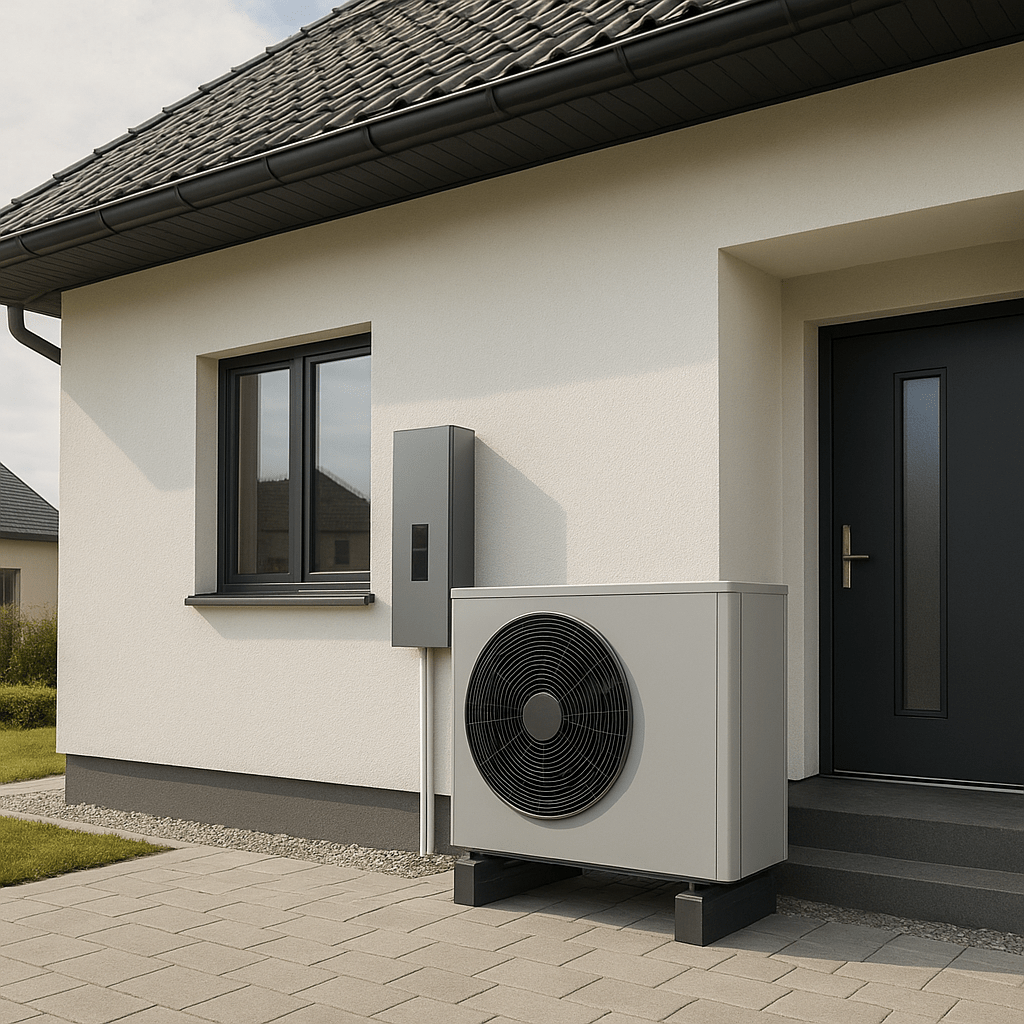
In an apartment, the issue is not only thermal. You also have to think about placement, noise, co-ownership, and available space. The outdoor unit of a heat pump requires a location accepted by the neighbors and compatible with building rules. If this point is a block, the condensing boiler can remain easier to fit into an existing technical room.
On the ground, it is observed that co-ownerships often delay switching to heat pumps for very concrete reasons: lack of space, protected facade, perceived noise nuisance, or inability to properly route the ducts. A family moving into a building from the 1970s often tells the same story: the project was not technically impossible, but it quickly became difficult to get approved.
How to check compatibility with the existing installation?
Before signing a quote, you need to review the hydraulic network, the emitters, and the installation constraints. This is where a large part of the project’s success is determined. A heat pump poorly matched with radiators that are too small or with a temperature requirement that is too high quickly disappoints, whereas a well-integrated boiler often operates without surprises.
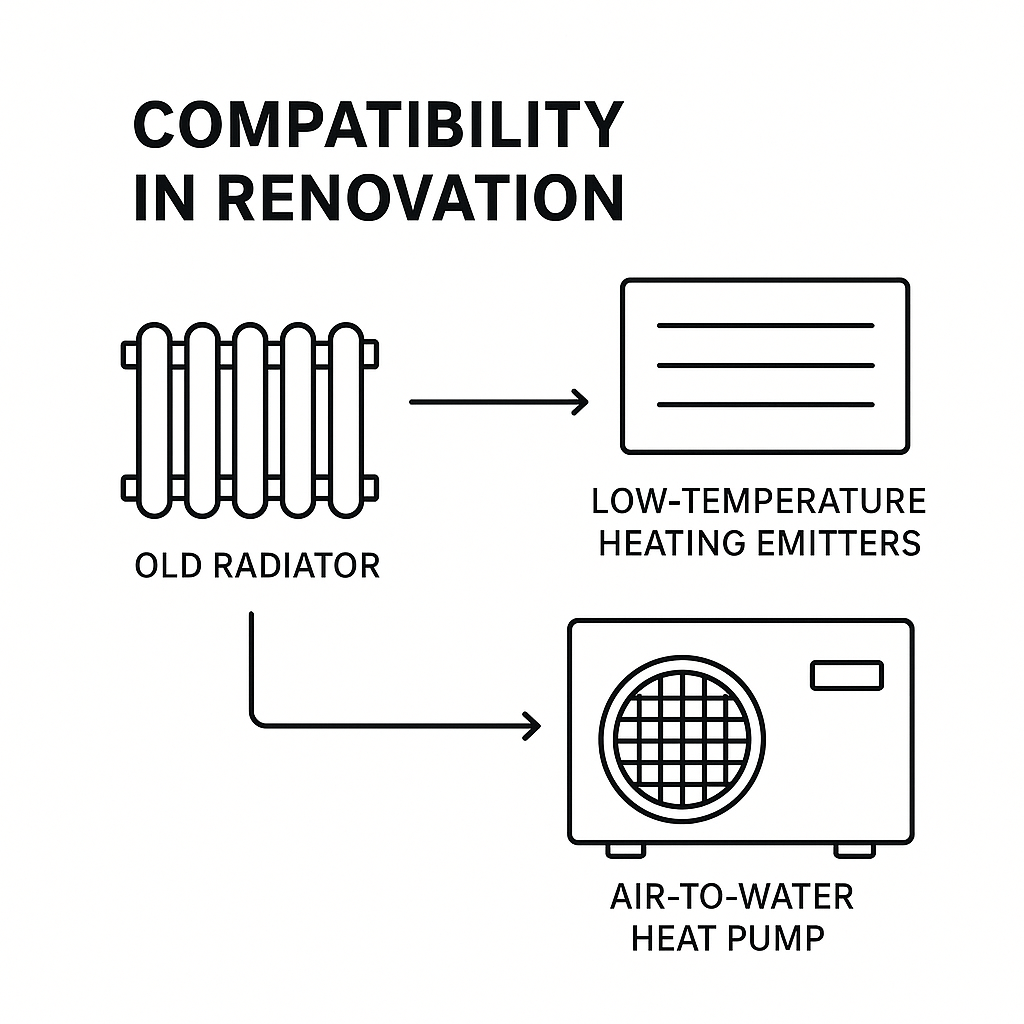
According to ADEME, the performance of a heat pump must be assessed over the entire season and not just when the weather is mild. This is a crucial nuance. In renovation, a heat pump that seems excellent in the shoulder season can lose its appeal when the thermometer drops. This is also why sizing matters as much as the brand.
To check compatibility, you need to look at least at:
- the actual supply temperature required by the radiators;
- the return temperature, essential for condensation;
- the power of the existing emitters;
- the available space for the outdoor unit or wall-mounted boiler;
- the quality of the hydraulic circuit and the possible presence of a hot water tank.
If you are opting for a simple replacement, this point becomes central. A practical guide on installing a condensing boiler helps to understand installation constraints, especially when you have to keep an existing installation without tearing everything down. Joking aside, this is often where price differences widen.
What are the differences in performance, comfort, and cost?
Comparing a condensing boiler and a heat pump without discussing the overall cost is like looking at an iceberg from the top. The purchase price does not tell the whole story. Installation, adaptation work, maintenance, comfort experienced in winter, and expected lifespan must be taken into account. Only at this level can you see which system truly holds up.
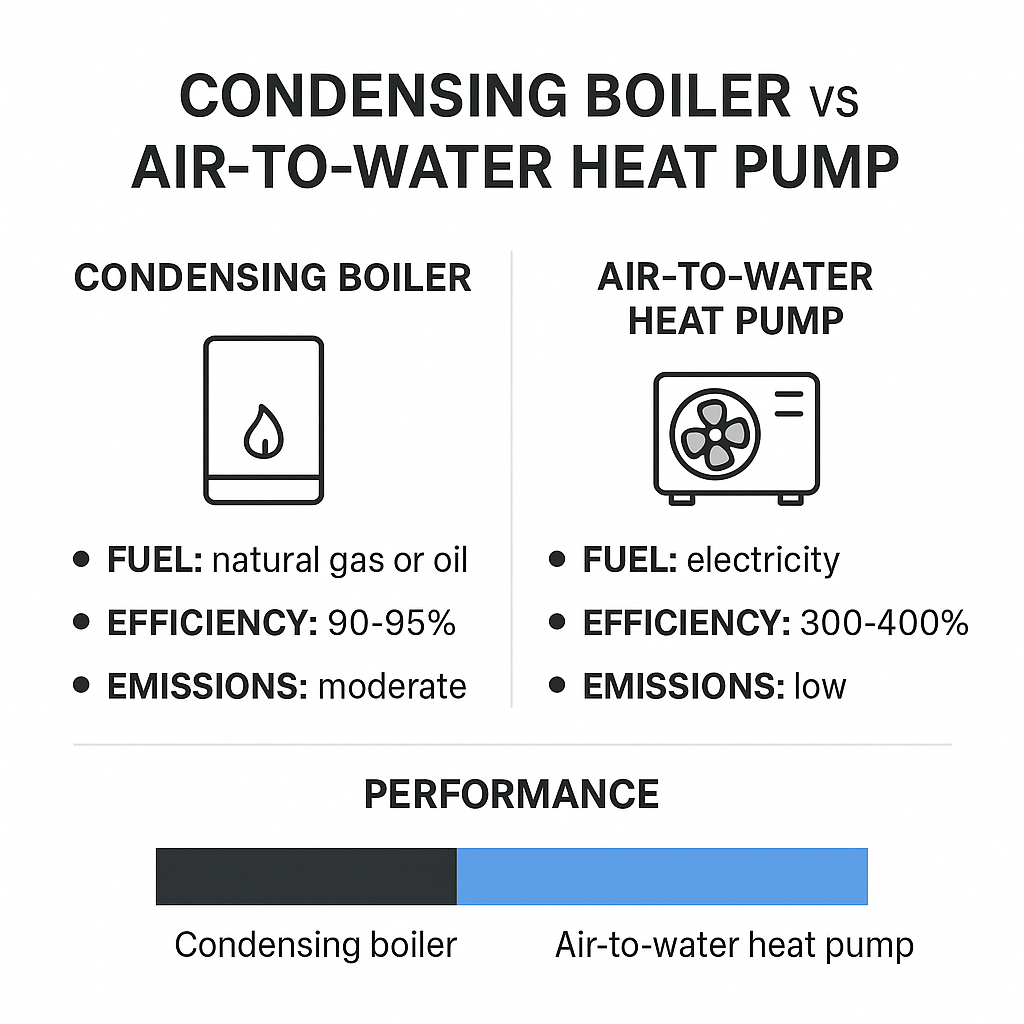
This difference in entry price explains why budget remains a decisive criterion. To refine your budget, also check the guide on the condensing boiler purchase and installation budget, as installation, flue lining, hydraulics, and condensate evacuation can greatly affect the quote.
Comfort, meanwhile, is not just a matter of kilowatt-hours. A heat pump can be very pleasant in a well-insulated home, but it can also produce airflow or noise perceived as annoying, especially outside. The condensing boiler is generally quieter in use, and its operation remains very understandable for occupants. According to ADEME (2024) and manufacturer manuals, the seasonal performance of a heat pump varies greatly depending on actual weather, which justifies comparing over a year rather than a single week.
| Criterion | Condensing Boiler | Air-Water Heat Pump |
|---|---|---|
| Investment | Often lower | Higher purchase and installation cost |
| Performance | Stable, especially with low return temperature | Very good if the home is adapted |
| Usage Comfort | Simple, quiet, familiar | Very good at low temperature, sometimes more sensitive to cold |
| Additional Work | Installation and connection often simpler | Outdoor unit, electricity, acoustics, network adaptation |
Regarding subsidies, the rules change regularly. ANAH and Service-Public.fr on MaPrimeRénov’ remind that eligibility depends on the household profile, the dwelling, and the nature of the work. Meanwhile, the ANAH MaPrimeRénov’ page details the current schemes. In renovation, aid can tip the choice, but it should not mask poor technical compatibility.
Concrete examples of choices in renovation
In the end, use cases are more telling than theoretical speeches. When following real construction sites, it quickly becomes clear that the best system is the one that integrates effortlessly. The icing on the cake: the right scenario also reduces surprises after installation. To build your decision-making, the article on criteria for choosing a condensing boiler can serve as a very concrete checklist.
When the condensing boiler remains the best compromise
If the work is limited, the radiator network is kept, and speed is essential, the condensing boiler often remains the most realistic solution. It requires fewer adaptations, installs in an existing technical volume, and allows starting fresh on a sound basis without heavy construction. This is the typical case of a “reasonable” replacement, one that protects the budget while improving efficiency.
If your priority is to secure financing, also check the condensing boiler subsidies. The combination of subsidies + technical simplicity can make a real difference when the project needs to stay contained.
When the heat pump takes the lead
If the dwelling is well insulated, needs decrease, and the emitters can handle lower water temperatures, the heat pump becomes very competitive. It makes the most sense in a comprehensive renovation, with enhanced insulation and a coherent energy project. This is when we really start talking about a sustainable reduction in consumption, not just a device change.
A family who renovated a 1960s house with insulated attic, windows, and ground floor often recounts the same revelation: once heat losses are reduced, heating becomes almost secondary in the renovation. It is precisely in these cases that the heat pump stops being a gamble and becomes obvious.
Hybrid case: the heat pump as boiler backup
In some projects, the smart compromise is to keep a boiler and pair it with a heat pump as backup. The heat pump covers most needs when temperatures are mild, and the boiler takes over when the cold becomes too biting. This approach avoids underperformance in the middle of winter and ensures comfort.
The best heating system is not the one with the prettiest label. It is the one that fits the building, the uses, and the budget without causing unpleasant surprises the first winter.
In practice, this hybrid setup can be interesting when you want to proceed in stages. It is less radical than a total replacement but allows reducing technical risk. Provided the regulation is well adjusted, it often offers a smoother transition towards a more ambitious energy renovation.
Common Mistakes That Sink the Project
The heating market is full of very enticing promises. But in renovation, some mistakes are costly, sometimes from the very first season. Avoiding them already saves money, time, and a few gray hairs.
- Choosing based on price alone: a low quote can hide unforeseen adaptation work.
- Ignoring the supply temperature: if it remains too high, the heat pump quickly loses its appeal.
- Undersizing the emitters: radiators that are too small degrade comfort and performance.
- Forgetting about noise and placement: especially in condominiums or on property boundaries.
- Neglecting maintenance: a gas boiler must undergo annual maintenance, and a heat pump also requires regular monitoring.
According to Service-Public.fr, annual maintenance of gas boilers remains an important obligation for safety and performance. For heat pumps, the issue is different, but it still exists: checking settings, cleaning, verifying the refrigerant circuit and condensate drainage. It’s not a luxury, it’s useful maintenance.
One last trap, and not the least: believing that a winning solution in a lowland house will be the same in a cold zone. The local climate changes the game. In the mountains or in areas with harsh winters, the stability of a condensing boiler can be reassuring, while a heat pump must be very well designed to maintain its appeal.
FAQ: Should You Favor a Condensing Boiler or a Heat Pump?
Can you keep your existing radiators with a heat pump?
Yes, sometimes. But it all depends on their sizing and the required water temperature. If the radiators are designed to operate at high temperature, the heat pump can lose a lot of efficiency and require supplementary heating.
Is the condensing boiler still relevant in a partial renovation?
Yes, clearly. When insulation or the heating network is not redone, it often allows modernizing the installation without major work. It is often the most pragmatic choice for a simple replacement.
What is the best choice if you want to limit the work?
The condensing boiler often has the advantage. It integrates more easily into an existing space, with fewer electrical and acoustic adaptations than an air-to-water heat pump.
Should a domestic hot water tank be planned?
Not systematically, but it is common. Many heat pumps and hybrid boilers include or control a tank, especially when you want to secure hot water comfort for several occupants.
Is the heat pump really penalized by the cold?
Yes, its performance drops when the outside temperature falls. This is not a defect in itself, it is the logic of its operation. Hence the interest in looking at the annual SCOP rather than just the nominal power figure.
How to decide if budget, comfort, and technology do not say the same thing?
In this case, priorities must be ranked. If your home is already adapted to low temperature, the heat pump can take the lead. If the work is limited or the existing network requires very hot water, the condensing boiler often remains more coherent.