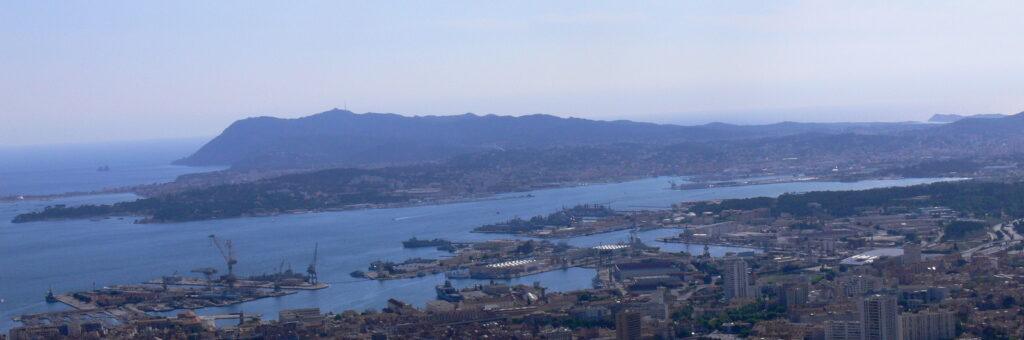
Prefecture of Var, Toulon stands out as one of the safest natural ports in the Mediterranean. Protected by the Faron, Coudon, and Caume mountains, the city combines naval traditions, urban beaches, and a vibrant cultural life centered around its opera house, Naval Museum, and legendary rugby club. This guide summarizes the essentials for visiting, settling, investing, or simply understanding the dynamics of a territory in motion.
TL;DR : Key port city with arsenal and ferries to Corsica. Top visits: Mount Faron, Mourillon beaches, Tour Royale, Naval Museum, old town. Easy access: TGV, A50/A57, water buses. Real estate 2025: ~€3,100/m² apartments, ~€4,400/m² houses. Up-to-date demographic data and official sources at the end of the article.
Sommaire
Geography and location: a harbor protected by an amphitheater of mountains
At the heart of a limestone amphitheater, Toulon opens onto an exceptional harbor, divided into the Small and Large Harbors, sheltered from prevailing swells. This natural basin has shaped the entire history of the city: establishment of an arsenal, shipyards, passenger traffic, and yachting. To the north, Mount Faron (584 m) dominates the urban scene and offers a balcony over the city, the Hyères islands, and Cape Sicié. To the east, the Garde valley and the coastal plain lead towards Hyères; to the west, La Seyne-sur-Mer and Six-Fours close off the harbor with a rugged coastline. The climate is distinctly Mediterranean: hot and dry summers, mild winters, frequent mistral winds but bright skies. This configuration creates a compact, dense city where maritime mobility plays a daily role.
The municipality is the centerpiece of the Toulon Provence Méditerranée (TPM) metropolis, which totals more than 440,000 inhabitants. Toulon drives the defense and maritime economy (naval base, maintenance activities), but also metropolitan services, culture, and higher education.
History and heritage: from the royal arsenal to the memories of 1793 and 1942
A major military port since the 17th century, Toulon has distinguished itself several times in French history. In 1793, the siege of Toulon marked the rise of a young artillery officer, Napoleon Bonaparte, who planned the capture of the forts controlling the harbor entrance. This victory reshaped military power in the Mediterranean. Another major event was the scuttling of the fleet on November 27, 1942, when most of the French navy based in Toulon was destroyed to prevent capture by Axis forces. Today, these memories are visible in the coastal forts (Tour Royale, Fort Saint-Louis, Balaguier in La Seyne), in the arsenal, and at the National Naval Museum, housed in the former monumental gate of the arsenal.
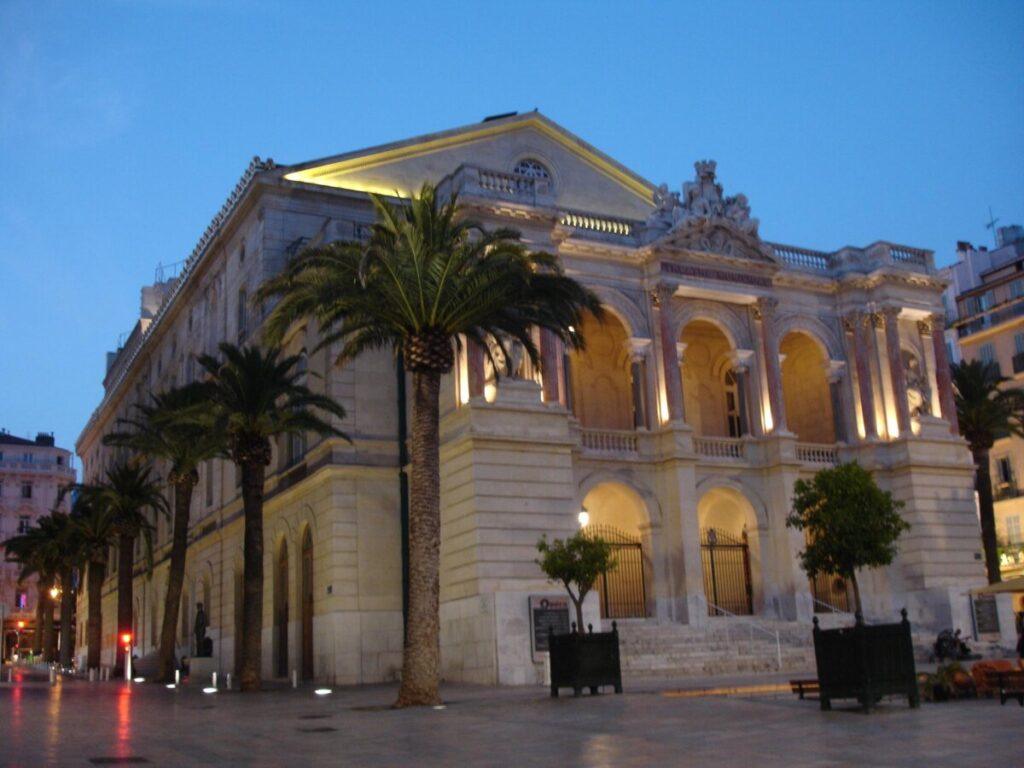
The rehabilitated old town reveals narrow streets, small squares, markets (Cours Lafayette), colorful facades, and fountains. The Toulon Opera House, one of the largest provincial opera houses, reflects the cultural ambition of the 19th century.
Population and demographics: key figures
Toulon has 180,834 inhabitants (2022) over a surface area of 42.8 km², which corresponds to a density of ~4,221 inhabitants/km². The housing stock remains mostly occupied by renters, with 43.6% owners. Secondary residences represent ~2.4% of the housing stock and vacant dwellings ~3.4%. The median disposable income per consumption unit reaches ~€20,960. These indicators confirm a large dense Mediterranean city, with a socio-economic profile contrasting between the renewing old center, suburban neighborhoods, and residential coastal fronts.
| Indicator (municipality) | Value | Source |
|---|---|---|
| Municipal population (2022) | ~180,834 | INSEE, territory comparator |
| Surface area | 42.8 km² | INSEE |
| Density | ~4,221 inhabitants/km² | INSEE |
| Owners | 43.6% | INSEE |
| Secondary residences | 2.4% | INSEE |
| Vacant dwellings | 3.4% | INSEE |
| Median income | ~€20,960 | INSEE |
Economy and employment: naval hub, metropolitan services, and tourism
The economic foundation of Toulon is structured around the port and military complex: naval base, maintenance, testing and systems integration, and an industrial ecosystem led by major defense naval players. At the metropolitan scale, the port generates direct and induced impacts from ferry and cruise activities, as well as hundreds of jobs related to port operations and passenger services. Coastal tourism is driven by the summer season but now extends into the shoulder seasons through events, cruises, and urban hiking.
Services (health, commerce, administration, education), training and research (University of Toulon, SeaTech, laboratories) complete the local employment. The residential economy and student consumption energize the city center and neighborhood hubs, while crafts and very small businesses permeate the entire urban fabric.
Useful figures (order of magnitude): more than 1.7 million ferry and cruise passengers in the harbor in 2024; planned port investments at the metropolitan level; continuous recruitment by naval and service sector actors. See detailed sources.
Tourism and culture: top 5 must-see
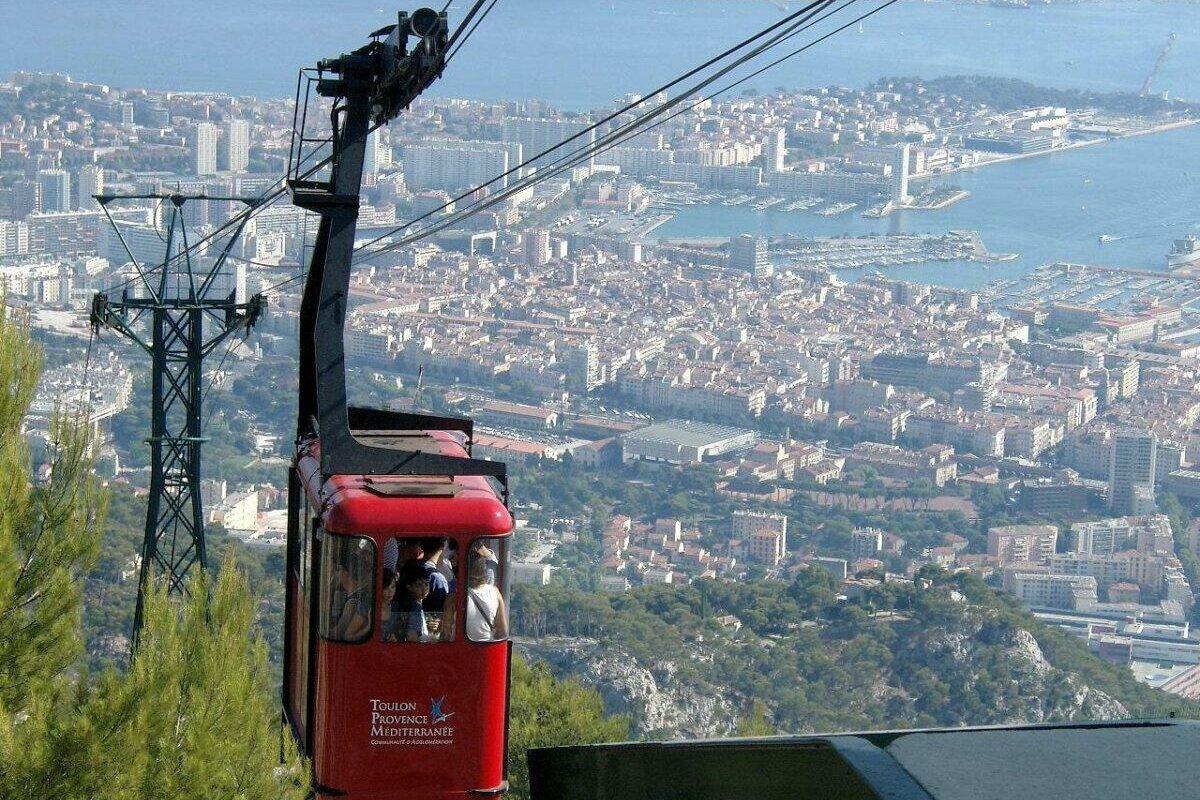
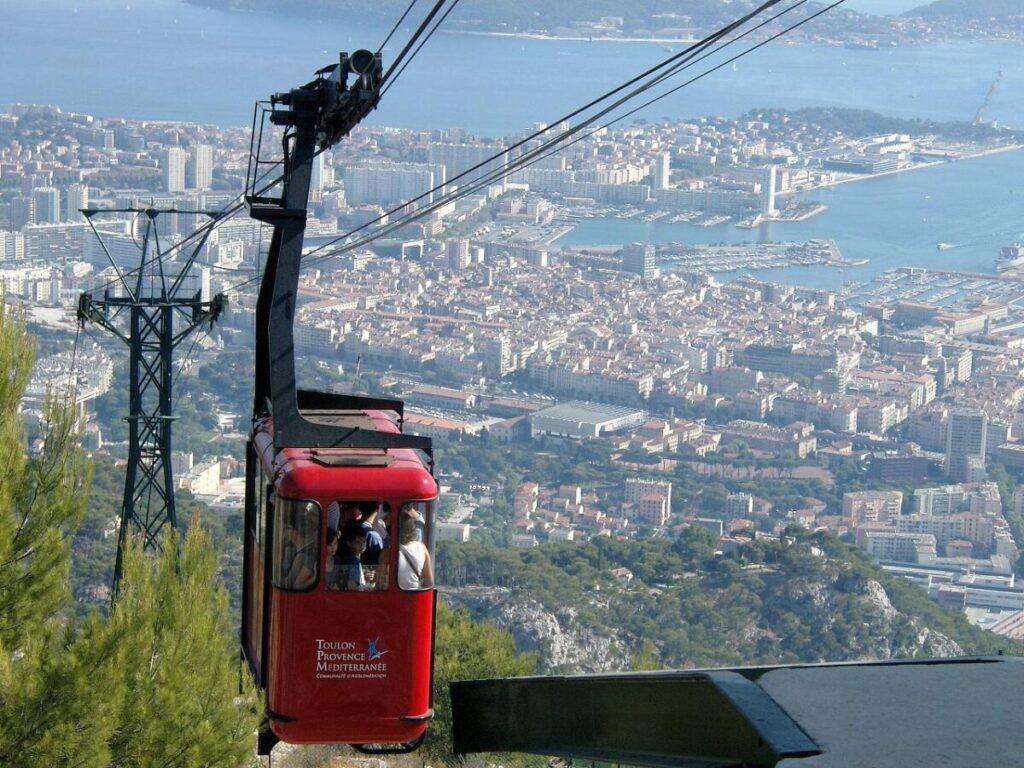
- Mount Faron and its cable car: spectacular ascent above the city, panorama over the harbor, memorial of the Provence landing.
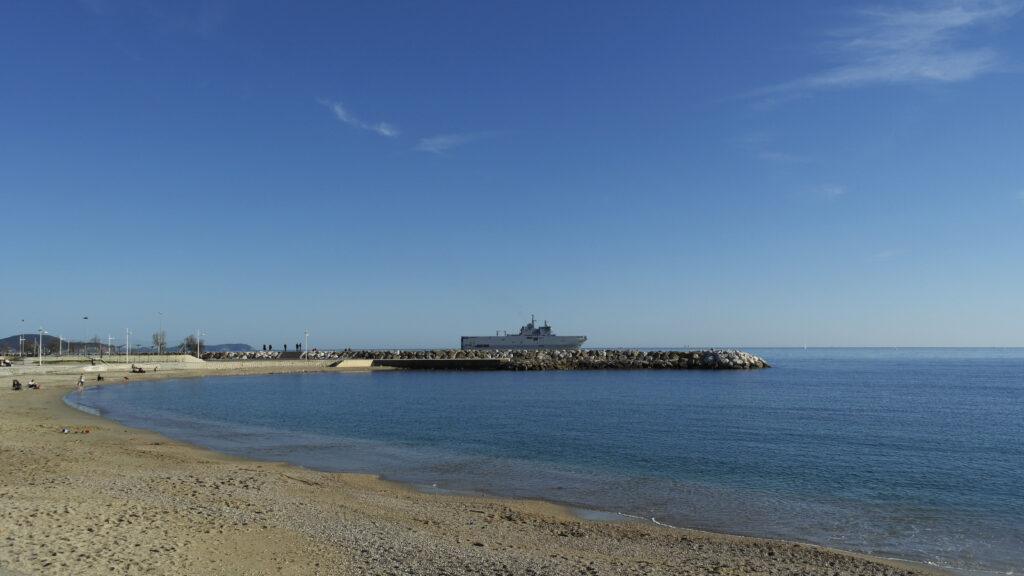
- Mourillon beaches: several well-equipped urban coves, excellent for families and sunsets.
- National Maritime Museum: models, instruments, history of the arsenal and fleet.
- Old town and markets: Cours Lafayette, pedestrian alleys, street art, terraces.
- Coastal forts: Tour Royale and Fort Saint-Louis, sentinels of the harbor.
Transport and access: train, road and daily water buses
By rail: Toulon station welcomes TGV and Intercités trains, connecting Paris, Lyon, Marseille, Nice and the Mediterranean arc. By road: the A50 connects Marseille, the A57 heads east (Hyères, Le Luc, Nice via A8). By air: Toulon-Hyères airport serves seasonal and regular routes to France and Europe.
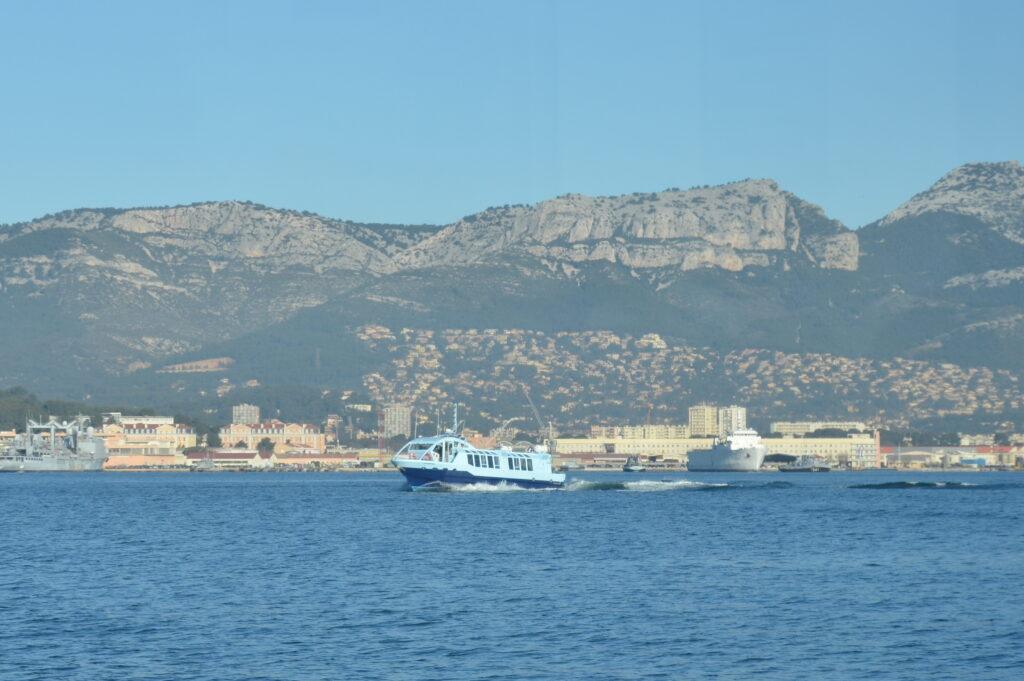
Local mobility: the Mistral network covers buses and water buses with daily maritime lines 8M (Toulon–La Seyne), 18M (Toulon–Les Sablettes) and 28M (Toulon–Saint-Mandrier). This “blue ring road” relieves road traffic and offers regular trips every 20 to 30 minutes depending on the season. Convenient for commuting and scenic rides overlooking the harbor.
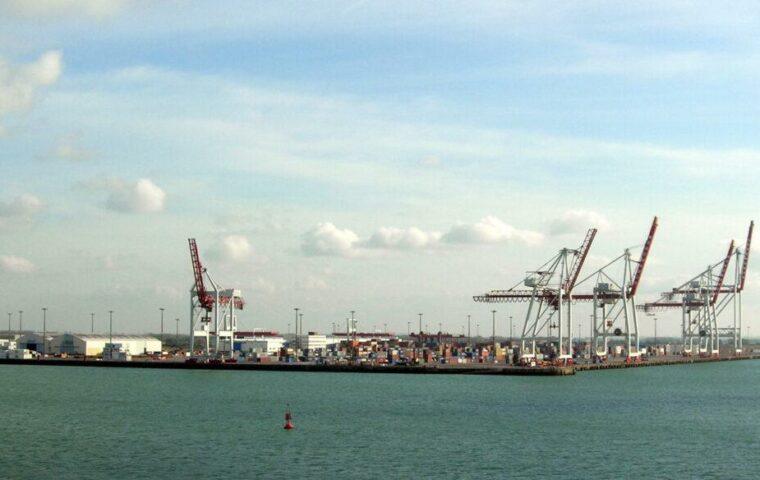
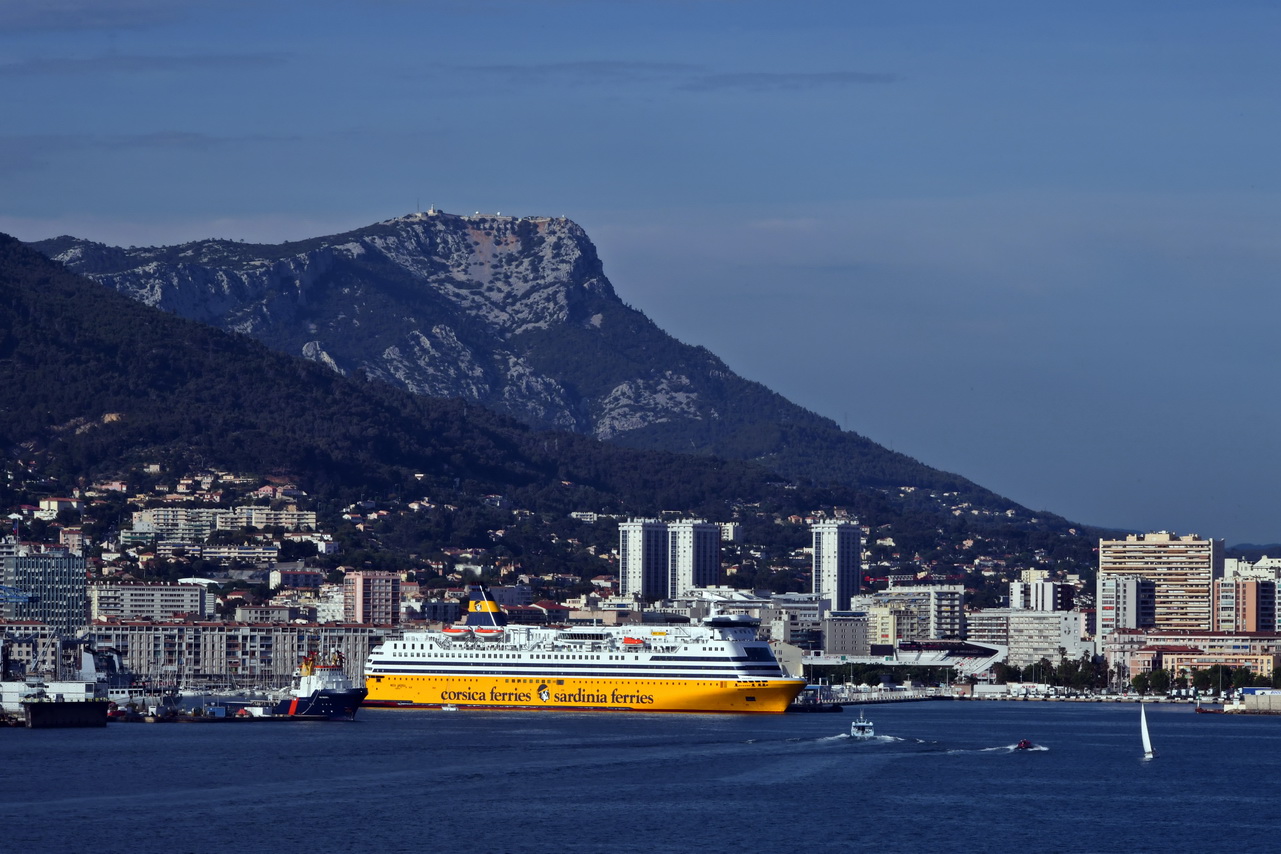
Lines to Corsica: from Toulon, ferries connect to Bastia, Ajaccio, Ile-Rousse and Porto-Vecchio depending on the season. The metropolitan port also manages cruises and freight, with high passenger traffic and investments to streamline access and reduce environmental impact.
Local life, education and sport
University of Toulon: nearly 11,000 students in 2024-2025, 3 campuses (Toulon, La Garde–La Valette, Draguignan), 9 departments, 14 laboratories, an engineering school (SeaTech). The university fuels the digital, maritime and sport-health ecosystem. On the cultural side, the Opera and Théâtre Liberté mark the season, joined by summer festivals. The Rugby Club Toulonnais (RCT) energizes the city at Mayol stadium and contributes to local identity.
Neighborhood life relies on shaded squares, markets, and proximity to sea and mountains. The beaches are certified and accessible, the hills offer hiking and mountain biking routes. For families, the range of school, sports and leisure facilities is comprehensive at the metropolitan level.
Real estate and urban planning: prices, neighborhoods and dynamics 2025
In 2025, the average price of apartments in Toulon is around ~3,100 €/m², and houses ~4,400 €/m² (market estimates). The overall medians are often mentioned around ~3,450 €/m², with significant variations depending on neighborhoods, condition, and sea view. The Mourillon, Cap Brun, and waterfront areas remain sought after; the old town continues its transformation with investment opportunities (renovations, tax breaks in heritage zones). The west and north districts offer more affordable prices. Student and seasonal furnished rentals coexist with primary residences, under municipal regulation.
Trends: after a national correction cycle, Toulon resists due to its coastal attractiveness, public/defense employment, and the shift in demand from the Côte d’Azur. Rates are normalizing, demand focuses on well-located, renovated, and energy-efficient properties. Urban redevelopment projects (city center, port wastelands, soft mobility) support the image and value.
2025 benchmarks: apartments ~3,100 €/m², houses ~4,400 €/m²; overall median approx. 3,450 €/m²; rents around 14–18 €/m² depending on segment and location. Check neighborhood by neighborhood before making an offer.
Practical advice and comparisons
When to come?
April–June and September–October offer the best weather–crowd balance. July–August promises maximum activity but crowded beaches and roads. Winter is mild, ideal for museums, ridge walks, and markets.
Without a car, is it doable?
Yes. TGV station downtown, dense Mistral network, water-buses effective for crossing the harbor, real-time apps and dematerialized tickets. Pedestrian paths and connections are expanding, especially between port, beaches, and center.
With children
Mourillon beaches very suitable, playgrounds, museums with workshops, fun cable car, hill parks, and numerous water activities.
Suggested itineraries
24 hours in Toulon
- Morning: Faron cable car, panorama and memorial.
- Noon: Cours Lafayette market, Toulon cade and local products.
- Afternoon: Naval Museum, Cronstadt quay walk and boat tour of the harbor.
- Evening: swimming or sunset at Mourillon, fish dinner.
Weekend
- Day 1: center, museums, street art, opera and old town.
- Day 2: coastal forts, coastal path, beaches, boat-bus trip to Les Sablettes and Saint-Mandrier.
Local specialties and flavors
The Toulon cade (chickpea pancake baked in the oven), harbor fish, anchoïade and Provence wines make up a simple and sunny repertoire. On the crafts side, the Cours Lafayette market remains the showcase of Var gastronomy.
FAQ
What is the best view of Toulon?
The summit of Mount Faron offers the most comprehensive panorama of the Petite and Grande Rade. Access by cable car is the most spectacular.
Is it possible to travel by boat on a daily basis?
Yes. The maritime lines 8M, 18M, and 28M of the Mistral network connect Toulon to La Seyne, Les Sablettes, and Saint-Mandrier with frequencies of 20 to 30 minutes depending on the season.
Which beaches are in the city center?
The Mourillon beaches form a set of developed coves, accessible by bus from the center and suitable for families.
What are the real estate prices in 2025?
Order of magnitude: apartments around €3,100/m² and houses around €4,400/m², with strong variations depending on the neighborhood, condition, and view.
Which museums to visit?
The National Navy Museum for naval history. Add the House of Photography and exhibitions at the Opera and the Liberté Theater.
Where do the ferries to Corsica depart from?
From the Toulon ferry terminal, with seasonal and annual connections depending on Corsican ports.
Useful links and sources
- INSEE — Toulon (population, housing, income, indicators)
- Mistral Network — lines and schedules, boat-buses 8M, 18M, 28M
- Mount Faron Cable Car — practical information
- National Navy Museum — official site
Conclusion — Toulon combines a unique harbor, a major naval heritage, and a Mediterranean way of life. The growth of maritime mobility, the redevelopment of neighborhoods, and the university and cultural attractiveness strengthen its positioning. Whether you are a visitor, student, naval worker, or investor, the city offers a wide range of choices to be decided neighborhood by neighborhood, as close as possible to your uses and budget.