In Brief
🔎 The connected car insurance device is especially interesting for low-mileage drivers, regular drivers, and profiles who want to prove their driving rather than just declare it.
💶 The real gain depends on the total cost: premium, subscription, device fees, cancellation conditions, and discount level. A displayed reduction is worthless if it’s eaten up by fees.
🔐 The CNIL reminds that an insured must understand what data is collected, why, and for how long. In short: mandatory transparency, no ambiguity allowed.
How Does a Connected Car Insurance Device Work?
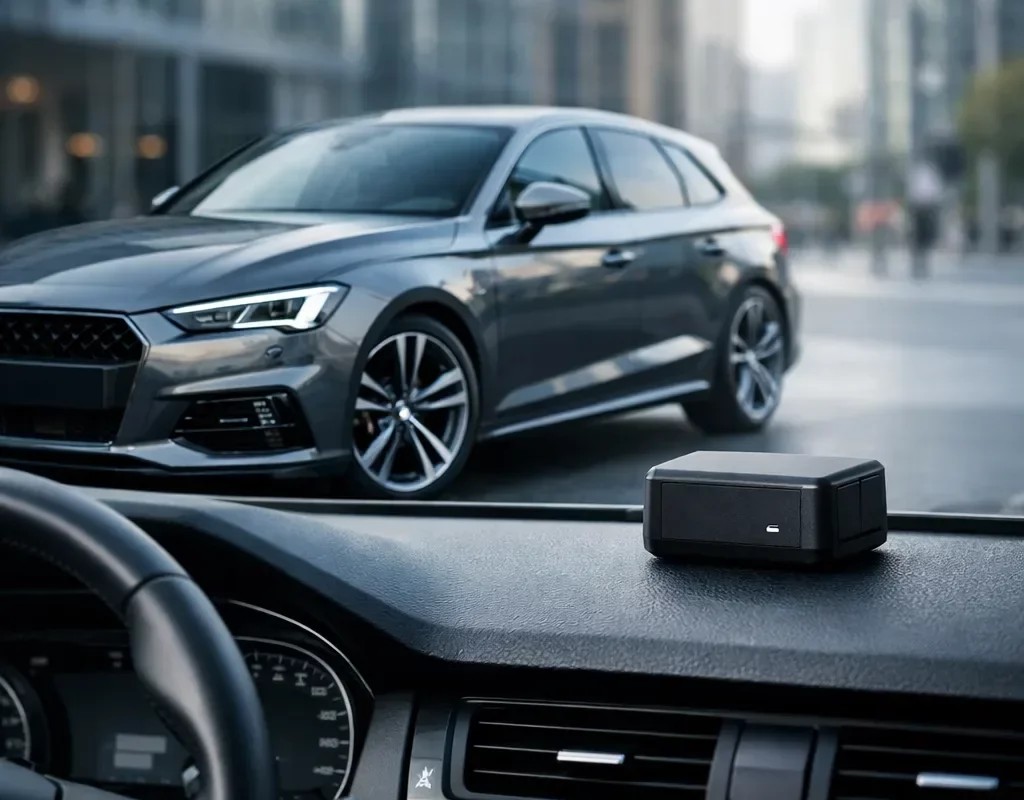
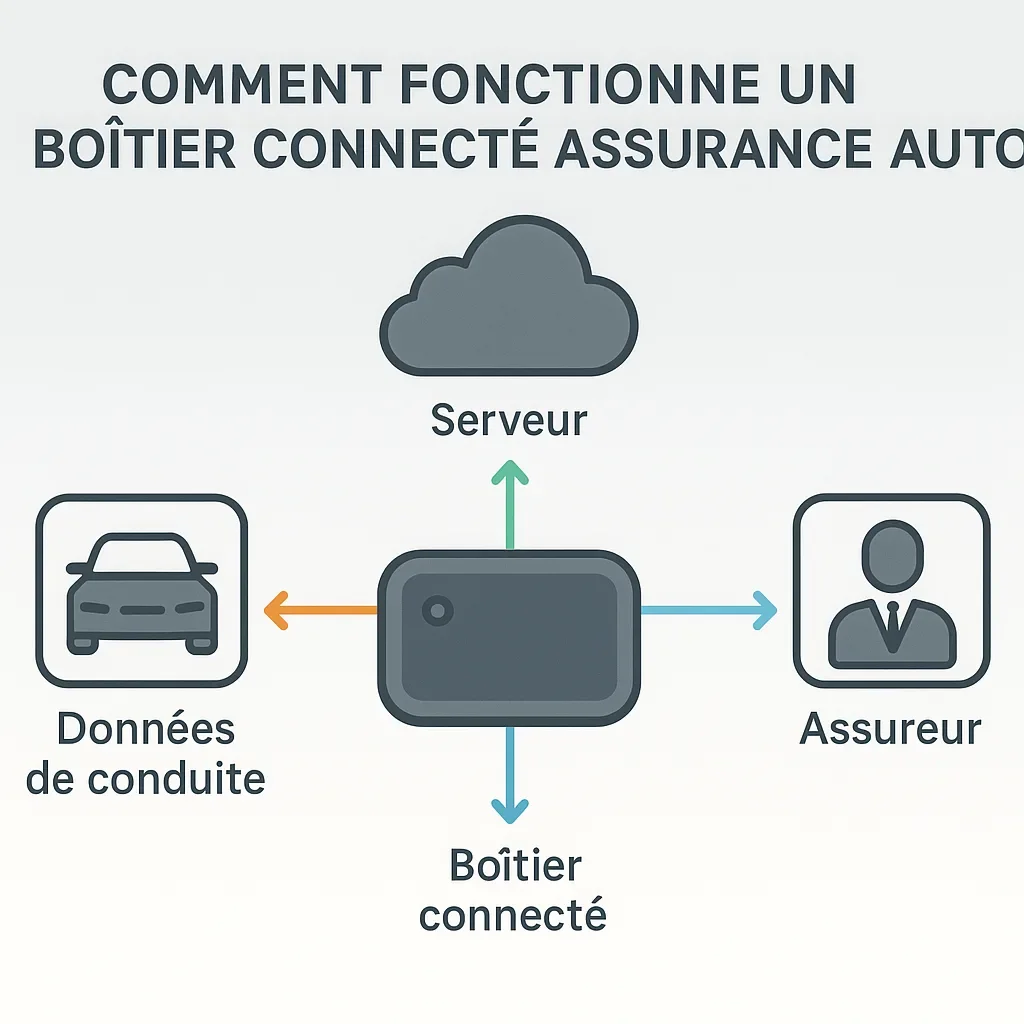
The device is most often plugged into the vehicle’s OBD port or connected to a mobile app. It records indicators such as mileage, harsh braking, or acceleration, then transmits them to the insurer to calculate a discount or driving score.
The connected car insurance device is based on a simple idea: turning driving behavior into readable data. Specifically, the small module reads vehicle information, often via the OBD port, the same port used in garages for electronic diagnostics. Depending on the contract, it can work alone or with a companion app.
In most offers, the logic is not to “monitor” for fun, but to measure targeted criteria: miles driven, usage times, driving smoothness, sometimes location. And this is where everything hinges: the less the contract measures, the easier it is to accept; the more finely it measures, the stronger the commercial promise must be.
What Data Is Really Collected?
Most often, we talk about trips, average speed, sharp accelerations, hard braking, and annual distance. Not all contracts go as far as permanent geolocation, far from it. According to the CNIL, the rule remains the same: the insured must clearly understand what is collected, why, and for how long.
Does the connected car insurance device really lower the bill?
Sometimes, yes, but not for everyone. The discount depends on the contract, mileage, driving style, and associated costs. The device becomes interesting when the announced savings far exceed the trade-off: monitoring constraints, possible subscription, and acceptance of data collection.
Insurers like to talk about discounts, and it’s not entirely marketing. In practice, the most generous offers target low-mileage drivers, who are fairly regular, with a calm claims history. Discounts of between 10 and 30% are often advertised depending on usage and the program, but it’s never automatic.
The point not to forget is that the device does not replace the regulatory bonus-malus mechanism. In other words, your coefficient continues to evolve according to the classic rules. Telematics can add a commercial rebate, but not rewrite the legal framework. Joking aside, this is often where sellers are a bit too quick in their pitch.
The connected device is worth little if it only serves to add control. It becomes interesting when the data really helps to pay the right price.
What are the advantages and limitations to weigh before signing?
The real interest of the system is that it rewards actual usage, not just a theoretical profile. If you drive little, drive regularly, and accept limited data collection, the contract can become smart. On the other hand, for a heavy driver, the equation quickly loses its appeal.
On the ground, an insurance agent based on the outskirts of Rennes observes that second car drivers accept the device more easily than heavy drivers. A family that only uses the car on weekends says they kept the contract mainly because the discount statement was readable from the first month.
Conversely, the limitations are very down-to-earth: dependence on the quality of the device, risk of overinterpreting an emergency brake, and sometimes an unpleasant feeling of being constantly rated. Some contracts also reward eco-driving, which is consistent, but this does not suit drivers who frequently change routes or share the vehicle.
This usage profile also corresponds to what is observed outside major urban centers: according to INSEE, the car remains more essential in low-density areas, while ADEME reminds us that smooth driving also reduces consumption. The device does not invent these behaviors; it measures them.
Which drivers is the connected device worth it for?
The device is especially cost-effective for low-mileage drivers, regular drivers, and young profiles who want to prove calm driving. It is much less convincing for those who cover a lot of kilometers, often lend their car, or refuse any fine data collection.
In other words, the question is not “is it good?” but “is it suited to your usage?”. A city car used on weekends, a second household car, or a driver who mostly makes short trips can benefit from it. Conversely, a salesperson on the road or a parent who racks up many kilometers will often have less to gain.
In practice, offers are often most interesting under 8,000 to 10,000 km per year, especially when the contract also rewards stable driving. This is not a universal rule, but it is a good benchmark to feel if telematics can really bring something or if it will just complicate the reading of the contract.
| Profile | Potential interest | Point of caution |
|---|---|---|
| Low-mileage driver | Often strong | Check the mileage threshold and fixed fees |
| Calm young driver | Often interesting | Compare the actual discount, not just the commercial argument |
| High-mileage driver | Low to medium | Tracking can cost more than it brings |
| Second household car | Very good candidate | Look at the management of occasional trips |
How to compare an offer without getting trapped?
First compare the full cost, not the percentage discount shown in the advertisement. You need to add the premium, any subscription, the device deposit, exit penalties, and conditions that can void the advantage. A 15% discount is not a good deal if fixed fees eat it all up.
Then check three very concrete points: what data is collected, how the discount is calculated, and how you exit the contract if the service does not suit you. A clear contract immediately states if geolocation is active, if the device can be easily removed, and if data is kept after termination.
- Measured mileage: annual, monthly, or per trip?
- Nature of data: driving only or driving + geolocation?
- Hidden fees: activation, subscription, return, replacement?
- Discount conditions: minimum score, km threshold, allowed hours?
- Exit from the system: deactivation, data deletion, equipment return?
The right reflex is to ask for a written quote with an example simulation based on your actual usage. If you drive 7,500 km per year, don’t take an offer designed for 15,000 km. It’s the best way to buy a “smart” device that ultimately becomes a hassle.
FAQ about telematics car insurance
Can the device increase my premium?
Yes, indirectly, if the contract provides penalties in case of behavior deemed risky or if you lose the discount for failing to meet conditions. However, the regulatory bonus-malus does not depend on the device: it follows the classic car insurance rules.
Do you need a recent car to install this device?
Not necessarily recent, but generally a compatible diagnostic port is required, often the OBD port. Most relatively modern petrol and diesel cars are equipped with it. For some older or very specific models, the insurer may offer another solution.
What happens if I lend my car to someone?
The device records the vehicle’s use, not the driver’s identity in most cases. If a relative borrows your car, their driving style can therefore affect your score or the reading of your trips. This is a detail to check before signing, especially for family use.
Can data be easily deleted?
The answer depends on the contract and the retention framework provided. The CNIL emphasizes transparency and limiting data to what is strictly necessary. Before subscribing, ask for clear written information on how deletion, portability, and deactivation are handled in case of termination.
Is the device useful for a young driver?
Often yes, if the young driver drives little and regularly. The device can help to objectively demonstrate cautious driving, which is valuable when the starting premium is high. But if the contract is too intrusive or too expensive in fixed fees, the benefit can disappear very quickly.