
In brief
⚡ Auto glass breakage primarily concerns the glazed parts of the vehicle: windshield, side windows, rear window, sometimes panoramic roof.
🧾 The deductible and exclusions often make the difference between comfortable coverage and a bill that stings a bit.
🛠️ A simple chip can sometimes be repaired in about thirty minutes; a well-placed crack often requires a full replacement.
📸 On recent cars, recalibrating cameras after windshield replacement can affect the final cost. It’s the small detail that matters… a lot.
What does the auto glass breakage warranty really cover?
The auto glass breakage warranty covers damage to the vehicle’s glazing when the contract explicitly includes it. In practice, it mainly serves to repair a chip or replace a broken window, possibly with a deductible. It does not cover, by itself, everything around the glazing.
The auto glass breakage warranty mainly covers the glazed elements of the vehicle: windshield, windows, rear window, sometimes panoramic roof. However, non-glazed parts, sensors alone, or complete mirrors often fall under another warranty or a specific clause in the contract.
The logic is simple: the insurer compensates what is considered a glazed surface, not the entire surrounding assembly. This is where many motorists get it wrong. A cracked window may be covered, but not necessarily its frame, sound system, sensors, or accessories if the contract does not mention them explicitly.
In other words, you need to read the exact definition of the warranty. Two contracts can have the same name yet not cover exactly the same things. This is a classic in the insurance world: same label, slightly different content. Joking aside, this is often where the good or bad surprise happens.
Which elements are actually covered by an auto glass breakage warranty?
Most contracts primarily cover the large glazed surfaces. Windshield, side windows, and rear window come first, then the panoramic roof depending on the plan. Headlight lenses, mirrors, or sensors are not automatically included: you need to read the exact line of the contract.
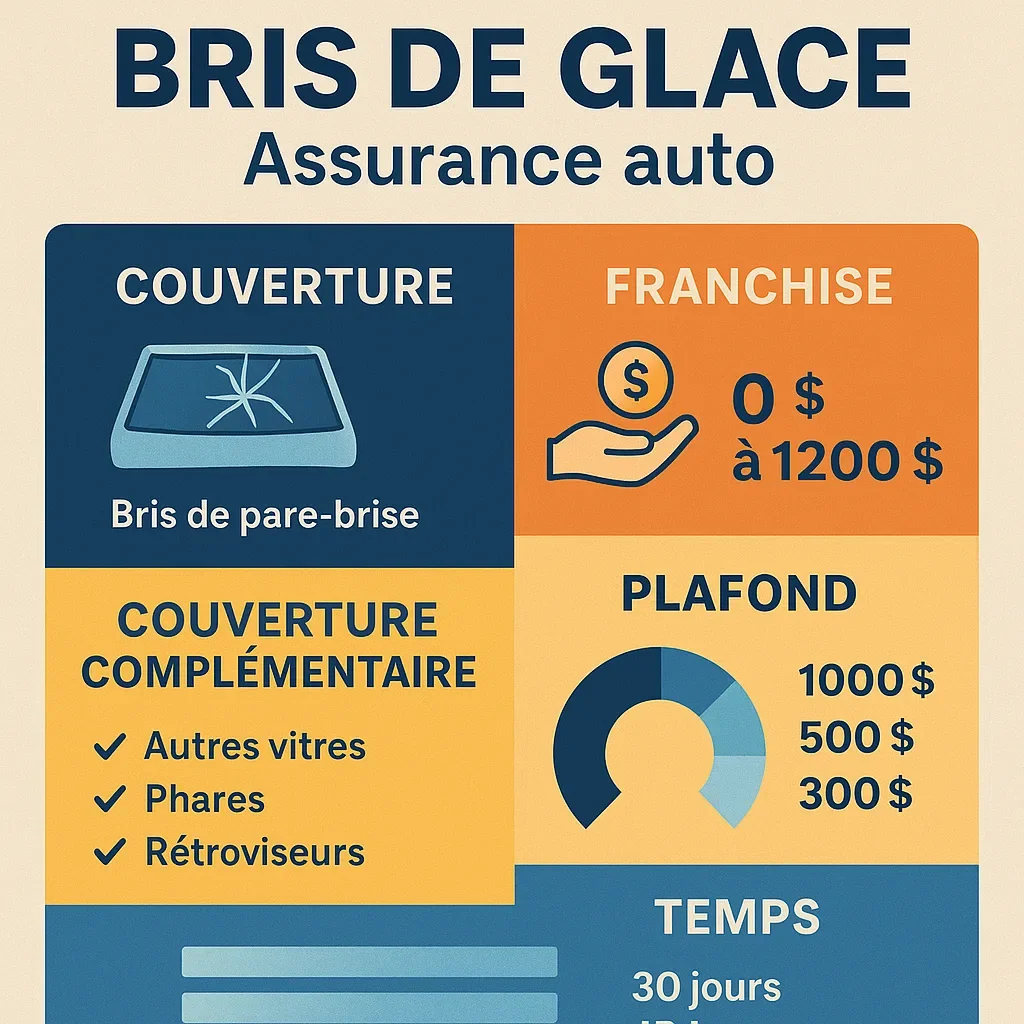
| Element | Often covered? | Point of attention |
|---|---|---|
| Windshield | Yes | Replacement if significant crack or chip in the vision area |
| Side windows | Yes | Clean breakage is generally covered |
| Rear window | Yes | Integrated defrosting may be subject to a specific clause |
| Panoramic / sunroof | Sometimes | Often explicitly mentioned, otherwise risk of exclusion |
| Mirrors / headlights | Sometimes | Not automatic: you need to check the additional warranty |
| Cameras / sensors | Often not alone | The glazing may be covered, not necessarily the associated electronics |
This table summarizes the most common trend in France, but it never replaces the general conditions. An intermediate formula may cover a panoramic roof, while another leaves it out. The same logic applies to headlight optics: sometimes included, sometimes not at all. That’s why it’s better to check the exact vocabulary used by the insurer.
Repair or replacement: how does insurance decide?
The choice is made based on the location, size, and depth of the damage. An isolated impact, outside the field of vision, is often repaired with resin. A crack starting from the edge, crossing the field of vision, or affecting multiple layers more often requires a complete replacement.
In workshops, the decision is based on fairly standard technical criteria: impact diameter, crack length, position relative to the driver, and the general condition of the glass. The closer the damage is to the edge, the greater the risk of propagation. And when the vision area is affected, the repairer often prefers to play it safe rather than patching up a shaky compromise.
The real issue with auto glass breakage is not just the broken window. It’s the contract you discover too late, with its deductible, exclusions, and separate recalibration.
- Repair: suitable for limited impacts, quick to stabilize, often less costly.
- Replacement: necessary if the crack lengthens, if the glass is weakened, or if the driver’s vision area is affected.
- Technical decision: it also depends on the vehicle model and onboard equipment.
An important point: repairing quickly sometimes avoids replacement. A simple chip can turn into a real crack after thermal shock, a rough road trip, or a car wash. In practice, this little wait can cost much more than immediate repair.
How much does it really cost and who pays the deductible?
The real crux of the matter is the out-of-pocket expense. A simple repair often costs little in the end, but a replacement with calibrated windshield can raise the bill. The deductible varies greatly from one contract to another: it’s what makes the difference between good news and a bit of a cold shower.
On the ground, differences are real. A simple chip can sometimes be covered with a minimal out-of-pocket cost, while a modern windshield equipped with driver assistance requires not only the glass but also system calibration. That’s where the bill can seriously increase.
- Repaired impact: often limited cost, especially if the insurer works with an approved network.
- Standard replacement: the observed range often hovers around a few hundred euros.
- Windshield with camera: the bill can rise significantly higher, especially if calibration is charged separately.
- Deductible: it can range from zero to over €100 depending on contracts, sometimes more on certain budget formulas.
Auto glass breakage generally does not result in a penalty if isolated and without liability. However, the deductible remains due if the contract provides for it, and recalibration can sometimes be charged separately on recent vehicles.
To check the rules governing your contract, keep handy the Insurance Code on Légifrance, the Service-Public.fr, Individuals section, and the guidelines from France Assureurs. This trio helps put the clauses in the right order.
Windshield with camera, sensors, and panoramic roof: what pitfalls?
On recent vehicles, auto glass breakage is no longer limited to a simple window. The windshield may house an ADAS camera, a rain sensor, or a set of sensors, and the panoramic roof sometimes changes the game. The icing on the cake… or rather on the bill: recalibration can be charged separately.
The key point is that the glass and electronics are not always covered under the same terms. Some contracts cover windshield replacement but not recalibration, others include it in the service, and still others require going through an authorized repairer. This detail is not trivial: for driver assistance systems, a poorly adjusted camera can distort lane-keeping alerts or automatic braking.
That’s why you need to ask two questions before accepting the intervention: is calibration included? and is the repairer authorized for my model? If the answer is unclear, ask for written confirmation. This is not paranoia, just smart prevention.
What to do in the 10 minutes after glass breakage?
The right reflexes are simple, but they prevent turning a small chip into a full replacement. Photograph the damage, protect the area if needed, avoid thermal shocks, and report the claim quickly. Waiting “to see” is often the best way to pay more later.
On the ground, a repairer from the Lille area notes that many drivers wait “to see if it holds.” Bad idea: as soon as a chip gets moisture or heat, the crack can spread within days, especially on modern bonded windshields.
The most pragmatic procedure looks like this:
- Photograph the impact up close and from afar, including the vehicle’s context.
- Check if the damage is in the driver’s field of vision.
- Avoid sudden temperature changes, which can cause the crack to spread.
- Report the claim within the contract’s deadline, usually within 5 business days.
- Ask if the repairer is authorized and if the deductible will apply.
A useful reminder: if the glass breakage is accompanied by vandalism, attempted theft, or other bodywork damage, it sometimes falls outside the pure glass breakage coverage. In this case, the claim is handled differently. In other words, the context of the claim matters almost as much as the damage itself.
FAQ on auto glass breakage
Should I report a simple chip even without a crack?
Yes, if you want to avoid the damage worsening and requiring a full replacement. Many repairers intervene quickly on an isolated chip, especially when it remains small and outside the field of vision. The reporting deadline stipulated in the contract remains the reference, often 5 business days.
Does auto glass breakage coverage include mirrors and headlights?
Not automatically. Some contracts include them via an extension, others clearly exclude them. You need to check if the insurer refers to “glazed parts,” “glass,” or “optical elements,” as the contractual vocabulary makes all the difference.
Can I choose my repairer?
Yes, in many cases. However, the level of coverage may vary depending on whether you go through an authorized network or not. Some insurers simplify the process with direct billing, others require you to advance all or part of the costs.
Does glass breakage increase the no-claims bonus?
Generally no, because it is not a responsible accident. The no-claims bonus mainly measures the insured’s responsibility in auto claims. The real issue here remains the deductible and any limits provided in the contract.
What if hail only damages the windows?
In this case, the glass breakage coverage can apply to the glazed parts. However, if the hail also damages the hood, roof, or bodywork, other coverages come into play. This is a very common “mixed” claim, so it must be reported precisely.