In brief
⚡ Liability insurance remains mandatory, just like for any car, but the real added value of an electric contract lies in the battery, the cable, and assistance.
🔋 On the ground, the most sensitive claims often concern charging: stolen cable, short circuit, impact on a charging station, immobilizing breakdown. These are the clauses to read first.
💸 In 2024, premiums observed on some electric city cars often range around €400 to €800 per year, but the no-claims bonus, parking, and model can change everything.
Is electric car insurance different from classic car insurance?
Yes, but not on the legal basis: the electric car must be covered at least by liability insurance, like any vehicle on the road. The difference mainly lies in the value of what needs to be protected and the more specific risks, notably the battery, power electronics, and charging accessories. According to Service-Public.fr, minimal car insurance remains mandatory, while 2024 data from the Ministry of Ecological Transition show that electric vehicles now weigh heavily in the new car market.
In other words, the contract is not “special electric” by magic: it must mainly be aligned with the real value of the vehicle and the potential cost of a claim. On a recent city car, a simple impact can already be expensive if sensors, the battery, or the charging system are damaged. That’s why the cheapest formula is not always the smartest.
What guarantees are really needed to insure an electric car?
The right electric car insurance is not about piling options randomly. You must first secure liability insurance, then check three points: battery, 0 km assistance, and charging cable. Comprehensive coverage often remains the most logical on a new or expensive-to-repair vehicle.
The simplest way is to think in layers. Some guarantees are essential, others become useful as soon as the vehicle is parked outside, driven a lot, or purchased via leasing (LOA). On the French market, insurers have even started to offer more targeted formulas, because a new electric car is not insured like an old, low-value petrol compact.
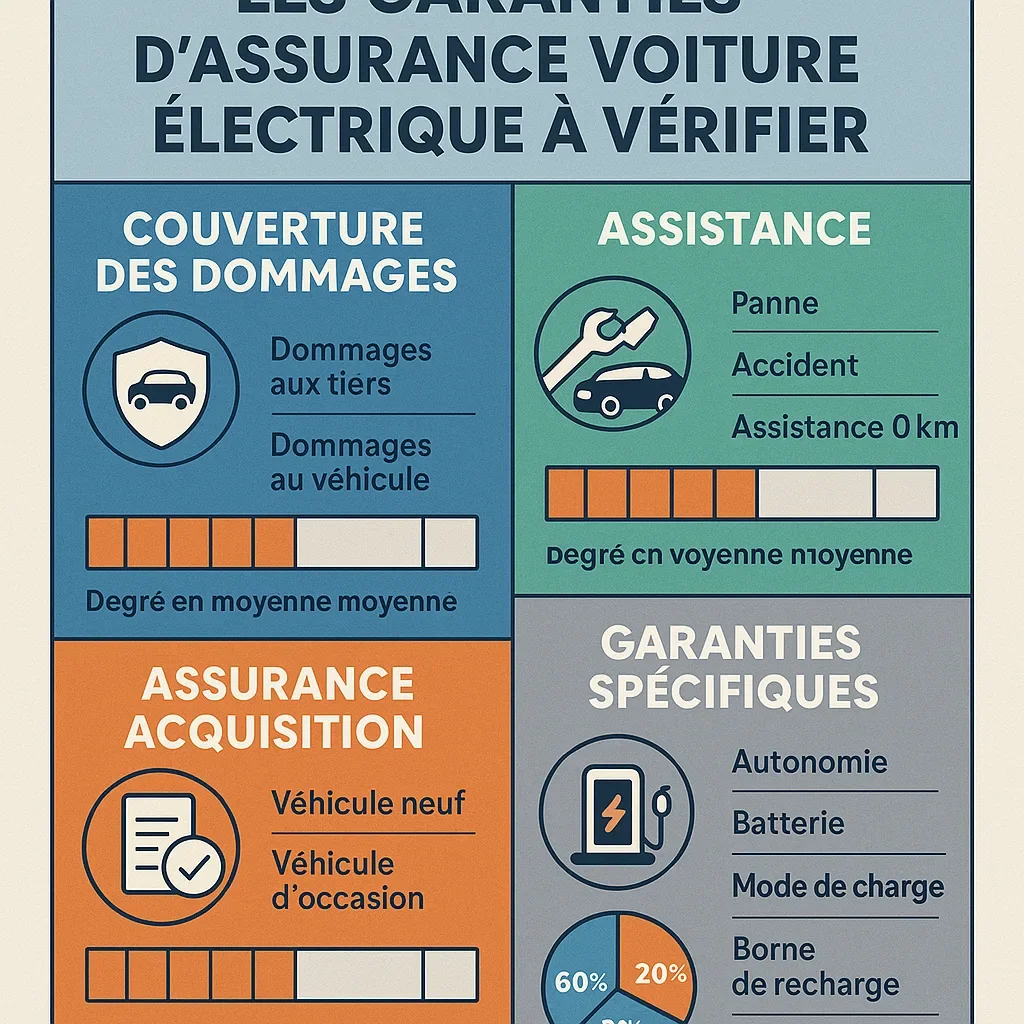
| Coverage | Level of interest | Why it’s useful |
|---|---|---|
| Liability insurance | Essential | It covers damages caused to third parties. |
| All accident damage | Very useful | It compensates your car even if you are at fault. |
| 0 km assistance | Very useful | It prevents being stuck in front of your home after a breakdown or a dead battery. |
| Battery and electronics | To be closely checked | It becomes strategic for costly repairs related to the claim. |
| Cable, accessories, charging | Useful | It protects equipment that is often expensive and sometimes forgotten in the contract. |
The real trap is to believe that all risks means “zero worries.” In reality, the deductible, compensation limits, and exclusions can make the difference between a comfortable contract and an unpleasant surprise. For a new car, a lease with option to buy (LOA) or a long-term lease (LLD), all risks often remain the most rational choice. For a used electric car already well depreciated, an extended third-party coverage can sometimes suffice.
What exactly does the battery, charging cable, and charging station cover?
The battery, cable, and charging station are not treated the same way depending on whether they are purchased, rented, installed at home, or simply transported in the trunk. The crucial point is to distinguish what falls under accidental damage, normal wear and tear, or a simple contractual omission. On this subject, the fine print makes all the difference.
In case of impact, fire, short circuit, or electrical damage, a purchased battery can be covered if the damage guarantee provides for it. However, normal wear and tear and the gradual degradation of autonomy are generally excluded. For a rented battery, the situation changes again: the rental contract and the insurance contract do not always tell the same story, so it is necessary to check who compensates what, and in what order.
In practice, it is observed that many drivers discover too late the difference between onboard accessory and declared accessory. A family living in a new house, for example, thought that their wall-mounted charging station was automatically protected by car insurance, whereas it mainly fell under home insurance and guarantees related to home improvements.
For the charging cable, the situation is more ambiguous than it seems. Some contracts cover it in case of theft with break-in or accidental destruction, others require it to be listed as an insured accessory. The same logic applies to the home charging station: it is often better protected by home insurance, while the car insurance contract rather covers damages related to the vehicle or charging while on the move.
How much does electric car insurance cost?
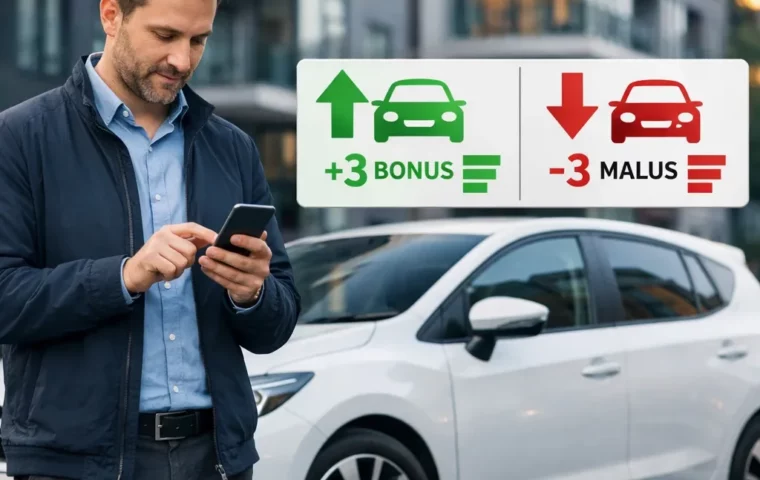
The price mainly depends on the value of the vehicle, the bonus-malus, parking, and the level of coverage. For some electric city cars, premiums are often around €400 to €800 per year, but a more expensive SUV to repair can quickly drive the cost up.
Insurers look at several very concrete variables. The bonus-malus remains central: it can go down to 0.50 for a highly favored driver or rise up to 3.50 in case of heavy claims history. Added to this are the parking location, annual mileage, vehicle age, power, and especially the cost of replacement parts. A Renault Zoé, a Peugeot e-208, or a Tesla Model 3 are not in the same league when it comes to quotes.
Public data from the INSEE website also remind us that the automotive budget weighs heavily on household expenses. This is not trivial: when the car is already expensive to buy, a 15% or 20% difference in the premium quickly becomes noticeable over the year, especially if you choose a high deductible to lower the premium.
How to pay less without sacrificing coverage?
The best method is not to blindly cut all guarantees, but to remove what is redundant and keep what truly protects your usage. Electric car insurance can remain affordable if the vehicle is parked in a closed place, drives little, and does not justify unnecessary overprotection. In short: we look for the right balance, not a bargain contract.
To lighten the bill, focus on what really changes the price: bonus-malus, parking, mileage, deductible, and vehicle age. For a used electric car that has already depreciated, a well-calibrated third-party extended coverage can be smarter than an overly loaded comprehensive policy.
Concretely, several levers work well:
- Declare a realistic mileage: no need to pay for 20,000 km if you only drive 9,000.
- Choose a coherent deductible: a slightly higher deductible sometimes significantly lowers the premium.
- Avoid duplicates: the home charging station does not always need to be covered twice, through both the car and the home insurance.
- Adapt the formula to the vehicle’s age: the older and more depreciated the car, the less comprehensive coverage is worthwhile.
- Look at the options that are truly useful: roadside assistance from 0 km, replacement vehicle, cable coverage, new-for-old value.
It should be noted that “comfort” options are often very appealing in the brochure, but not always on the final bill. The right reflex is to request a quote with and without each option, then compare what you pay for what you get. This way, you avoid promises-filled metas and guarantees that are never used.
Which contract to choose according to your driver profile?
The right contract depends less on the word “electric” than on your actual usage. A small urban driver, a high motorway mileage, a car on a lease with option to buy (LOA) and a rented battery do not have the same needs. That’s why a “standard” quote can quickly miss the mark if you don’t get into the details.
| Profile | Often relevant contract | Point of caution |
|---|---|---|
| New or recent car | Comprehensive | Check the new value, the battery, and 0 km assistance. |
| Used electric car with low value | Extended third party | Look at theft, fire, and charging accessories. |
| LOA / LLD | Comprehensive | Check the financial loss guarantee and the lessor’s requirements. |
| High mileage driver | Full package | Extended assistance, replacement vehicle, and deductible compatible with usage. |
| Rented battery | Contract carefully reviewed | Clearly separate compensation for the vehicle, the battery, and the rental contract. |
If you mainly drive in the city, park outside, and use your car for short trips, sensitivity to theft, minor damage, and cable breakage can increase a notch. Conversely, a very cautious driver who parks their car in a closed garage can sometimes settle for a somewhat simpler coverage without losing peace of mind.
The key point not to miss is the overall coherence of the contract. A well-calibrated electric car insurance protects the vehicle but also your daily life: not being stranded, not having to advance huge expenses, and not discovering too late that an accessory was excluded. It’s simple, but this is often where everything is decided.
FAQ — Electric car insurance
Is an electric car cheaper to insure than a gasoline car?
Not necessarily. Some electric cars benefit from a reasonable rate if they are compact, low-powered, and driven little, but repairing a battery or an electronic unit can raise the price. The model, the bonus, and parking often weigh more than the motorization itself.
Is comprehensive insurance necessary for a new electric car?
In most cases, yes, especially if the vehicle is new, bought on credit, or on a lease with option to buy. Comprehensive coverage better protects the value of the asset when it is still very expensive to replace. For a recent car, it is often the most coherent choice.
Does a rented battery change the insurance coverage?
Yes, because you have to distinguish the ownership of the vehicle from that of the battery. The insurance contract does not replace the rental contract: in case of a claim, each document may provide its own compensation rules. So you need to check the clauses on both sides.
Is the home charging station covered by car insurance?
Not always. The fixed charging station often falls more under home insurance, while the car insurance contract mainly covers damages related to the vehicle or the cable. The good reflex is to notify your insurer about the installation to avoid a coverage gap.
Is the charging cable covered in case of theft?
Sometimes, but it’s not automatic. Some contracts include it as an accessory, others require a specific declaration. Theft with break-in is often better covered than a simple disappearance, so you need to read the clause before signing.
Is 0 km assistance really worth it?
Yes, and even more so for an electric vehicle. A breakdown or a discharged battery can immobilize the car in front of your home, in the work parking lot, or at the foot of the house. With 0 km assistance, you avoid waiting too long or too far for a tow truck.