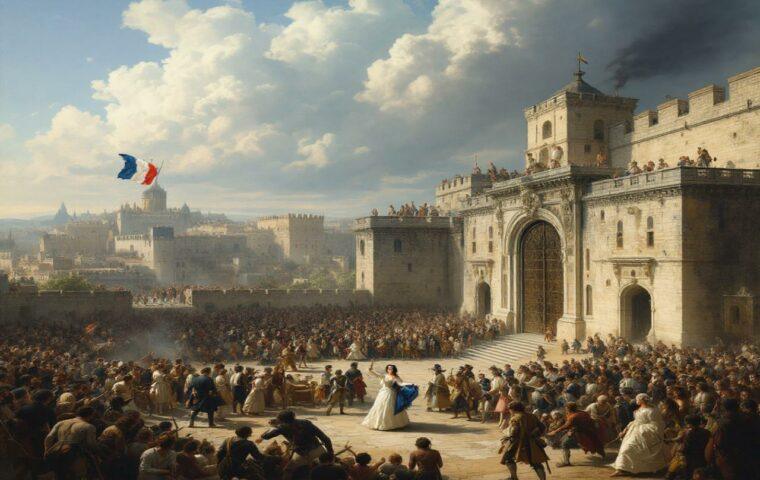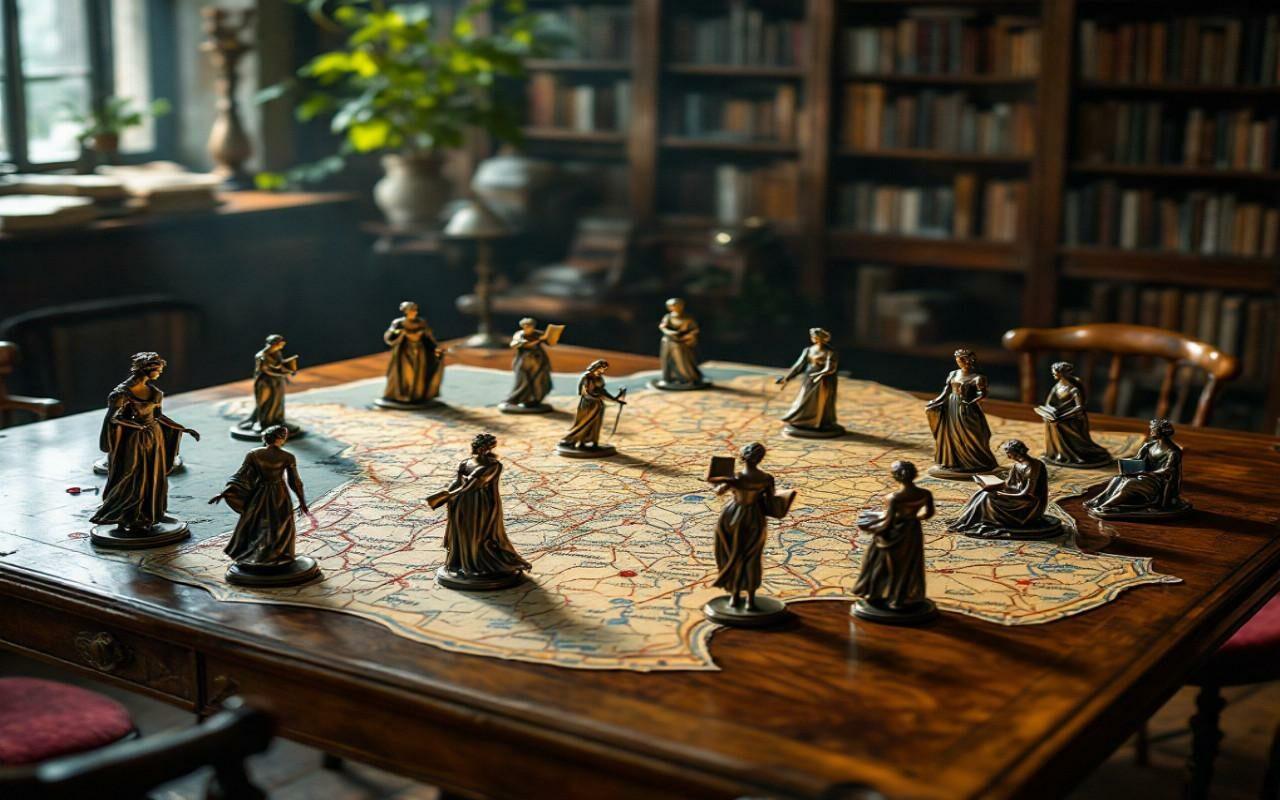
The indelible mark of these women in the history of France
Like a golden thread linking different eras, the journeys of these ten major female figures reveal an extraordinary strength of character and creativity. Some challenged the codes of their time, others carried new ideas, while still others shaped the cultural or scientific scene. Together, they compose a rich and nuanced fresco that invites reconsideration of the role of women at the heart of national events.
The 10 major female figures in the history of France
| Name | Period | Field | Main contribution |
|---|---|---|---|
| Clotilde | c. 475–545 | Monarchy | Conversion of Clovis to Christianity |
| Aliénor d’Aquitaine | 1122–1204 | Politics, culture | Artistic patronage, diplomatic influence |
| Jeanne d’Arc | 1412–1431 | Military | Revival of the Valois dynasty |
| Marguerite de Navarre | 1492–1549 | Literature, reform | Patron of humanists, committed writer |
| Catherine de Médicis | 1519–1589 | Politics | Influential regency, cultural reform |
| Madame de Sévigné | 1626–1696 | Literature, correspondence | Beauty of epistolary style |
| Olympe de Gouges | 1748–1793 | Politics, human rights | “Declaration of the Rights of Woman and the Female Citizen” |
| Marie Curie | 1867–1934 | Science | Discovery of polonium and radium |
| Simone de Beauvoir | 1908–1986 | Philosophy, feminism | “The Second Sex” |
| Joséphine Baker | 1906–1975 | Arts, resistance fighter | Music hall icon and intelligence agent |
1. Clotilde (c. 475–545): the builder of a Christian dynasty
One might think that Clotilde’s destiny is limited to the figure of a submissive queen, but her political and spiritual influence was considerable. Descended from the Burgundian line, she married Clovis at a key moment when Christianity was seeking a launching pad in Gaul. Through her persistence, she imposed on the Frankish king the baptism that would transform the religious map of Western Europe. Her faith was not limited to a symbolic gesture: Clotilde organized the construction of churches, protected contested bishops, and made the Merovingian palace an intellectual center. Without her, France and, more broadly, Christianity might not have experienced the same cohesion.
2. Aliénor d’Aquitaine (1122–1204): patron and diplomatic strategist
Queen of France then Queen of England, Aliénor d’Aquitaine embodies the meeting of Provençal culture, fortified castles, and refined courts. More than a sovereign, she was a true cultural ambassador: she supported troubadours, encouraged translations of philosophical texts, and played a mediating role between two great powers. Her life was a curious mix of medieval poetry and political maneuvering, where she exchanged courtly poems while negotiating peace or war. Like a true strategist, Aliénor knew how to assert her authority over two neighboring kingdoms without ever renouncing her Aquitaine roots.
3. Joan of Arc (1412–1431): the Maiden who Restored Hope
“I was not born to be afraid; I was born to do the will of God.”
Her name immediately evokes the fervor of the battles at the end of the Hundred Years’ War. By an almost mystical will, Joan infused enthusiasm into the French ranks at a time when the monarchy was sinking into doubt. Knighted by Charles VII, she rallied discouraged troops and imposed several victorious sieges (Orléans, Jargeau). While she knew how to wield a sword, her true asset remained the image she projected: symbol of national fervor, she embodied the revenge against the English occupation. Condemned for heresy, she now holds a place of crystalline clarity in the collective memory.
4. Marguerite of Navarre (1492–1549): protector of free spirits
Sister of King Francis I, Marguerite of Navarre did not content herself with playing the princess. In Nérac, she transformed her court into a crucible of new ideas: humanists, reformers, and poets crossed paths there. Her collection of novellas, Heptameron, and her role as a patron attracted Italian scholars like John Calvin, who found there a welcome intellectual breath. A Protestant at heart, she used her prestige to temper the excesses of the French Inquisition. Her pen thus rose against persecutions and paved the way for a still nascent tolerance.
5. Catherine de’ Medici (1519–1589): the art of regency and alliances
Arriving in France at 14, betrothed to Henry II, Catherine de’ Medici carried within her the refined heritage of the Florentine court. Widowed before 40, she assumed the regency for her three successive sons. Again, her power is read in creative constraint: she instituted ballets and sumptuous banquets, but also left her mark on the architecture of the Tuileries. A seasoned politician, she played alliances between Protestants and Catholics to preserve peace… in vain, as the Wars of Religion bogged down. Yet, her name remains associated with the invention of the court ballet and the introduction of Italian cuisine, reflecting her love for the art of living.
6. Madame de Sévigné (1626–1696): the letter writer who captured the Grand Siècle
It is enough to open her letters to find oneself plunged into the splendor of Louis XIV’s reign. Madame de Sévigné did not merely describe the weather or the latest court rumor: she sublimated daily chronicles into a literary art. Her correspondence, rich in anecdotes and wit, reveals a sharp woman, capable of scolding an indiscreet marquis or praising the splendor of an opera. It is through her eyes that one perceives the social soul of the nobility and the backstage of an absolute monarchy, with all its elegance and flaws.
7. Olympe de Gouges (1748–1793): the avant-garde voice for women’s rights
When the Revolution shook the foundations of the Old Regime, Olympe de Gouges raised her voice to remind that emancipation should not be limited to men alone. Her Declaration of the Rights of Woman and the Female Citizen (1791) relayed ideas then considered subversive: right to divorce, inheritance, employment. Through her plays and pamphlets, she demanded political and social parity. Considered dangerous, she ended on the scaffold, but her work foreshadowed the long and still unfinished path to equality.
8. Marie Curie (1867–1934): the pioneer of radioactivity
Two Nobel Prizes (Physics in 1903, Chemistry in 1911), exhausting research in a poorly heated shed: Marie Curie symbolizes the triumph of scientific rigor over prejudice. By isolating polonium and radium, she paved the way for cancer therapies. Her method, based on rigorous experiments and constant imagination, revolutionized modern physics. She taught at the University of Paris, created the Radium Institute, and trained a new generation of researchers, including her daughter Irène Joliot-Curie. Her name remains synonymous with tenacity and innovation.
9. Simone de Beauvoir (1908–1986): the philosopher of modern feminism
Alongside Jean-Paul Sartre, Simone de Beauvoir developed an engaged existentialism. But it was in 1949, with The Second Sex, that she forged the founding concepts of contemporary feminism. By demonstrating how society constructs woman as “Other,” she triggered a global awakening. Her essays, novels, and travels form the journey of an intellectual in search of freedom: freedom of speech, freedom of body, social freedom. Multi-faceted, she was also a faithful companion, lecturer, and activist for abortion rights.
10. Joséphine Baker (1906–1975): From the Stage to the Fight for Freedom
Born into a modest background, Joséphine Baker conquered Paris in the 1920s with her incandescent charisma and dazzling choreography. The first Black artist to shine on the European stage, she transcended racial prejudices. When World War II broke out, she joined General de Gaulle’s resistance network, gathering information during her international tours. After the war, she adopted twelve children of different origins, “my rainbow tribe.” Her journey blends performance, activism, and humanism, offering the portrait of an artist who did not settle for being admired: she took action.
FAQ
- Why these ten women and not others?
Our selection aims to reflect the diversity of eras and fields (politics, culture, science). Other figures could also have been included, but these ten portraits illustrate major breakthroughs. - How were these women perceived by their contemporaries?
Testimonies vary: some were immediately celebrated (Eleanor, Joan of Arc), others criticized (Olympe de Gouges). Historical perspective allows us to measure the true extent of their contributions. - Can more recent personalities be added?
Of course. Women like Simone Veil, Christiane Taubira, or Eugénie Le Sommer embody the continuity of this legacy. However, the article aims to trace a timeline from the 5th century to the 20th. - Is their legacy still visible today?
Yes: in laws (women’s rights), institutions (Curie Museum), popular culture (Joan of Arc festivals, Eleanor festivals), and education (Simone de Beauvoir studied in high schools). - Where to find more information?
Academic biographies, published letters (Madame de Sévigné), national archives, and institutional websites (Curie Museum, Joan of Arc Center) offer a wealth of data to deepen each of these journeys.