
When an FTTH connection fails, the blockage point is very often on private property: a France Télécom manhole that is missing, buried, covered, or a blocked duct. Travaux-Fibre-Optique.fr has established itself since 2021 as a reference provider for resolving these complex situations for individuals, professionals, and condominiums. The company handles everything from diagnosis to the complete restoration of the fiber path, so that the operator technician’s second visit can succeed without further issues.
Specialist in connection failures: missing manhole, blocked duct, uncertain routing.
Manhole location using micro-probe and detector with an accuracy of about 5 cm.
Two offers: detection only or full service including opening, repair, and routing.
Company active since 2021, about 200 monthly interventions, and a 5-star customer rating.
Objective: to restore a continuous and passable path up to the Optical Termination Point (PTO) for a successful connection.
Sommaire
Company Presentation and Key Figures
Travaux-Fibre-Optique.fr is a company specialized in private interventions related to FTTH connections. Its scope covers telecom manhole detection, duct restoration, routing and minor civil engineering repairs necessary for the passage of a fiber cable from the property boundary to the optical termination point. The company intervenes before or after an operator failure to secure the path and ensure the next passage is reliable.
The positioning is clear: to resolve recurring incidents that are neither the responsibility of the public network nor the operator’s equipment, but rather on private property where most issues occur. Since 2021, the team handles on average about 200 interventions per month. Online customer reviews show an overall rating of 5 stars with several hundred cumulative reviews, a notable sign of trust for this type of technical operation with high time constraints.
The company also publishes educational resources intended to clarify key concepts for owners and managers: what is a telecom manhole, where it is located, its usual depth, and why access to it is critical for a successful connection. For example, their detailed article on the telecom manhole at the property boundary explains responsibilities and points of caution on private property.
Why a Missing Telecom Manhole Blocks Fiber Installation
A standard FTTH connection expects a quick passage by the operator technician. The technician must be able to insert a rod, retrieve a pull wire, or directly pull the cable from the access network to the dwelling. When the France Télécom manhole at the property boundary is missing, covered by landscaping works, hidden by vegetation, buried under thick gravel, or when the duct is crushed, the intervention immediately fails.
The blocking point is not just the lack of access. Without an inspection chamber, it is impossible to verify the continuity of the pathway and identify sharp bends, crushes, sandy areas, or water ingress points. The technician cannot undertake destructive work or open the ground. They then write a failure report and a second visit is scheduled, which will fail again if the pathway has not been put back into service in the meantime. It is precisely this phase that Travaux-Fibre-Optique.fr handles to secure the next steps.
Detection and Localization Methodology
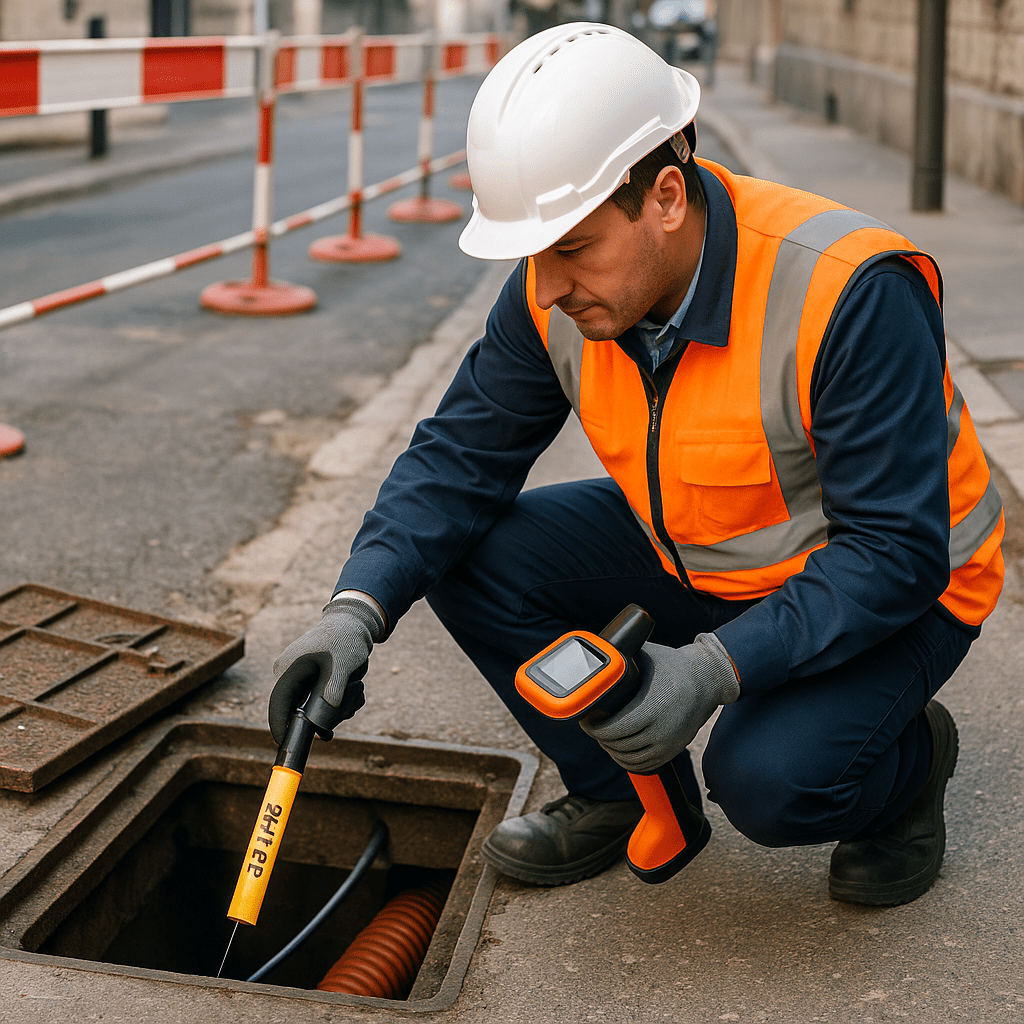
The company’s hallmark relies on a chain of complementary tools and a standardized procedure that reduces the scope of the work. The objective is to precisely locate the infrastructure and then limit the opening to the strict necessary. The approach generally follows these steps:
- Insertion of a transmitting micro-probe into the duct accessible from the interior side or the street side. The probe generates a signal detected on the surface by a suitable detector.
- Radio detection using a frequency generator on copper rod or existing cable to follow the actual path of the duct and identify anomaly points.
- Short-range video inspection when access allows, to qualify the nature of the blockage (sand, bend, crush, or root intrusion).
- Tracing and marking on the ground according to current regulations, for a precise and secure opening.
In complex configurations, a ground-penetrating radar can complement the analysis, especially when several networks intersect. However, the company favors the micro-probe + detector approach which provides an accuracy of about 5 cm on position and depth, sufficient to avoid extensive excavations. Depending on needs, Travaux-Fibre-Optique.fr offers either detection only with delivery of a plan and marking, or full management including opening, restoration of the duct, and routing.
For readers who wish to deepen their understanding of localization principles or prepare for the visit, the company publishes a useful guide to detect France Telecom inspection chamber and save time on the day.
Restoration and Routing Work
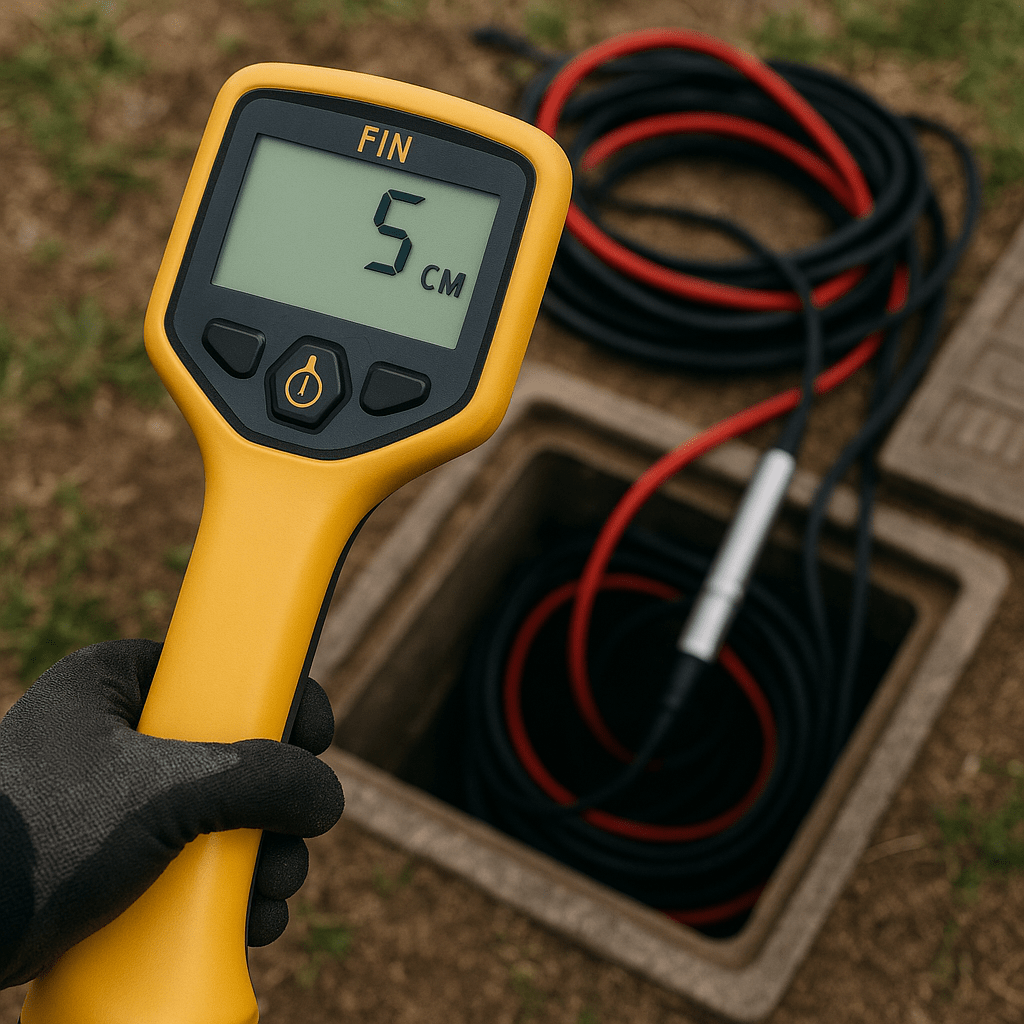
Once the location is validated, Travaux-Fibre-Optique.fr intervenes in a targeted manner. The teams carry out the punctual opening, clearing of the manhole, and restoration of the access elements. When the duct is involved, a local repair is performed on the defective section, with replacement of the segment if necessary. The switching is then done to ensure smooth passage of the fiber cable during the second operator appointment.
- Protected opening at the marking point, with vacuuming and clean cutting on asphalt or paving stones.
- Clearing and cleaning of the manhole: stable bottom, possible raising, quality cover, and visible marking.
- Unblocking or duct repair: removal of obstacles, correction of overly tight bends, replacement of crushed sections.
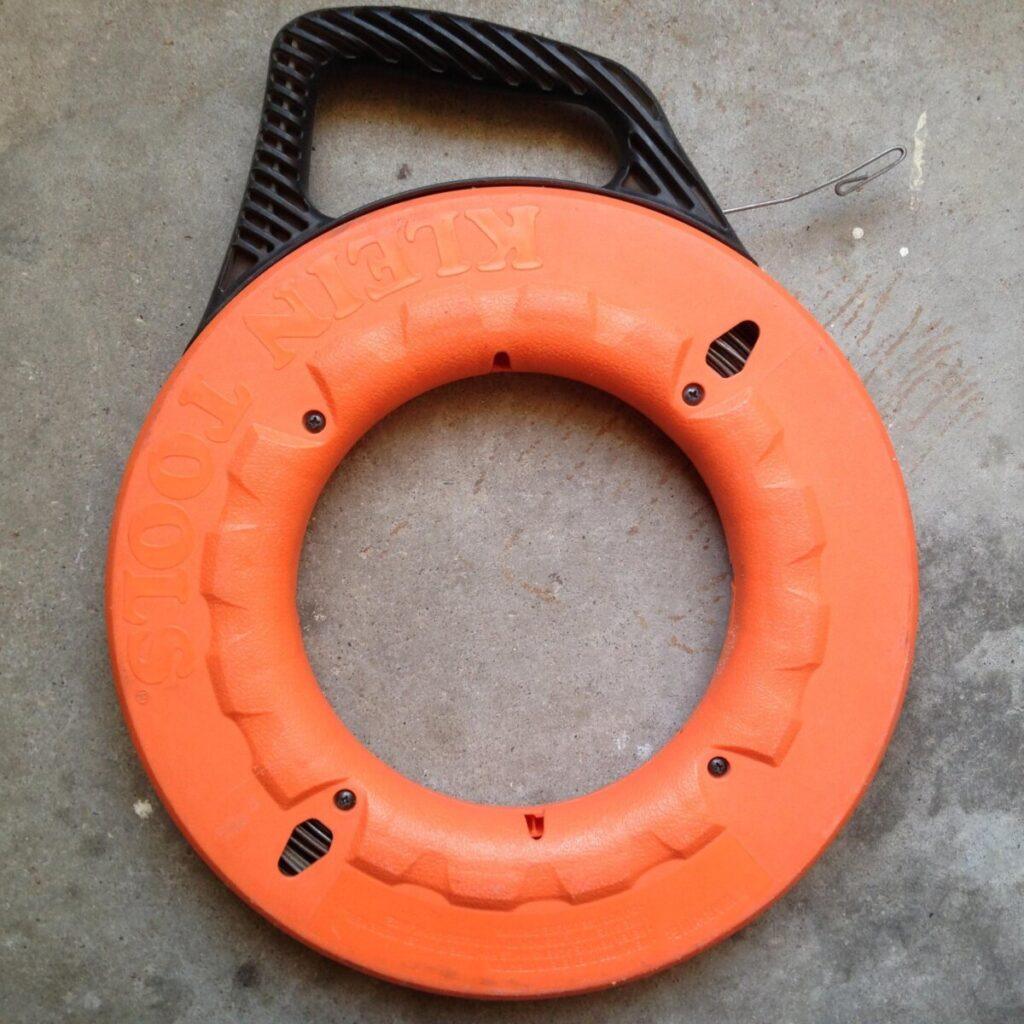
- Passage of the fish tape and continuity test up to the building entry point.
- Restoration identical to the original surface with neat finishing.
This preparation turns a second operator visit into a short operation: pulling and splicing the Optical Termination Point (PTO) without additional searching. Activation times are thus significantly reduced.
Concrete cases handled in the field
The diversity of private developments causes recurring incidents. Here are typical scenarios managed by the company and the solutions provided.
- Gravel courtyard: manhole buried under 5 to 10 cm of gravel. Localization with micro-probe, punctual opening, installation of a cleanliness frame and marked cover to prevent recurrence.
- Recently paved driveway: manhole covered during redevelopment. Circular cutting with core drill, raising, resealing, and neat repair of the asphalt.
- Tree-lined driveway: roots deforming the duct. Controlled removal over 1 to 2 meters, replacement of the sheath, sealing, and switching.
- Old building: tracing from the riser to the property boundary to locate the junction chamber and create a durable access.
- Housing development: confusion between irrigation, EDF, telecom manholes. Radio detection and multi-network marking to avoid openings in the wrong place.
Common symptoms, causes, and recommended actions
| Symptom | Probable cause | Recommended action |
|---|---|---|
| Manhole not found | Covered by asphalt, gravel, soil | Micro-probe localization, targeted opening, permanent marking |
| Rod quickly blocked | Tight bend, crushing, sand | Video inspection, local duct repair, switching |
| Water infiltration | Degraded sealing | Cleaning, raising, sealing, and slope control |
| Repeated operator failures | Non-continuous path | Complete handling up to fish tape passage |
Depth, compliance and precautions
The depth of a telecom inspection chamber in a private domain varies according to the history of the land and the backfill materials. In practice, the structure is often located a few dozen centimeters below the finished surface. An on-site measurement remains essential to define the safest opening. The publication dedicated to the France Telecom inspection chamber depth summarizes common cases and exceptions.
Before any excavation, teams check for the possible presence of other networks (electricity, water, irrigation, copper telecom). Marking follows current regulations and the opening is limited to the minimum necessary footprint. Once access is created, the cover is requalified or replaced with a readable and durable model, so that future interventions no longer require searching.
Offers, costs and indicative timelines
Travaux-Fibre-Optique.fr structures its services to adapt to the constraints of both private individuals and professionals:
- Detection only: locating by micro-probe and detector, depth estimation, ground marking and delivery of a location plan. This option is intended for clients who already have a construction company for the opening, or who must go through a management company/municipality.
- Detection + works: opening, reactivation, duct repair if needed, switching and surface restoration. This option aims for a quick restart of the operator file while minimizing the number of appointments.
Costs vary depending on site complexity: accessibility, soil type, depth, length to be repaired, co-ownership constraints, need for a micro-trench, etc. Timelines are optimized thanks to dedicated scheduling for operator failure cases to reduce waiting before activation.
Tools, alternatives and best practices
Some simple practices speed up the resolution of a case:
- Gather recent plans or development invoices and photos of suspicious areas.
- Prepare a clear access to entry points and ensure the availability of a person on site.
- Avoid any risky opening without localization, which could damage other networks.
- Coordinate upstream with the property manager or neighbors if the route crosses shared areas.
When the subsoil is impassable or the historical route is unrecoverable, alternatives exist: discreet aerial solution, new peripheral routing or partial bypass. The decisive criterion remains the creation of a continuous and sustainable path between the roadway and the Optical Termination Point (PTO).
Quality commitment and customer feedback
The core of the promise lies in three points: a precise location to minimize the opening, a complete reactivation to guarantee operator passage, and a careful restoration of surfaces. The feedback published online highlights the technicians’ pedagogy, the ability to solve cases considered “impossible,” and adherence to deadlines. The volume of about 200 interventions per month demonstrates an organization well-practiced in handling these use cases repeatedly.
FTTH trends and perspectives
The widespread adoption of FTTH and the increase in cloud usage reinforce the critical nature of the private part of the connections. Access networks are evolving towards next-generation PON technologies with higher upstream speeds, which puts pressure on the reliability of routing in the private domain. In this context, controlling access, and in particular the location of the telecom manhole, becomes a major factor in service quality. Stakeholders able to combine diagnostics, micro civil engineering, and coordination with operators provide immediate value: fewer failures, less waiting, and more predictable activations.
Contact
For a file blocked by a missing manhole or an unusable duct, Travaux-Fibre-Optique.fr offers a quick diagnosis, detection, and targeted restoration. Readers can consult their publication dedicated to the manhole at the property boundary or the location of the France Télécom manhole to prepare for the visit.
FAQ
Who intervenes when the operator technician fails to connect the fiber?
The private part is handled by a specialized service provider. Travaux-Fibre-Optique.fr intervenes to locate the manhole, restore the duct, and prepare the branching so that the operator’s second attempt succeeds.
How is a missing France Télécom manhole located?
A micro-probe is inserted into the duct and emits a signal detected on the surface. The accuracy is about 5 cm, which allows for a limited and safe opening, followed by the installation of a marked cover.
Is the depth of the manhole standardized?
It varies according to the history of the terrain. In practice, it is found a few tens of centimeters below the surface. On-site measurement determines the opening and appropriate precautions.
What options are offered?
Two packages: detection only with marking and plan, or detection + works including opening, duct restoration, branching, and surface restoration.
In which cases should an alternative to the existing routing be planned?
When the duct is unrecoverable or the terrain makes any repair risky, a discreet aerial solution or a new peripheral route can be studied to ensure a continuous path.